For years, Luxembourg established itself as Europe’s leading fund centre through fund structuring, administration and cross-border distribution. Today, another function is quietly gaining strategic importance: valuation.
The first Luxembourg Valuation Survey, conducted jointly by Alfi and Kroll, suggests that valuation is increasingly becoming a core competency within Luxembourg’s management companies rather than simply an oversight exercise. The benchmark, based on responses from 65 Mancos representing approximately €4.1trn in assets under management – around half of Luxembourg’s fund industry – offers one of the most comprehensive snapshots of current valuation practices in the market.
Building valuation substance
One of the survey’s strongest messages concerns the localisation of expertise. According to the findings, 44% of respondents now perform valuation work directly in Luxembourg, while another 41% oversee valuations carried out through delegated operating models. Only a small minority follow other organisational structures.
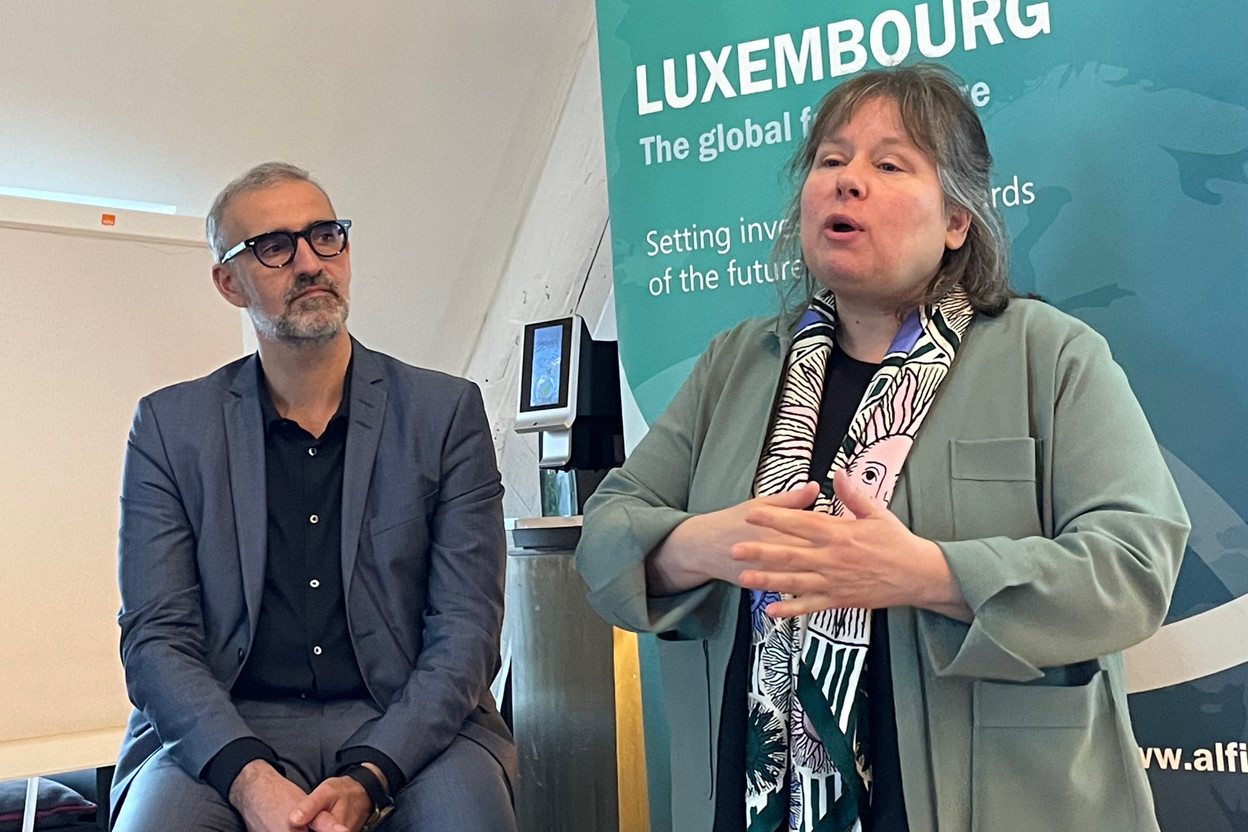
For Christopher Georgeson, senior vice president managing industry affairs at Alfi, this marks an important evolution.
“Valuation is moving from oversight to ownership,” he said during the presentation. While Luxembourg historically focused on supervising valuation activities, management companies are now increasingly developing their own modelling, calculation and control capabilities locally.
Although no historical benchmark exists, both Georgeson and Elena Moisei, head of portfolio valuation at Kroll, believe the shift has accelerated over the past decade, as Brexit, the expansion of private markets and growing regulatory expectations have encouraged firms to establish more expertise in Luxembourg rather than relying on London or other financial centres.
Governance becomes more sophisticated
The survey also illustrates how valuation governance has matured. 77% of respondents have established a local valuation committee, while 80% of those committees meet at least quarterly. In addition, 70% say their committees now focus primarily on strategic oversight and exceptional cases rather than reviewing every individual valuation.
“This is actually a positive development,” Georgeson explained. “The objective is not to multiply meetings but to automate controls so that committees can concentrate on exceptions and judgement.”
The survey also shows that 20% of valuation committees already include independent directors, a proportion that rises further among real estate specialists.
Meanwhile, boards continue to play an oversight role: 80% rely on the Manco’s valuation expertise when assessing valuation models, while 79% primarily verify that appropriate policies and governance frameworks are in place.
Technology still has ground to cover
If governance has progressed rapidly, technology remains a work in progress. The most widely adopted tool remains template standardisation, implemented by 83% of respondents. However, more advanced technologies remain relatively limited.
Only 42% have implemented dedicated database systems, 23% automated testing or validation frameworks, 22% proprietary valuation platforms, 18% programming tools such as Python or R, and just 17% automated API-based data feeds.
Georgeson admitted that this finding surprised him. “We hear a lot about AI and automation, but many firms are still relying on Excel,” he said, adding that the industry’s biggest obstacle is not software availability but the lack of standardised data exchanged between promoters, administrators and valuation teams.
Indeed, respondents identified manual information gathering through Excel files and emails as by far the biggest barrier to scalability, ahead of inconsistent industry data standards and dependence on client processes. Existing software solutions ranked much lower among perceived obstacles.
Scale matters
Another clear conclusion is that automation depends far more on company size than on asset class. Large management companies – those managing more than €44bn – are 2.5 times more likely than firms managing less than €8bn to operate at least three automated control processes (55% versus 22%). According to the survey, this relationship holds across both liquid and private asset classes, suggesting that scale, rather than investment strategy, enables greater automation.
The finding also supports calls for proportionality in regulatory expectations, recognising that smaller firms may face greater resource constraints when investing in technology.
Independence remains central
The benchmark also confirms the growing role of independent valuation specialists across private markets. The use of fully independent valuers reaches 54% in private debt, 50% in real estate, 44% in private equity and 35% in infrastructure. However, both Georgeson and Moisei stressed that responsibility for the valuation always remains with the management company.
“The independent valuer provides challenge and transparency,” Moisei explained. “The Manco still owns the valuation.” Rather than assessing the quality of individual valuations, the survey focuses on the governance surrounding them, based on the assumption that stronger governance should ultimately lead to more robust valuation outcomes.
A benchmark for the years ahead
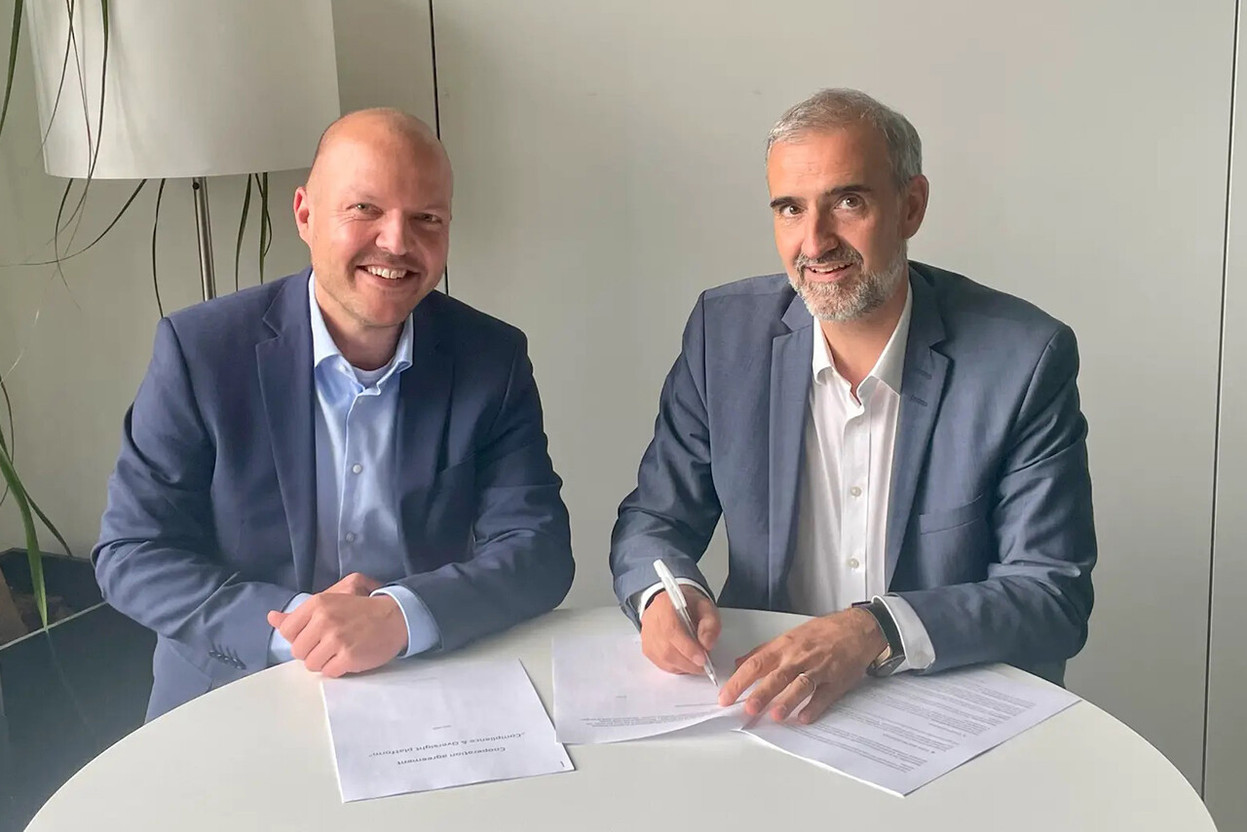
Alfi and Kroll intend to repeat the survey annually, allowing the industry to measure its progress over time.
For Elena Moisei, the objective was never to issue recommendations but to replace anecdotal observations with measurable evidence. As Luxembourg continues to expand its presence in private markets, valuation appears set to become another strategic capability underpinning the country’s ambition to move further up the asset management value chain.