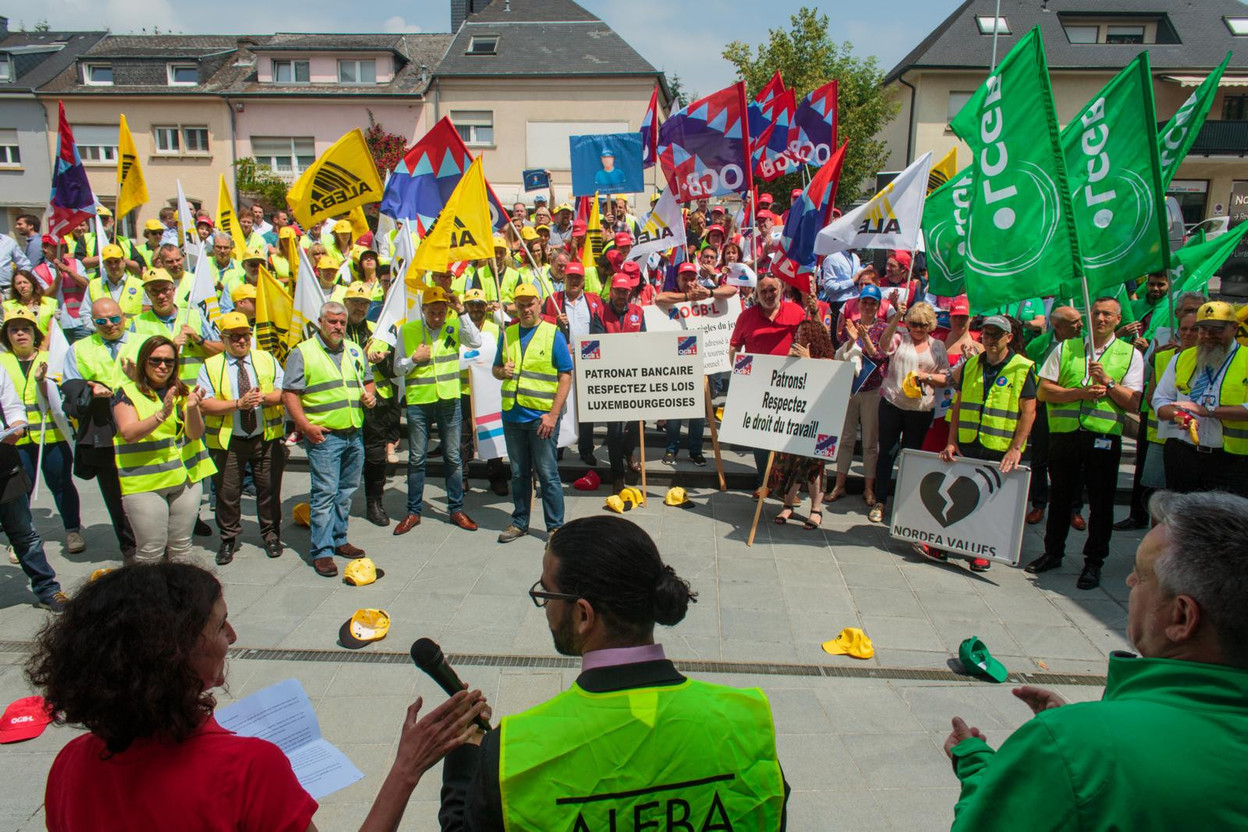
National demonstrations are rare in Luxembourg. There have been three in 51 years: on 9 October 1973, 32,000 people took to the streets to protest against the Werner government’s social policy; on 27 March 1982, 40,000 people marched against the austerity policy announced by the Werner government; on 16 May 2002, 30,000 people took to the streets, again to protest against the temptation of an austerity policy.
Thirty thousand participants therefore appears to be a benchmark figure. However, reaching it seems difficult. First, because times are changing and the union fibre has become somewhat strained. But, above all, more prosaically, because the CGFP--the civil service union--will not be taking part in the event as it did in 1982. Although it says it “supports the two unions calling for a demonstration on 28 June,” the CGFP will not be playing any active role in the demonstration.
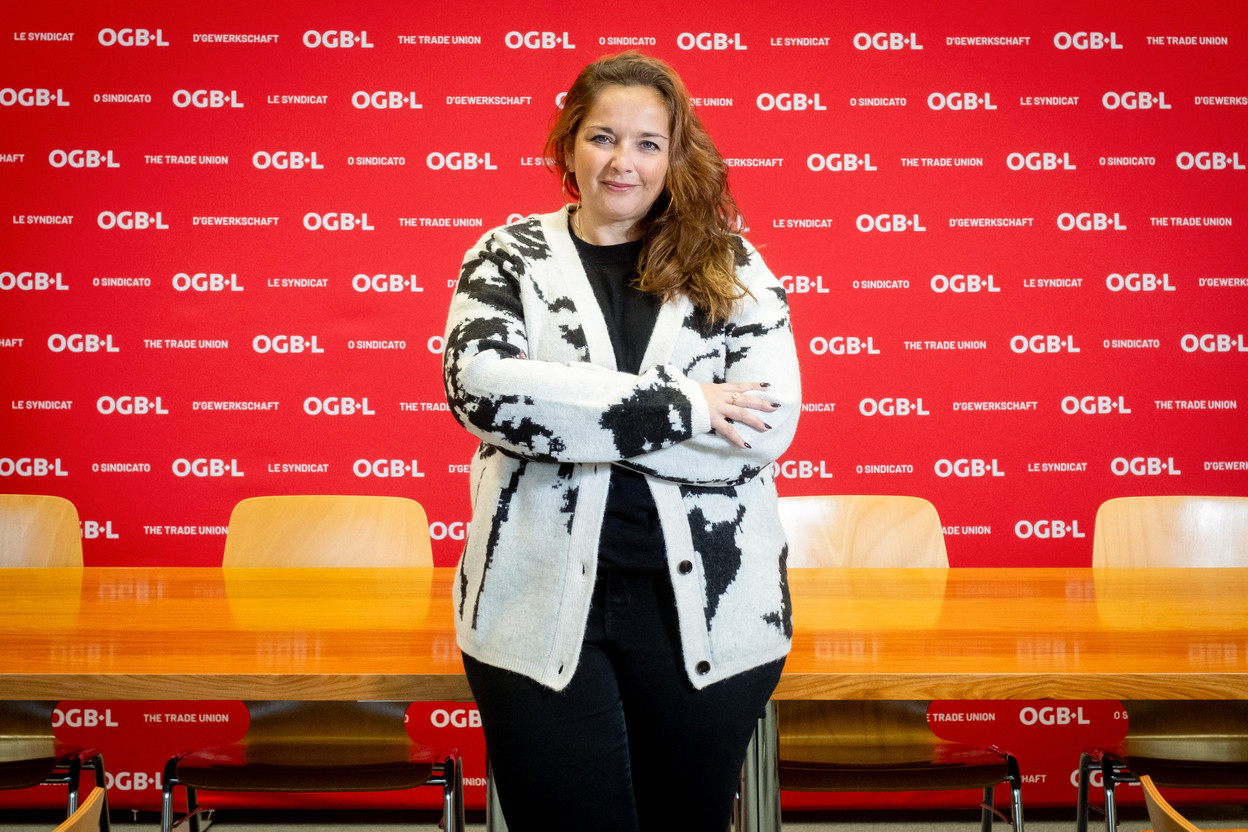
This is a reminder that the central issue, pensions, does not concern the public sector. Nor does the issue of Sunday working. Noting that the government wants to go above and beyond social dialogue is akin to minimum social service--a position that infuriates LCGB national president 
How many civil servants have there been in these demonstrations? In 1999, the CGFP brought together 10,000 civil servants for demands concerning the public sector.
“As many people as possible”
The target of 30,000 demonstrators seems hard to achieve, so the question on everyone’s lips--and to which neither the unions nor the government want to give an answer--is how many people should be on the streets in order for the 28 June demonstration to be called a success.
Dury doesn't want to get ahead of himself. “The demonstration will be a success if it brings together the whole of society.” Meanwhile, David Angel, the OGBL’s central health secretary, and Rafael Mineiro, the LCGB’s deputy union secretary in charge of the care and socio-educational and public sector sectors, sound the same note. “As many people as possible,” they say in concert.
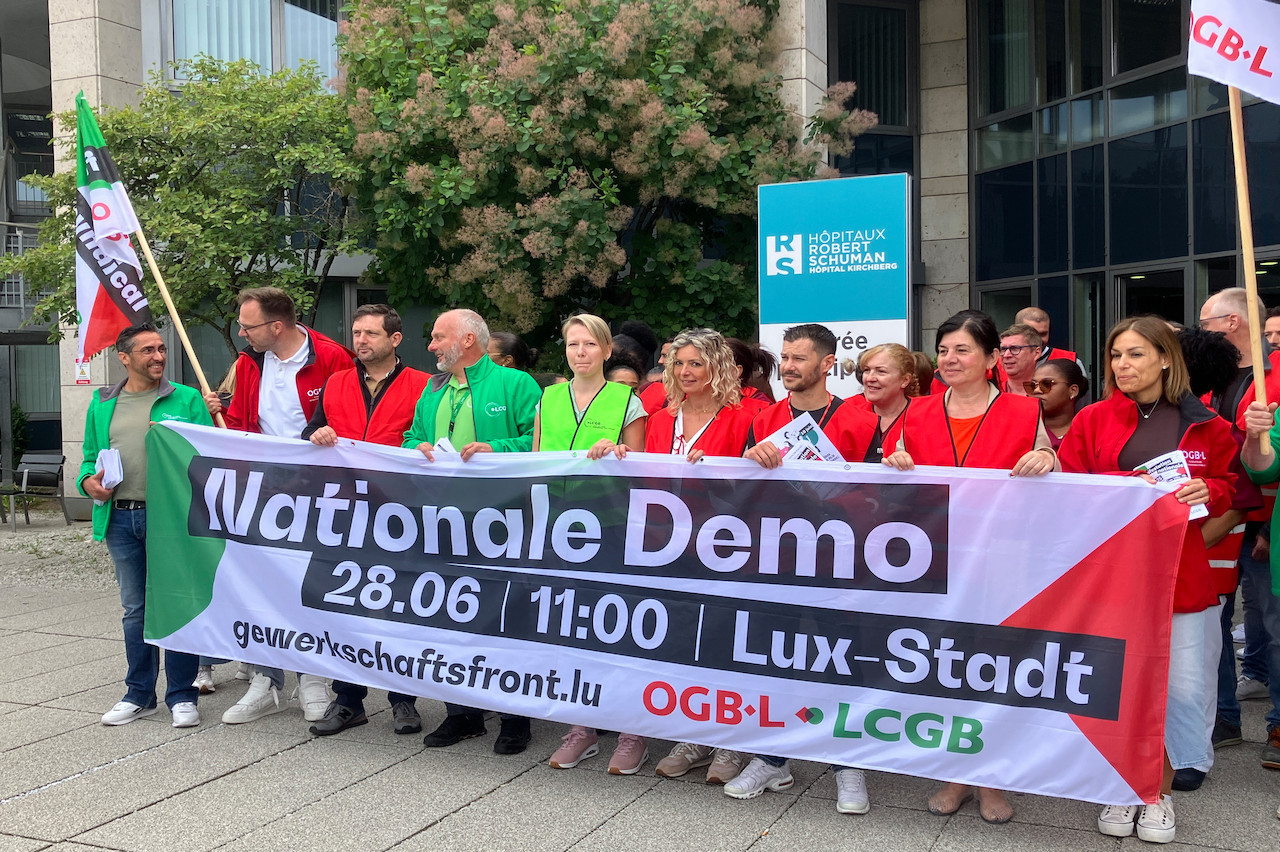
Hitting the streets this Tuesday in order to mobilise activists, they say they are optimistic. “We feel that people are ready to get involved.” However, they insist that as 28 June is not a strike day, “many” will not be able to take part. Cross-border workers in particular are “difficult to mobilise” by nature. According to Angel, the OGBL is considering ways in which those who will not be demonstrating can “show their solidarity.” Armbands, pins or posting on social networks are the avenues currently being explored. How will these forms of expression be included in the final tally? It’s a mystery.
And where there’s mobilisation, there’s security. “We are working on this in conjunction with the OGBL and the ministry of home affairs,” says Patrick Dury, who is not revealing the scenarios for the demonstration. When questioned on this point, the home affairs ministry also made no comment that might allow an initial estimate.
A critical Council of State
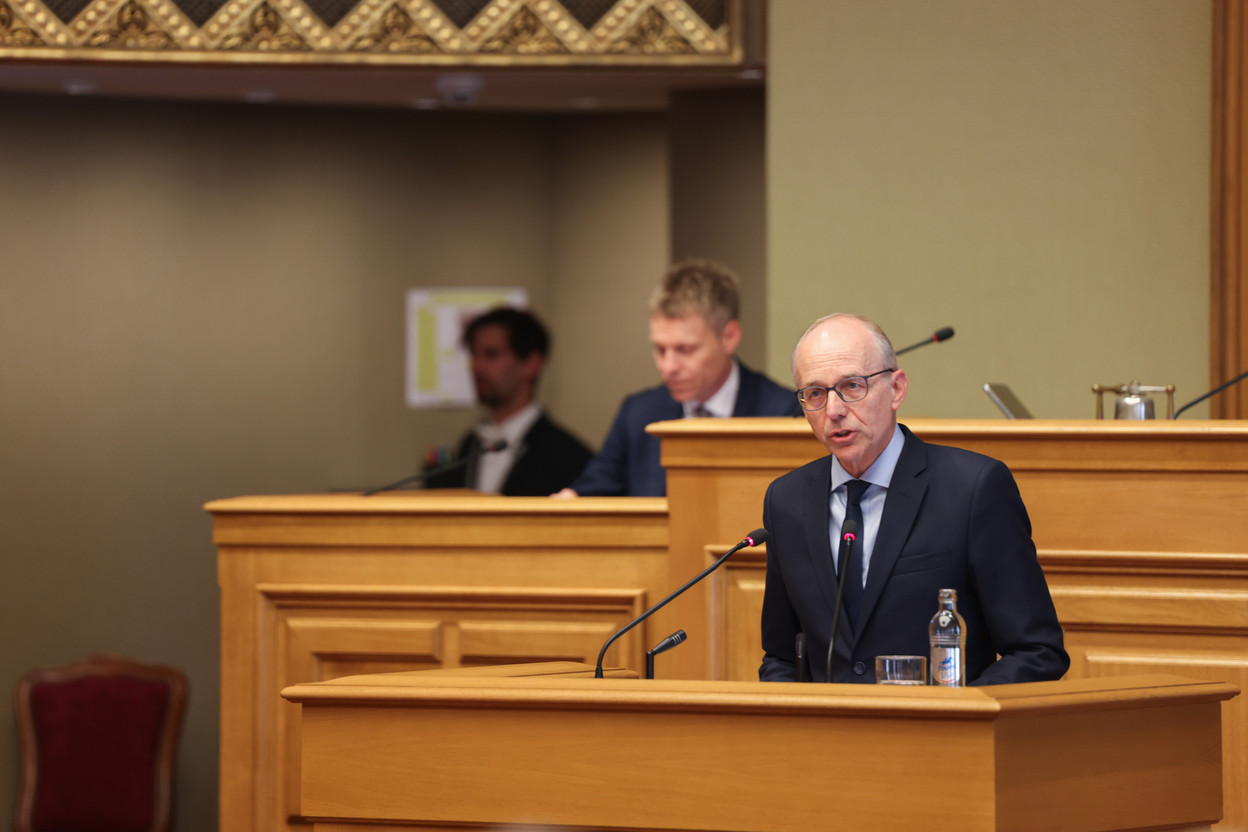
What is at stake is the balance of power between the unions and the government, at a time when prime minister 


The bill on Sunday working is currently in committee. The committee will consider the opinion issued by the Council of State on 3 June. Whilst the Council of State did not express any formal opposition, it did consider that “the extension of Sunday working and the associated implementing rules should be the preserve of the social partners, and any negotiated and balanced solution would be preferable to one imposed by law.” Further on, we also read that “compared with the current legal situation, the draft law under review constitutes a step backwards in that it allows Sunday working hours to be increased without negotiation and therefore, for example, without compensation for wages other than the minimum provided for by the labour code.” We’ve known the Council of State to be much less left-wing... It’s an opinion that constitutes “a stone in the already overcrowded garden of the minister of labour.”
On the opinion issued the same day concerning Sunday working, the council noted that “the most substantial change compared with the arrangements currently in force consists in extending opening hours on Sundays and public holidays,” referring de facto to its opinion on opening hours in the retail sector.
Here too, there was no formal opposition, but a pithy sentence was included: “The effects of the proposed liberalisation are in any case difficult to predict and also raise a number of questions.” This phrase suggests that the justification for this reform is primarily ideological.
The day after
What will happen on 29 June? “It will depend on the turnout,” replies Dury. He also points out that the OBGL and the LCGB have not yet decided whether or not they will attend the meeting on 9 July to which prime minister Frieden has invited them. By setting the next meeting for 9 July, the head of government is also indicating that he will not hold talks before the demonstration.
To take the analogy a step further, the big demonstration in 1973 was mainly about co-determination in the workplace, the gradual reform of health insurance, the promotion of social housing, the fight against speculation in building land, tax relief on top-ups, negative taxes for low earners, and the introduction or generalisation of zero fares on public transport for workers and students. A year later, the government made it possible for employee representatives to sit on the boards of directors of major companies, reformed the operation of health insurance funds by increasing employer and employee contributions to funding on an equal footing, introduced zero fares for school transport and discounts for the elderly. It also increased tax relief on supplementary pay. And from 1 January 1975, the 40-hour working week became the norm and a fifth week’s holiday was introduced. All of this made 9 October 1973 a legendary date in the social struggle.
On 27 March, the trade unions took to the streets to protest against the Werner government’s austerity policy. But this was unsuccessful; the Chamber of Deputies voted in favour of the austerity policy on 8 April.
On 16 May 2009, the index was at the heart of the concerns. “The slogan was ‘We won’t pay for your crisis,’” recalls Dury. The unions were rejecting the government’s economic policy, which--following the 2009 financial crisis--opted for a policy of austerity. It was a policy accused of seeking to undermine wage indexation and social benefits. The 2009 parliamentary elections, which took place a month later, saw the outgoing CSV-DP coalition defeated in favour of a CSV-LSAP coalition.
This article was originally published in French.