Unicef Luxembourg’s 2025 outlook highlights an increasingly stark tension between soaring needs and stagnating resources. “Children’s needs are reaching unprecedented levels,” the organisation acknowledges in its annual report published on Tuesday 7 April, against a backdrop where “funding (…) has been scaled back” in several donor countries.
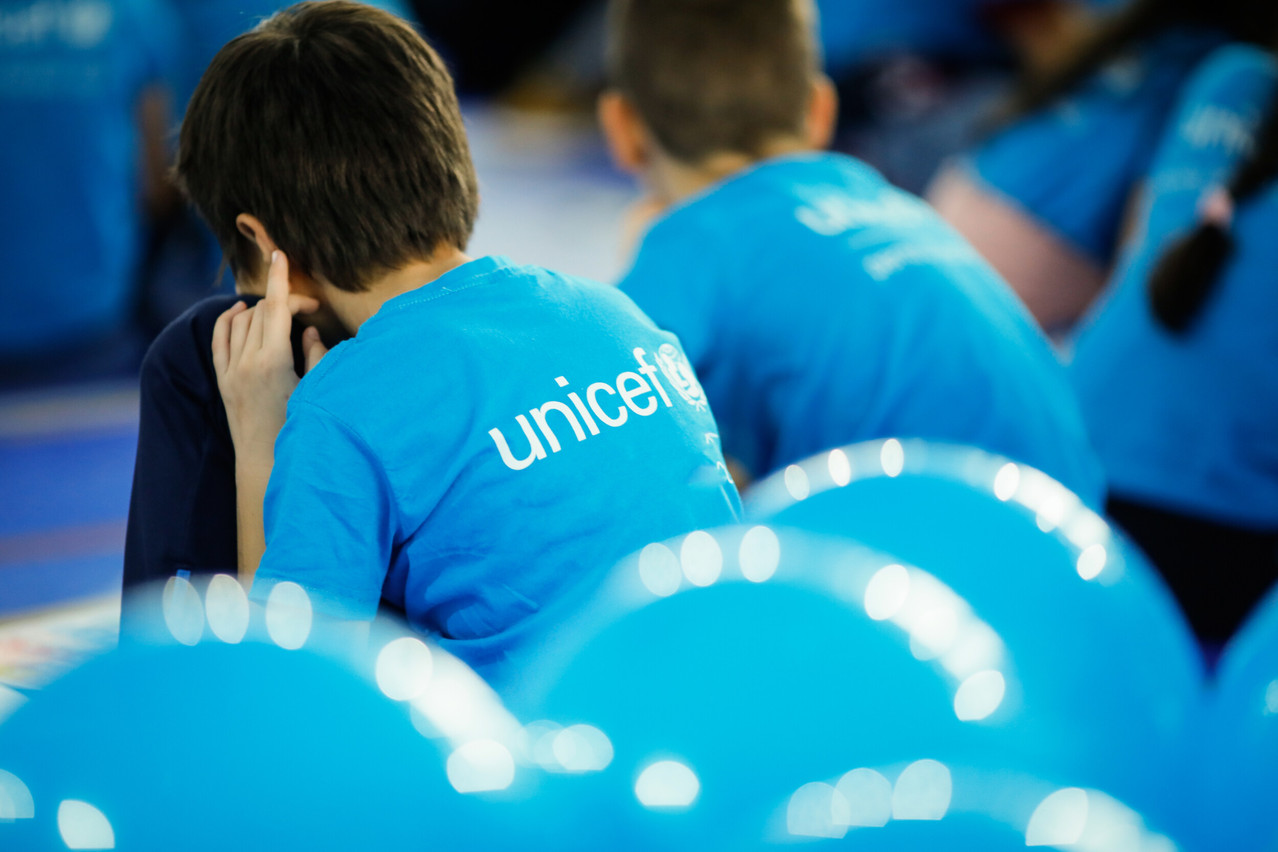
Unicef Luxembourg does not carry out humanitarian operations directly on the ground, but acts as an intermediary. Its mission is threefold: to raise awareness in Luxembourg, to influence public policy and, above all, to raise funds. The donations collected are then transferred to Unicef’s international headquarters, which redistributes them to programmes in over 190 countries. In practical terms, this money funds vaccination campaigns, treatments for malnutrition, access to clean drinking water, education, and emergency responses within 72 hours during major crises.
On paper, resources are set to rise slightly to €8.69m in 2025 compared with €8.55m in 2024. But this increase masks more significant shifts. Corporate donations have surged to €819,710, compared with €229,445 a year earlier, whilst bequests have plummeted from €1.63m to €888,642.
Rising costs
Fundraising from regular donors continues to grow modestly, reaching €4.52m, compared with €4.43m in 2024. This is a welcome increase, but it is insufficient to offset the volatility of other sources. As a result, despite an increase in total resources, the funds actually available have fallen to €6.19m, compared with €6.47m the previous year.
At the same time, costs are rising. Expenditure on fundraising and sales has risen to €1.66m, compared with €1.31m in 2024. Administrative costs are following the same trend, reaching €843,097, up from €765,480 in the previous financial year.
This shift is beginning to have an impact on the ground. Contributions to international programmes have fallen sharply, to €2.99m compared with €4.10m in 2024. Conversely, specific projects supported from Luxembourg have skyrocketed, rising from €718,673 to €1.73m. This strategic shift reflects increasingly targeted priorities.
A public commitment that remains unchanged
Emergency aid remains a major item of expenditure but is down, with €837,044 committed compared with over €1m the previous year. In detail, priorities are shifting: funding for Ukraine is decreasing (€204,212 compared to €337,736), whilst funding for Gaza is increasing (€266,703 compared to €189,273).
On the ground, the pressure shows no sign of letting up. In 2025, the organisation provided support in response to major crises in Ukraine, Gaza, the Democratic Republic of the Congo and Myanmar, which was hit by an earthquake. The sums committed remain substantial, but the situation is becoming more complex as crises mount and become protracted.
“The decline in funding has (…) limited the scope of several interventions. This reality cannot be ignored,” the organisation admits. Against this backdrop, Luxembourg stands out as a relative exception, with public commitment remaining steady or even increasing. But this is no longer enough to meet the scale of the needs. Unicef is now emphasising the growing role of the private sector and individual donors in filling the gaps.