The standoff is playing out in Bern. UBS is calculating the cost in Zurich. Luxembourg is watching from one of the group’s European outposts. Since the acquisition of Credit Suisse, the Swiss Confederation has been seeking to tighten the rules applicable to banks deemed too big to fail. The most contentious measure concerns the foreign shareholdings held by UBS’s Swiss parent company.
The Federal Council proposes that these be covered 100% by CET1 capital, the highest-quality capital from a prudential perspective. This coverage currently stands at around 45%. The government’s aim is thus to prevent a sharp decline in the value of a foreign subsidiary from directly undermining the Swiss parent company.
The Federal Department of Finance illustrates this with a hypothetical example. A write-down of 10 billion dollars on foreign equity investments would currently be offset by only 4.5 billion in capital. It would therefore result in a regulatory shortfall of 5.5 billion. This is neither a loss incurred by UBS nor a calculation specific to UBS Europe SE or Luxembourg.
Between 20 and 37 billion, according to the calculations
The Swiss government estimates that the main measures under consideration would increase the group’s CET1 capital requirements by around 20 billion dollars. After taking into account the capital already available, it puts the actual shortfall at around 9 billion. UBS presents a different figure. The bank puts the cost of fully covering foreign holdings at $20 billion and that of other regulatory changes at $2 billion. This brings its total estimate of additional capital to $22 billion. The group adds to this sum $15 billion in requirements already linked to the acquisition of Credit Suisse. It estimates the cumulative regulatory requirement at 37 billion dollars and its annual cost at around 3 billion. These figures constitute UBS’s estimate, which is contested by the Swiss government.
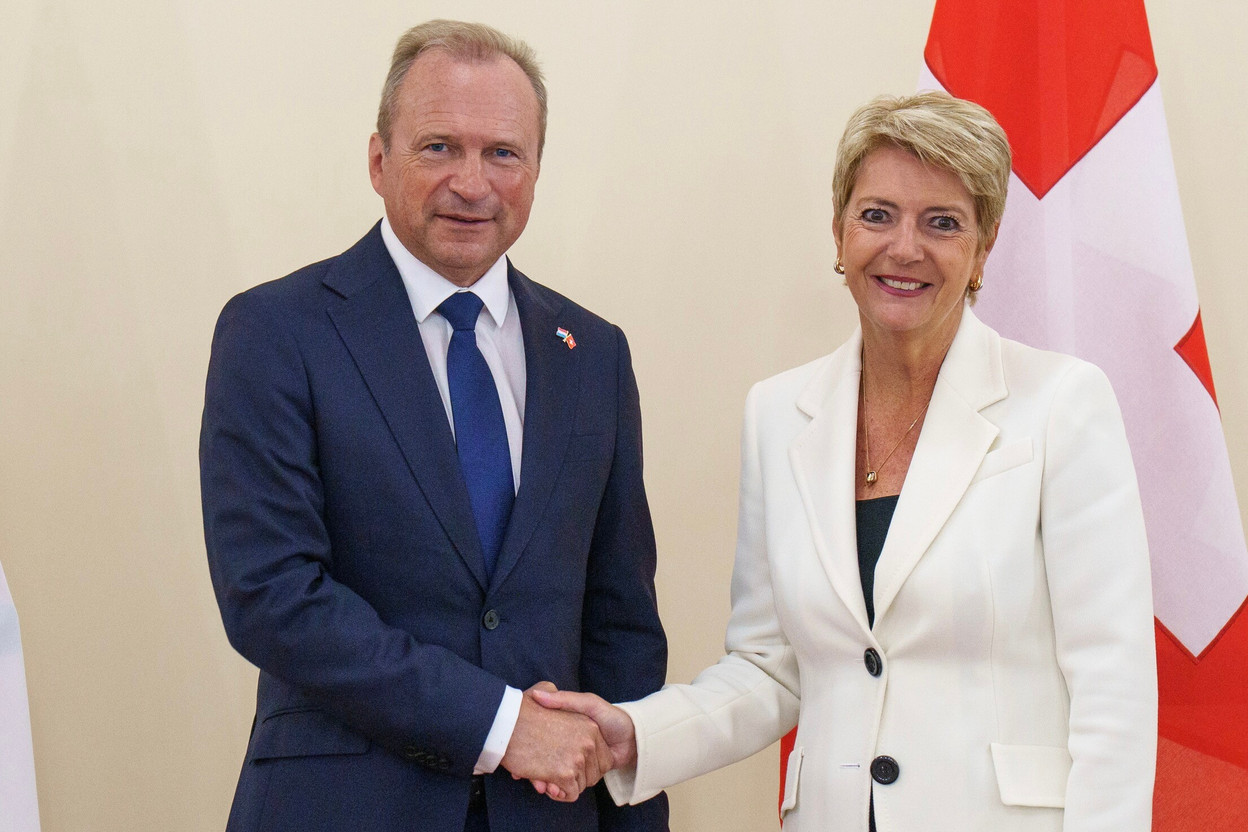
Federal Councillor Karin Keller-Sutter summarises the government’s position in the NZZ am Sonntag: “The Federal Council’s primary objective is to protect taxpayers and the economy.” UBS, for its part, defends its ability to compete with major US and European banks. The group believes that tying up additional capital would limit its growth prospects and make its business model less competitive. The government responds that international expansion would remain possible, provided it is financed entirely by equity capital.
Decision on 10 or 11 August
The relevant committee of the Council of States is due to adopt its position on 10 or 11 August. This stage will not settle the reform once and for all, but will provide an initial indication of the political balance of power regarding its key provision.
Luxembourg is not involved in this decision or in the calculation of the requirements imposed on the Swiss parent company. Its interest stems from UBS’s European structure. Local banking activities are carried out by UBS Europe SE, Luxembourg Branch. This branch is a subsidiary of UBS Europe SE, a bank established in Germany, wholly owned by UBS AG and subject to direct supervision by the European Central Bank.
UBS Europe SE had total assets of €61.5 billion at the end of 2025. It is a foreign subsidiary of the Swiss parent company and, as such, falls within the general scope of the proposed reform.
However, its Luxembourg branch is neither an additional subsidiary nor a separately held stake by UBS AG. It belongs to the same German legal entity and does not have its own capital comparable to that of a bank incorporated in Luxembourg. No public document consulted allows the Grand Duchy to be attributed a share of the 20 billion put forward by the Swiss government or the 22 billion calculated by UBS. None of them mention any specific consequences for the operations, staff or customers of the Luxembourg branch.
For Luxembourg, the significance of the debate lies elsewhere. Switzerland is seeking to determine the extent to which a global bank’s home country should cover the risks borne by its foreign subsidiaries. UBS counters this by pointing to the cost of such protection to its international competitiveness. An interesting and rare example of “King Size butterfly effects” – one worth watching.