By the numbers: 32,000 companies, 210,000 employees, 64% of GDP.
If, by any chance, you wanted to win the good graces of the people who work 55% of Luxembourg’s jobs (and their families) in the run-up to the legislative elections in October, there’s nothing like a good plan for small and medium-sized enterprises.
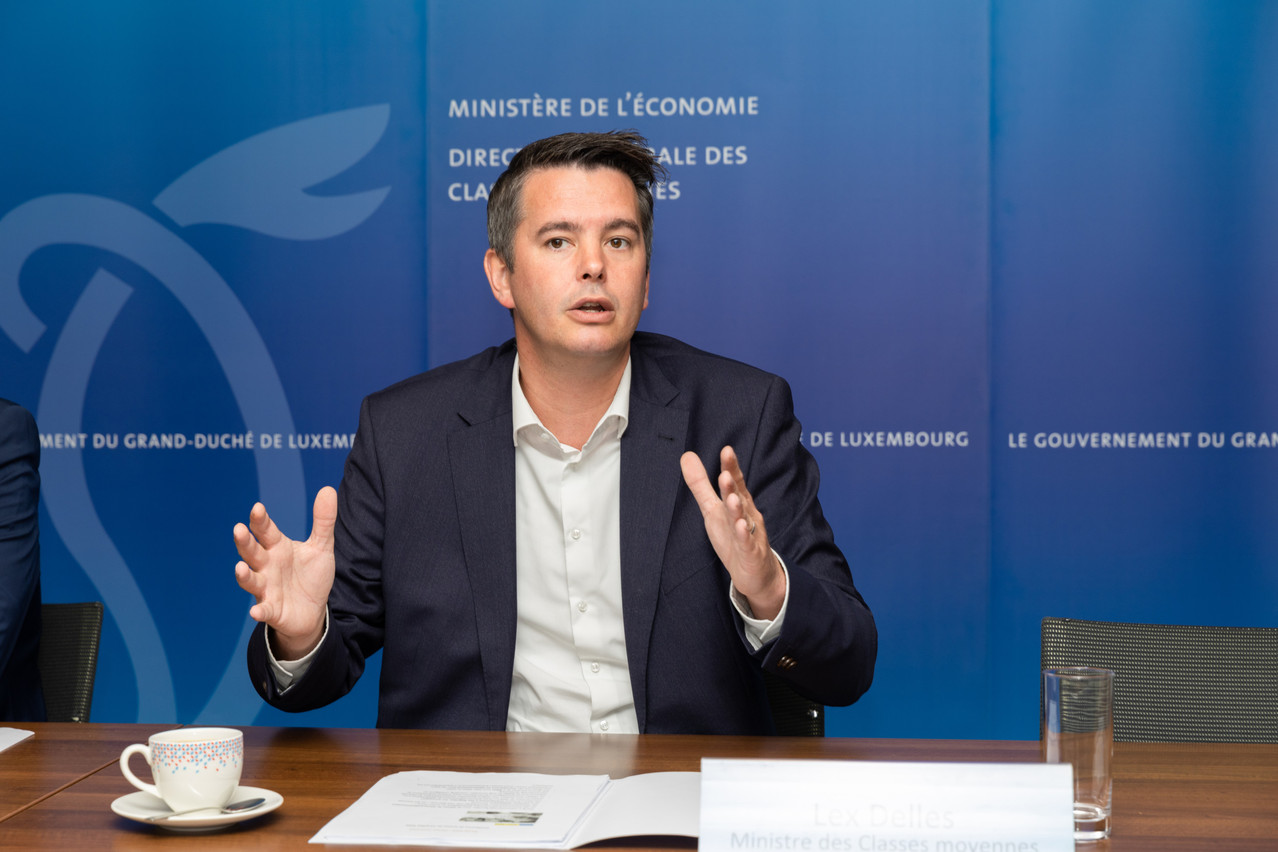
And the plan is indeed good--the fifth national action plan for SMEs, that is, presented on 25 July by SMEs minister 


It’s not us saying these things, but those who presented the ten priorities. The details are laid out in 53 often redundant chapters, most of which were already included in the fourth national SMEs plan presented in 2016 by 
Business transfers
Let’s take a look at business transfers, which are a major issue: according to statistics released in March, one third of SMEs will change hands in the next ten years. The text addresses this subject in various places:
Priority 1, “Promoting the spirit of enterprise and entrepreneurship,” refers people to businesstransfer.lu and guichet.lu to find out how to value their business before selling it, and stresses the need to use professional chambers five to seven years before retiring so as to be better prepared (even if that means training at the House of Entrepreneurship).
Priority 4, “Improving the quality of public service and promoting administrative simplification,” plans to facilitate family transfers by making it simpler to transfer a provisional establishment permit to a person who has been employed for at least three years in the company concerned, instead of ten years previously.
Under priority 5, “Making financing more accessible to SMEs,” the SNCI (Société Nationale de Crédit et d’Investissement) will work with the mutual guarantee scheme to set up a new instrument that will combine public bank finance with guarantees from the mutual scheme. In other words, the former will provide a loan backed by a guarantee from the scheme, or even from a reluctant banker…
Talent
During the press conference, Ernster spoke about talent concerns: “A new company will start up with people who have new skills, but a company over 40 years old won’t have the skills to cope unless it starts training.” He argued that over half of all employers fear a shortage of staff--and above they fear losing their competitiveness and attractiveness.
The question of talent is addressed in various places across the 53 chapters. Among other things, the text mentions promoting entrepreneurship with awareness campaigns starting at school; abolishing certain permits needed to found a school; granting micro-credits (up to €10,000) via a new fund; establishing a “Luxembourg Talents Hub”; and promoting lifelong learning programmes.
Three elements to note
1. An assessment unit for struggling companies. Twenty years (!) after discussions on bankruptcy reform began, the minister is calling for an assessment unit to be introduced for struggling companies. In concrete terms, this means that companies failing to pay their social security contributions would be reported to this unit with a view to initiating a dialogue on possible solutions. Both the economy and SMEs ministers--if those jobs continue to be held separately--could even appoint a conciliator to reorganise the company’s assets or activities.
2. “Once only” and “think small first.” These are two concepts introduced in the text that sound younger and sexier than they are. For entrepreneurs, “once only” means not having to provide essential information more than once, a form of administrative simplification that is hardly new: in 2005, then-economy minister Jeannot Krecké (LSAP) launched Luxembourg’s Central Balance Sheet Office six months after creating the National Committee for Administrative Simplification in Favour of Businesses (CNSAE). As for “think small first”--undoubtedly being monitored by Brussels because it circumvents competition rules--this concept makes it easier to award contracts to local players.
3. Raising awareness. Communication campaigns for business leaders; support from the House of Entrepreneurship; promotional measures for the skilled crafts and trades, commerce and hotel/catering industries; the vum Handwierk Festival; promotion of SME digitalisation and existing tools; a one-stop shop for the energy and environmental transition; CSR awareness campaigns; SME packages for international growth… the fifth national plan for SMEs amounts to a gigantic appeal to make SMEs realise that they already have tools at their disposal, and are simply not using them well enough.
This article was originally published in French in Paperjam. It has been translated and edited for Delano.