What personally motivated you to turn the “100 Women on Board” edition into an ongoing project?
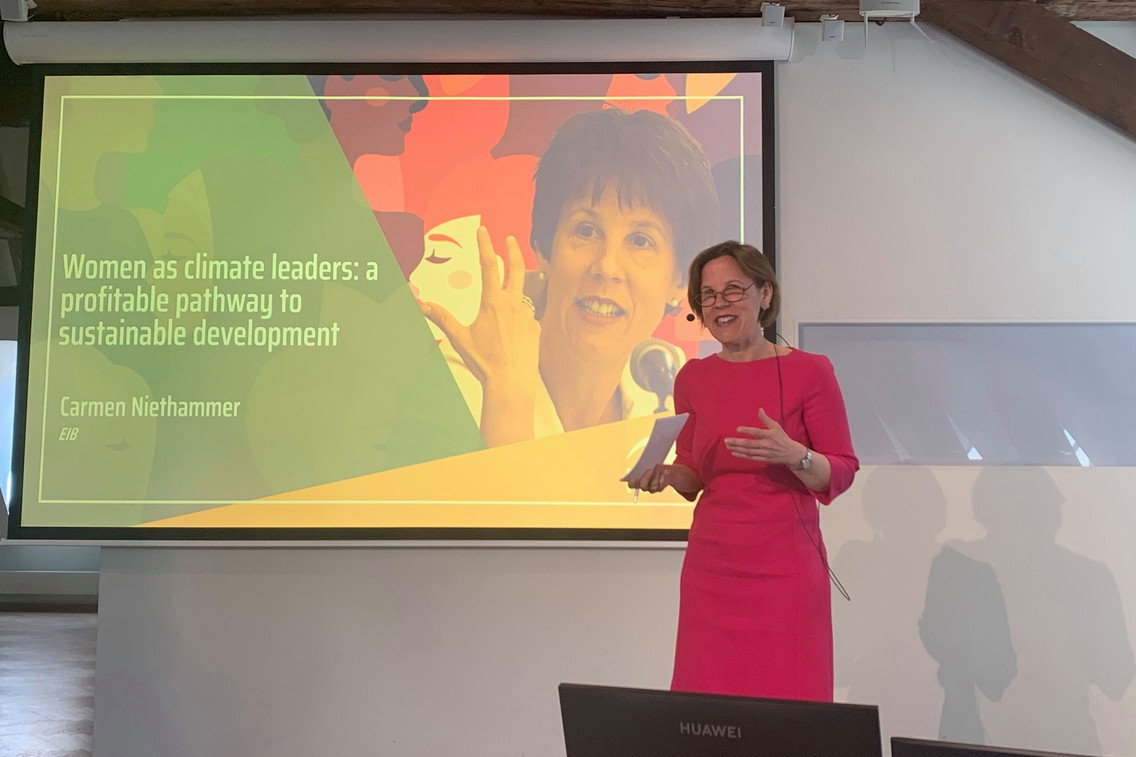
Carmen Niethammer. —“When I saw Paperjam’s ‘100 Women on Board’ publication, it confirmed that Luxembourg is embracing women’s leadership and board diversity. Around the same time, I had almost completed a sticker album for the Uefa Women’s Euro in Switzerland. I had missed the chance to get the players’ signatures in the stadium and suddenly thought: these women on boards are my heroines. Instead of football stars, why not meet them—one by one?
I have been working professionally on women’s entrepreneurship, employment and leadership for most of my career. I am an oil economist by training, and when I joined the World Bank Group many years ago, one of my first assignments was to promote women’s entrepreneurship and access to finance in the Middle East and North Africa. It was then that I realised something very striking: the banks that were reaching women better were also those with more women in senior positions. There was a clear link. If you want to improve women’s access to finance, you must also promote women in leadership—because inclusive services happen when they are mirrored at the top of institutions. That insight stayed with me.
I later worked at a global level within the World Bank Group on how to promote women on boards. In Brazil, I explored what it takes at national level: talent pipelines, visibility and technical support for women to join boards. Later, in Sri Lanka, I worked closely with the Colombo Stock Exchange on similar questions around women in leadership.
This is not about building women’s skills. It’s about visibility and connections.

Today, at the European Investment Bank (EIB), gender equality is part of our business model and embedded in how we invest. In 2025 alone, we have supported gender equality and women’s empowerment with around three billion euros across more than 100 targeted projects. At the EIB Group, we are proud to have reached our target of 40% women in management already in 2025—ahead of the planned end-2026 deadline.
What is the concrete goal of collecting these signatures, and how far along are you?
“At first, the goal was extremely simple—almost trivial. Like completing an album. I just wanted to meet each woman and collect her signature. The first meetings were easy to obtain, because I already knew some of them through my work in Luxembourg, notably via the Ministry of Finance’s Gender Finance Task Force and the Female Board Pool. Then the project evolved. In May, I joined a board myself—a warehousing facility investing in women-founded funds in Africa. It was my first board experience, so I started asking for advice: what is it like to be a woman on a board? What networks or trainings matter?
As I became more comfortable in my own role, the conversations naturally shifted from advice to reflection—on careers, obstacles and what comes next. I now keep the meetings one-to-one and unhurried. Some coffees last well over two hours, moving between professional and very personal topics—which is precisely what makes them so valuable. I am roughly a third of the way through, with around ten more meetings already scheduled. Most take place before or after work, or on weekends—a demanding but extremely energising rhythm. None of the women I contacted said no, and many expanded my network further.
What did you not anticipate?
“What I did not anticipate was how curious these women would be about one another. Luxembourg is very connected, yet many did not know each other. They would ask who else I had met or suggest new contacts. Another surprise was how interested these women were in the business case for diversity. Studies—including EIB research—show that companies with diverse boards are around 36% more likely to have above-average profitability, and many were keen to discuss these figures.
But the biggest surprise was their willingness to give back. Despite managing companies, sitting on boards and holding senior roles, many are deeply involved in giving back, including through charities and NGOs. They are extremely busy—yet they still make time.
How would you assess Luxembourg’s ecosystem?
“International gender indices show Luxembourg performs quite well. What strikes me most is the competence of the women I have met. This is not about building women’s capacity—their skills are already there. It is about visibility and connections. Luxembourg understands that diversity is not about being nice or politically correct—it is about attracting talent and driving economic performance.
What really makes a difference for women on boards?
“Competence comes up repeatedly, with many women feeling they must constantly prove themselves. Critical mass is key. When at least three women—around 30%—sit on a board, dynamics change. One woman can be an outsider, two a pair, but three normalise women’s perspectives.
Still, systemic factors persist: access to the right networks, being in the room at the right time, and the unconscious tendency to favour people who look and think like us. That is why tracking diversity at every stage matters so much. What gets measured gets done.
Is there a form of sisterhood?
“There is a strong sense of solidarity and curiosity. It is less about competition and more about recognition and mutual support. These conversations create a rare moment to stop and reflect—which is why they have been so meaningful, for them as much as for me.”
This article was written for the March 2026 issue of Paperjam magazine, published on 25 February. The content is produced exclusively for the magazine. It is published on the site to contribute to Paperjam’s comprehensive archive. Click on this link to subscribe to the magazine.
Is your company a member of Club Paperjam? You can request a subscription in your name. Please let us know via club@paperjam.lu.