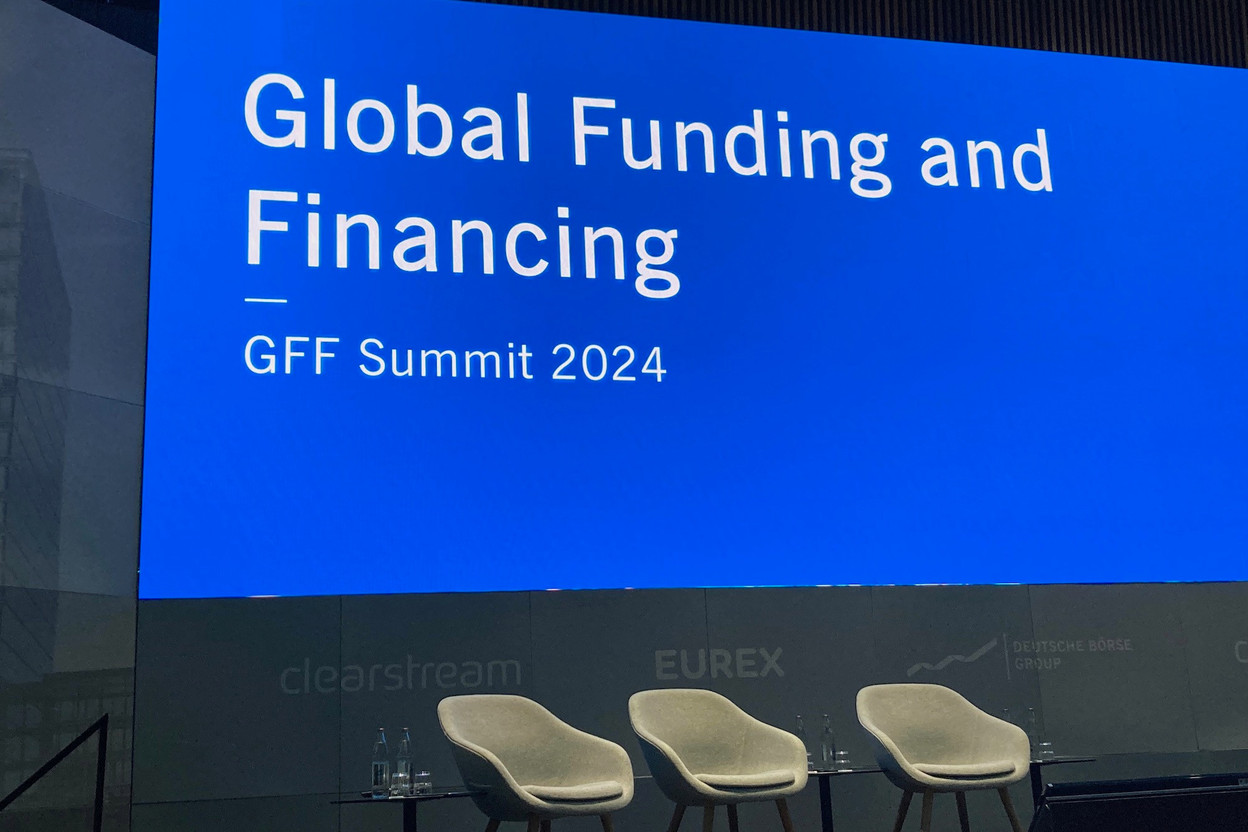
The Deutsche Börse Group conference, which was held under Chatham House rules, suggested as a main theme that the industry is on a wake of a paradigm shift. Yet speaker 1 noted that they believed that 10 years ago the Financial Times reported that gold was used as collateral for security lending trades. Interestingly, it is making a comeback in a new dress: gold tokenisation.
It shows that the diversification of collaterals remains a burning subject in the industry given their perceived scarcity. Speaker 3 observed that whenever there is an appetite by clients to use a specific collateral, it will generally lead to an engagement with the central counterparties (CCP). Speaker 1 said that an interest by market participants for a new collateral generally leads to a regulatory recognition that something must happen to frame new possibilities.
Data is key: what does it mean in reality?
Despite hammering home that data is a crucial aspect in the industry, very little was proposed. After discussing with tri-party and collateral agents, speaker 1 said the focus will be on distributed ledger technologies and interoperability. Furthermore, they are expecting the regulator to jump in as well but observed that “regulators are essentially in catch up mode.”
Challenges for long term investors that need to stay invested
Speaker 2 mentioned that interest rate and inflation risk is generally hedged with derivatives that need to be cleared with cash at CCPs. Given that the derivative clearance requires the maintenance of a significant cash position, the panellist explained that “bilateral trades” are also being used whereby bonds are posted as collateral. It also means that these players must rely on the well functioning of the repo market.
When dealing with CCPs, speaker 2 explained that investors are running not only liquidity risk but transformation risk (selling assets for cash). They stressed the importance for large investors to have all collateral centralised in a single unit and to revisit potential collaterals that have not been used before for an eventual mobilisation.
Speaker 3 noted an increasing trend across the globe, including Europe, that the collateral for CCPs needs to be in the form of cash. They explained that clearing a piece of collateral from the client to the CCP “could take up to 10 hours.” Speaker 3 thinks that shortcomings in their ecosystem may be better served using DLTs.
Progress on the common domain model (CDM)
Speaker 1 explained that the CDM goes beyond on the structure of the trade, the counterparty and the security. It looks at whether the legal documentation is in place, compliance with KYC and links them with a collateral schedule that is applicable to a transaction. The ecosystem surrounding the trade and the collateral is therefore better controlled by the firms.
The same speaker added that some sort of protocol needs to be adhered to, for a successful implementation at different firms. They aimed at standardisation. Yet speaker 1 observed that “there are 20 to 25 different standard setting bodies such as trade associations, regulators,” which are multiplying the standards.
Speaker 1 complained that it is not a standard at the end and therefore “communality should be looked for.” They invited the attendees to join a working group in a showcase that will place on 28 February 2024.
Speaker 1 thought that significant developments generally happen for commercial reasons or to comply with new regulation. As for CDM, they noted that the proof of concept at EU and UK regulators revealed the same positive outcome that may “save the regulators enormous amounts of money in collecting regulatory data.”
Tokenised assets: solving the challenges of mobility?
“You can’t use one of these pieces [token] of technology by itself, it means there’s a whole load of other things that come along. The documentation, the architecture, the risk measurement, counterparties you deal with… there’s lots of different moving parts,” said speaker 1. They seemed to believe that such developments may eventually result into dynamic haircuts.
Not only the tokenisation of gold was discussed. Speaker 2 suggested the tokenisation of liquid assets such as infrastructure. Yet they were concerned about the way auditors may investigate those transactions.
Speaker 3 noted the baby steps in the use of the technology and suggested that larger investments by the industry are required to move quicker. Speaker 2 concurred and expects the benefits to outweigh the cost.
When discussing innovation and collateral expansion, speaker 1 stated that central bank digital currency (CBDC) is being discussed but reported that it is debated even at some central banks.
Under Chatham House rules, individuals can be quoted but they and their affiliation cannot be identified.