Imagine you have locked away your most sensitive secrets behind a door that is double-locked. The first lock is based on mathematics: it is designed to be so complex that no conventional computer could crack it within a reasonable timeframe. The second concerns the key itself: how can you ensure it reaches the right recipient without a third party being able to copy it along the way?
That is precisely what is at stake in cybersecurity in the quantum age.
On the one hand, post-quantum encryption aims to replace current encryption methods with new algorithms capable of withstanding future quantum computers. On the other hand, quantum key distribution, or QKD, focuses on the transmission of the key. In the project being developed in Luxembourg, the key can be established using photons exchanged between a ground-based optical station and a satellite.
The promise lies in a peculiarity of quantum physics: these photons cannot be observed without disturbing them. If someone attempts to intercept the communication, the attempt becomes detectable. The key is then discarded before it is used. In this model, security no longer relies solely on the difficulty of a calculation. It also relies on a physical property: one cannot eavesdrop on the key without leaving a trace.
From Luxembourg to Singapore
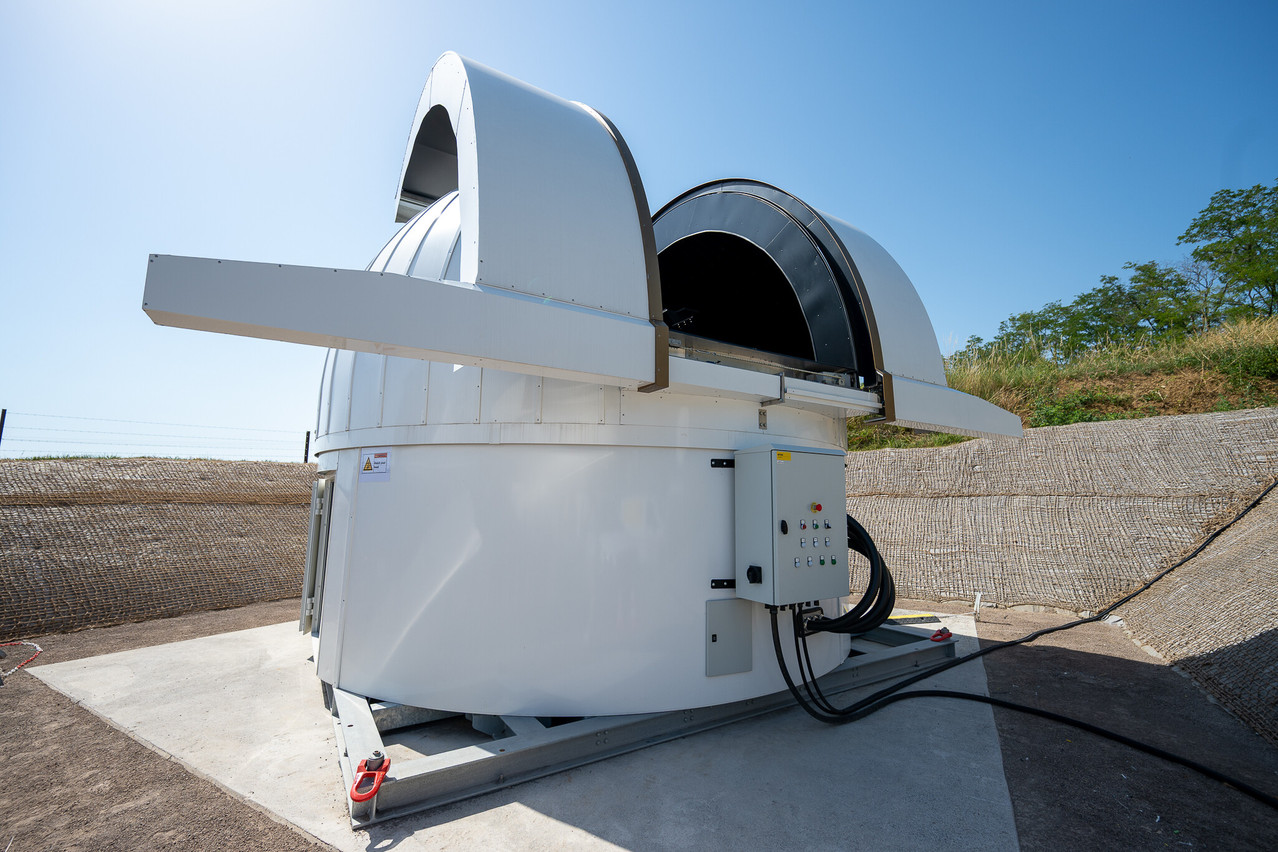
This infrastructure is not just on paper. Unveiled on Wednesday 24 June, under a blazing sun, the ground-based optical station is already in place. It is currently located in Mamer, on the premises of Hitec Luxembourg, before its future relocation to Windhof, at the Post site, offering a horizon better suited to communications with low-Earth orbit satellites. The challenge lies in maintaining an optical link with an object travelling at several kilometres per second, whilst compensating for atmospheric turbulence and the station’s minute movements.
This station is intended to enable Luxembourg to participate in INT-UQKD, which stands for “International Use Cases for Operational Quantum Key Distribution”. Supported by the European Space Agency (ESA), this project aims to demonstrate that a hybrid infrastructure, combining terrestrial and satellite networks, can distribute quantum keys between Europe and Asia.
The consortium brings together a range of complementary skills. Starion, based in Luxembourg, is coordinating the project and its technical integration. Hitec is developing the ground-based optical station. Post is contributing its expertise in telecommunications networks. The SnT at the University of Luxembourg is involved in work on cybersecurity protocols and their validation. Internationally, the Singaporean company Speqtral is supplying the space segment, whilst the Canadian firm EvolutionQ is developing software for the management and orchestration of cryptographic keys.
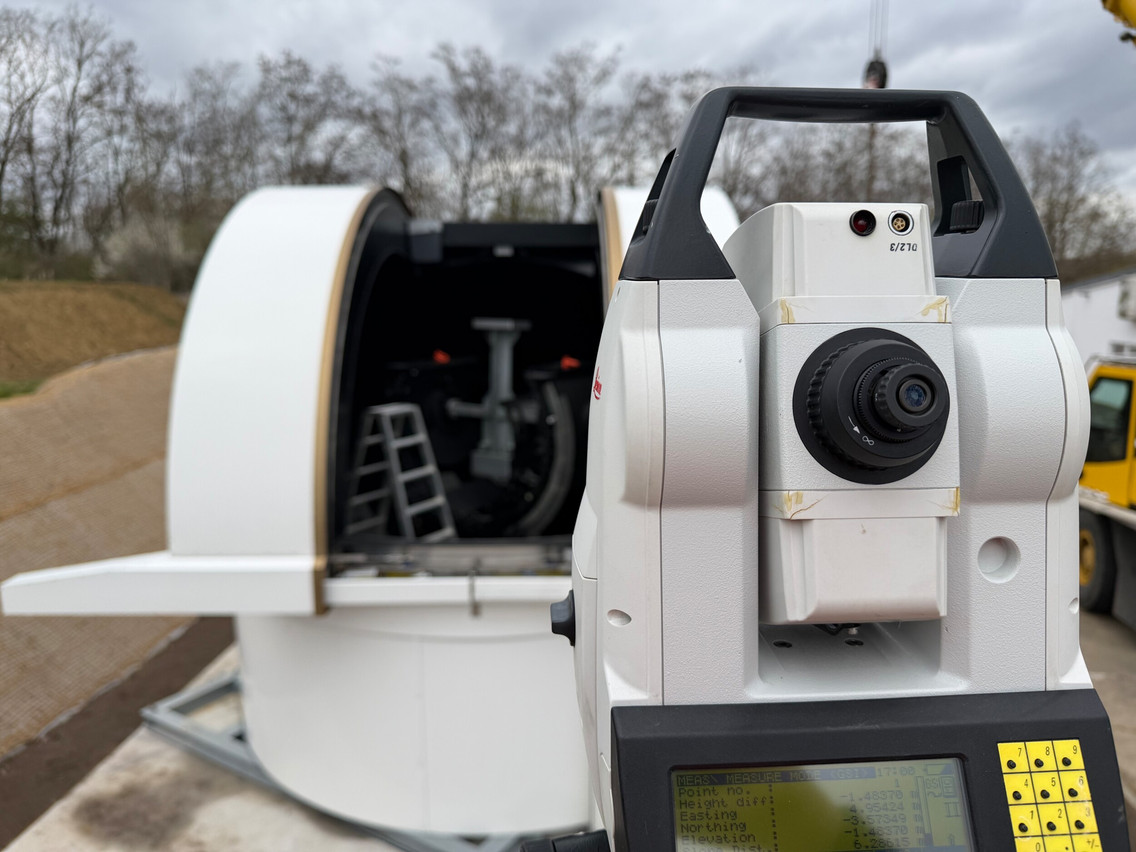
Behind Luxembourg’s infrastructure, projects are taking shape in Luxembourg, Belgium and across Europe, covering sectors ranging from finance to defence. (Photo: Hitec)
The project, costing nearly €20m, is therefore not intended to be a laboratory curiosity. It aims to demonstrate that a key generated via a satellite can be integrated into a real-world telecommunications infrastructure and then used for practical applications: protecting a government department’s communications, securing data exchanges between two data centres, strengthening a telecoms operator’s networks, or safeguarding certain transactions carried out by a financial institution.
However, the operation is still constrained by the laws of physics, the satellite’s orbit and the time available. With Speqtral’s satellite, quantum key distribution is only possible during a window of a few minutes whilst the satellite is passing over the station. The future Eagle-1 satellite is set to provide Europe with a second option and a more robust foundation for space-based QKD. Led by SES Techcom in collaboration with the ESA, the European Commission and a consortium of European companies, Eagle-1 aims to demonstrate quantum key distribution from low Earth orbit to European ground stations. For Luxembourg, the challenge is twofold: to maintain its involvement in the intercontinental demonstrator with Speqtral, whilst also becoming part of the future European infrastructure.
A backbone linking the optical stations
This momentum is not confined to INT-UQKD. Another programme, TransEuroOGS, aims to help link and harmonise ground-based optical stations across Europe, with the participation of Germany, Greece, Ireland and Luxembourg. This backbone illustrates the shift from a proof-of-concept approach to an infrastructure-based approach. The aim is no longer simply to establish a successful link. It is to ensure that several stations are compatible with one another, capable of working with missions such as Eagle-1 and of integrating into the European EuroQCI architecture.
Luxembourg is thus part of a network that extends far beyond its borders. Fibre-optic cables remain suitable for local or regional communications. Satellites become necessary as distances increase. The photons used to establish a quantum key are fragile. In a fibre, the signal weakens as the distance increases. However, unlike conventional networks, it is not possible to simply copy or amplify a quantum state without disturbing it. For long distances, space offers a solution: the signal travels through the atmosphere for a limited portion of the journey, then travels through a vacuum.
This architecture does not, therefore, replace existing networks. It complements them. Local communications can continue to be carried over fibre. Intercontinental connections can rely on satellites acting as relays between two secure networks. Luxembourg is not seeking to build everything on its own. It is aiming to become a specialised component within an international infrastructure where space, telecommunications, cyber security and software converge.
The defence watches, waits and hopes
This is what gives the project its economic significance. Since SES, the Grand Duchy has learnt to make its mark in the space sector without possessing the industrial scale of the major powers. It does not manufacture the entire supply chain. Instead, it positions itself in high value-added segments by attracting or mobilising operators, integrators, research laboratories and companies capable of working together. Quantum communications extend this approach. They do not merely require satellites; they also demand ground stations, fibre networks, key management software, protocols, certification, maintenance and integration with existing infrastructure.
This is also what gives the subject a strategic dimension. The first applications will probably target organisations for which confidentiality must be maintained over the long term: governments, armed forces, operators of critical infrastructure, banks, data centres, industry and the healthcare sector. In these sectors, certain information must remain protected for years, sometimes for several decades. Data that is encrypted today could be stored and then decrypted tomorrow if computing power advances sufficiently.
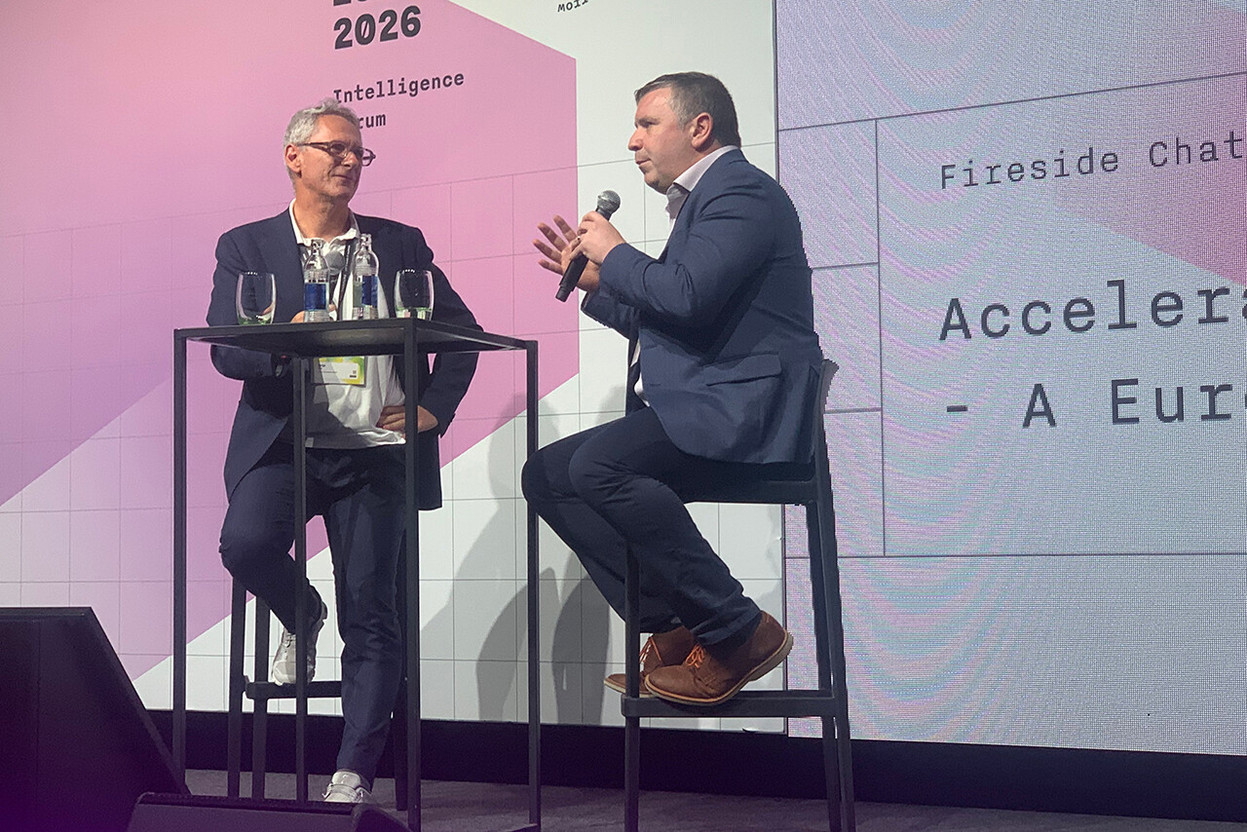
This topic, which has so far been envisaged for the financial sector, is also of interest to the defence sector. However, military applications are subject to constraints that are very different from those in the private sector. “We work with classified information. The technology must be approved by a national security authority. Until then, it is impossible to use it in a classified environment,” explained a representative from the ministry of Defence. The issue is, therefore, not limited to technical performance. To gain access to defence networks, a solution must undergo security validations, personal clearances, infrastructure certifications and meet requirements specific to classified environments. “In the private sector, if you work with banks, for example, you don’t have these constraints. [But in defence], the bar is set very high,” summarised the speaker.
A conference on quantum computing and defence in November
Luxembourg also wishes to place this work within a broader context. A conference on quantum technologies in the defence sector is due to take place on 25 November. It will address their impact on military operations, as well as the links between detection, communication and computing. The message is important: quantum technology is not a silo. Sensors, secure networks and computing capabilities all form part of the same ecosystem.
This approach explains why the issue goes beyond data protection alone. Quantum technologies could, in the long term, improve the detection of submarines, the identification of hard-to-detect aircraft, navigation without GPS, the simulation of battlefields, the development of new materials or the optimisation of complex systems. In this context, technological mastery also becomes a deterrent.
“It is better to develop these technologies and master them before others do,” argued the speaker. In his view, potential adversaries will not wait for democracies to have resolved all their ethical issues before investing in these tools. The response, he continued, must involve policies that comply with international law. On the subject of weapon systems incorporating artificial intelligence, he reiterated that Luxembourg’s position must remain in line with international humanitarian law.
Balance of power
This phrase aptly captures the tension of the moment. Quantum technologies are not merely tools for protection. They can also shift the balance of power. Whoever controls the most secure communications, the most accurate sensors or the most advanced simulation capabilities does not merely possess a technological advantage. They also hold strategic leverage.
The Hitec station, its relocation to Windhof, the trials with Speqtral, the Eagle-1 project and investments in European optical stations do not, on their own, resolve these challenges. They represent milestones. Quantum communications will still need to prove their reliability, reduce their costs, establish standards, win over customers and integrate with post-quantum encryption. The two approaches are not in competition with one another. They address different needs and should coexist in the security architectures of the future.
But the process is already underway. Having used satellites to transmit data, Luxembourg now wants to help distribute what protects them: the cryptographic keys themselves. The “keys to the sky” are not merely a figure of speech. They refer to an infrastructure currently being built, spanning Mamer, Windhof, Singapore and low Earth orbit. In this context, the Grand Duchy does not claim to be single-handedly inventing the cybersecurity of the future. Rather, it is seeking to occupy a specific role in the chain: that of a country capable of linking space, telecoms, research, defence and economic applications. It is less spectacular than a national quantum computer or a satellite built entirely in Luxembourg. But it is perhaps more realistic.