The elephant had remained on the EY forecourt.
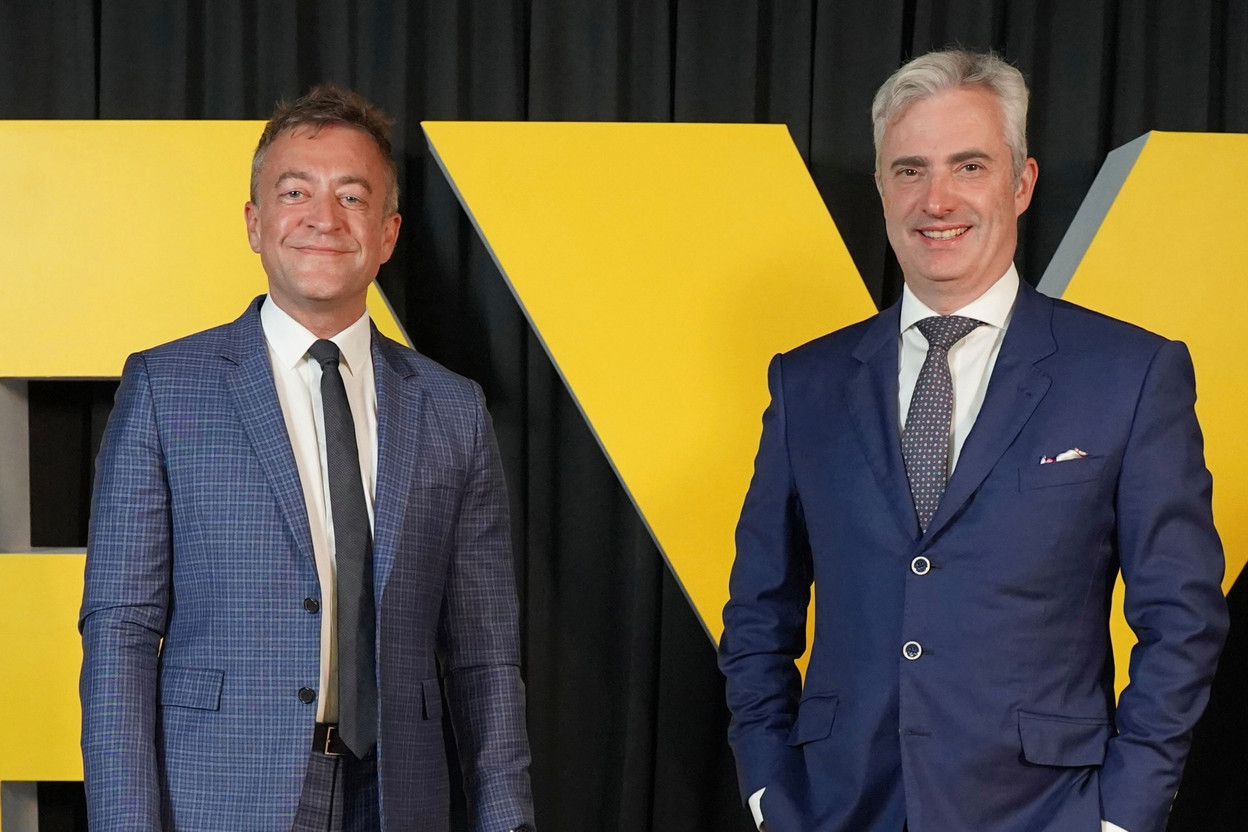
One of the eight original “Triumphant Elephant” sculptures by Salvador Dalí welcomed guests on Thursday evening as they arrived to discover the latest edition of “Investment Funds in Luxembourg”, the “fund bible” published by the firm for over thirty years. Inside the hall, another elephant awaited 
The question was put directly to the director of the regulator. The financial sector continues to talk about applications that used to be processed more quickly and about market entry times that are said to have lengthened. Can artificial intelligence help the CSSF regain its efficiency?
“Thank you for that question, which is obviously intended to be provocative for the sake of the evening,” replied Jean-Pierre Faber. He then challenged the assessment: “We need to distinguish between perception, complexity and actual processing time.”
The director of the CSSF then asked participants to raise their hands to estimate the regulator’s processing times. Almost no one thought that a case could be dealt with in less than three months. Only a few hands were raised for a timeframe of less than six months. “Perception is the problem,” he concluded.
Three out of four cases in less than six months
According to the figures presented by Jean-Pierre Faber, 40% of applications received by the CSSF are processed within less than three months, and a further 35% within three to six months. In other words, three out of four applications are resolved within less than half a year. The remaining 25 per cent take longer.
The CSSF publishes its statistics on initial authorisations for regulated investment vehicles every six months. The data covers applications finalised since 1 January 2020 for UCITS funds, specialised investment funds and collective investment undertakings falling under Part II of the 2010 Act. In particular, it excludes amendments to existing funds, the addition of sub-funds, SICARs and certain atypical cases. The latest figures published are as at 30 June 2026.
The timer used by the CSSF does not merely measure the work carried out by its own staff. It also records the time during which the file remains with the applicant, whilst awaiting documents, corrections or replies. Jean-Pierre Faber has compared it to a chess clock: the timer switches sides every time the CSSF returns the file to the applicant.
For applications finalised in under three months, the regulator accounts, in his view, for 55 per cent of the total time, compared with 45% for the applicant. For applications taking between three and six months, the breakdown is reversed: 40% of the time is attributable to the CSSF and 60% to the applicant. For applications taking longer than six months, the applicant accounts for 75% of the time taken.
“The applications processed most quickly are ‘the best prepared, the clearest and the best documented,” emphasised Jean-Pierre Faber. They were sometimes prepared with the help of professionals able to provide the regulator with the information needed to understand the project and give the go-ahead.
The 12 layers of ownership: a cumbersome relic of the past
The tone is becoming harsher for the others. “Cases that take longer are more complex,” the director acknowledged. But, in his view, not every instance of complexity warrants the regulator devoting more resources to it. He singled out, in particular, structures involving “12 layers of ownership” before reaching the ultimate beneficial owner: “Frankly, in this day and age, that’s not what we want to be doing. If you want to do that, go to another country. Luxembourg doesn’t want it.”
Nor does the CSSF wish to keep having to correct the work of the advisers or teams submitting an application. “We are not here to teach your lawyers or staff how to document an application correctly,” said Jean-Pierre Faber. “If we have to spend so much time reviewing your files and explaining to you what is wrong, there comes a point where we have to say no.”
This is where artificial intelligence must change the process. Jean-Pierre Faber does not promise to delegate the approval decision to a machine. The tool is designed to assist teams in reviewing documents, to check more quickly whether they comply with a series of control points, and to identify applications that are too incomplete to warrant a thorough examination.
AI to speed up the return of incomplete files
“Artificial intelligence assists us in the review process. It does not replace our responsibility,” he explained. However, it should enable a faster and more decisive response: where an application fails to meet a significant proportion of the requirements, the CSSF will be able to reject it and ask the applicant to start the process again from the beginning. “Come back when the application is acceptable to us,” the director summarised.
This use of AI did not begin in 2026. As early as 2019, the CSSF had entered into a partnership with the SnT at the University of Luxembourg to automate part of the verification process for fund prospectuses. The project was designed to extract information from prospectuses, check them for compliance, completeness and consistency, and then direct experts to the sections requiring human analysis. Jean-Pierre Faber stated at the time that 95 per cent of the information contained in the 40,000 prospectuses already processed was standardised.
The next step, therefore, is not simply to process admissible applications more quickly. It must also bring the process for unsound applications to a quicker close. The CSSF has already publicly warned that delays may result from missing documents, incomplete submissions or substantial changes made to the project during its review. It recommends submitting only applications whose scope is finalised and whose content is complete.
On Thursday evening, in his former office, Jean-Pierre Faber did not claim that artificial intelligence would cause the elephant to disappear. He announced that the regulator would stop feeding it sooner.