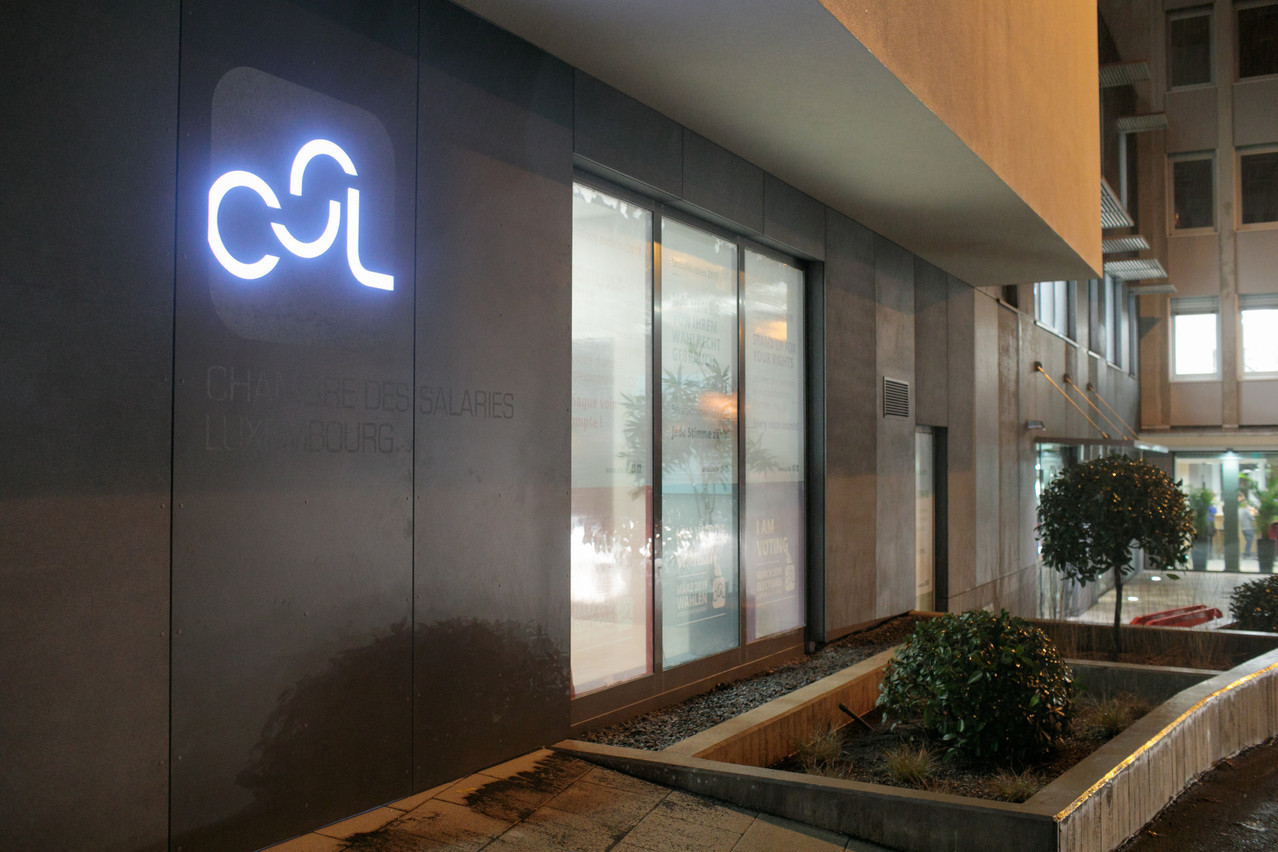
The Chamber of Employees (CSL) is withdrawing from the High Committee for the Attraction, Retention and Development of Talent, in operation since June 2024. This clear-cut decision marks a new episode in the tensions surrounding Luxembourg’s attractiveness policy and the way it is being steered. The institution does not question the objective. Attracting and retaining skills remains, in its view, a necessity for the Luxembourg economy. But the CSL believes that the direction taken by the committee’s work no longer guarantees “balanced institutional consultation”, in a press release published on Friday 13 March. In these circumstances, it prefers to withdraw rather than endorse a process that it now considers to be unbalanced.
The breaking point concerns in particular the setting up of the Talent Desk, an office designed to support international talent. This is to be set up within the House of Entrepreneurship and placed under the responsibility of the Chamber of Commerce. This is a configuration that CSL had been contesting for several months. It had argued in favour of a neutral institutional framework and believes that entrusting this scheme to employers’ organisations poses a problem. "Entrusting the management of a one-stop shop intended mainly for private-sector employees to employers’ organisations raises a risk of conflict of interest", explains the press release, particularly when it comes to providing information on employment law or social security.
Open to discussion
The Employees’ Chamber regrets not having been involved in the decision-making process that led to this decision. Beyond this institutional disagreement, it also criticises the general direction of the committee’s work. In its view, the discussions place ‘too much emphasis on tax incentives for certain categories of expatriates’. This approach is considered too narrow to address the challenges facing the country’s attractiveness. The Chamber believes that other factors should carry greater weight in the equation, starting with working conditions and the situation of cross-border workers.
The subject is a sensitive one. Luxembourg’s economy is heavily dependent on cross-border workers, who represent an essential part of the workforce. In this context, the CSL is concerned about differential tax treatment between cross-border commuters and impatriate employees. The Grand Duchy, it underlines in the background, cannot afford to pit these two categories of workers against each other when it needs both to keep its labour market moving.
Despite this withdrawal, the CSL is not completely closing the door on the debate. It says it wants to continue to contribute to a “balanced and sustainable” attractiveness policy. The fact remains, however, that its departure from the High Committee weakens a little further a mechanism that was supposed to unite the players around the battle for talent, which has become one of the country’s major economic challenges.