Behind every Lët’z product are jobs, expertise and businesses that contribute to the country’s economic vitality.

It all starts with a simple conviction: when a product can be grown, manufactured or processed in Luxembourg, why source it elsewhere? This is a fundamental pillar of sustainable development.
For several years, La Provençale has built its “Be Lokal” approach around this principle. Behind this philosophy lies a concrete ambition: to strengthen the country’s economic and food autonomy, support local producers, and develop new value chains capable of generating long-term value within Luxembourg.
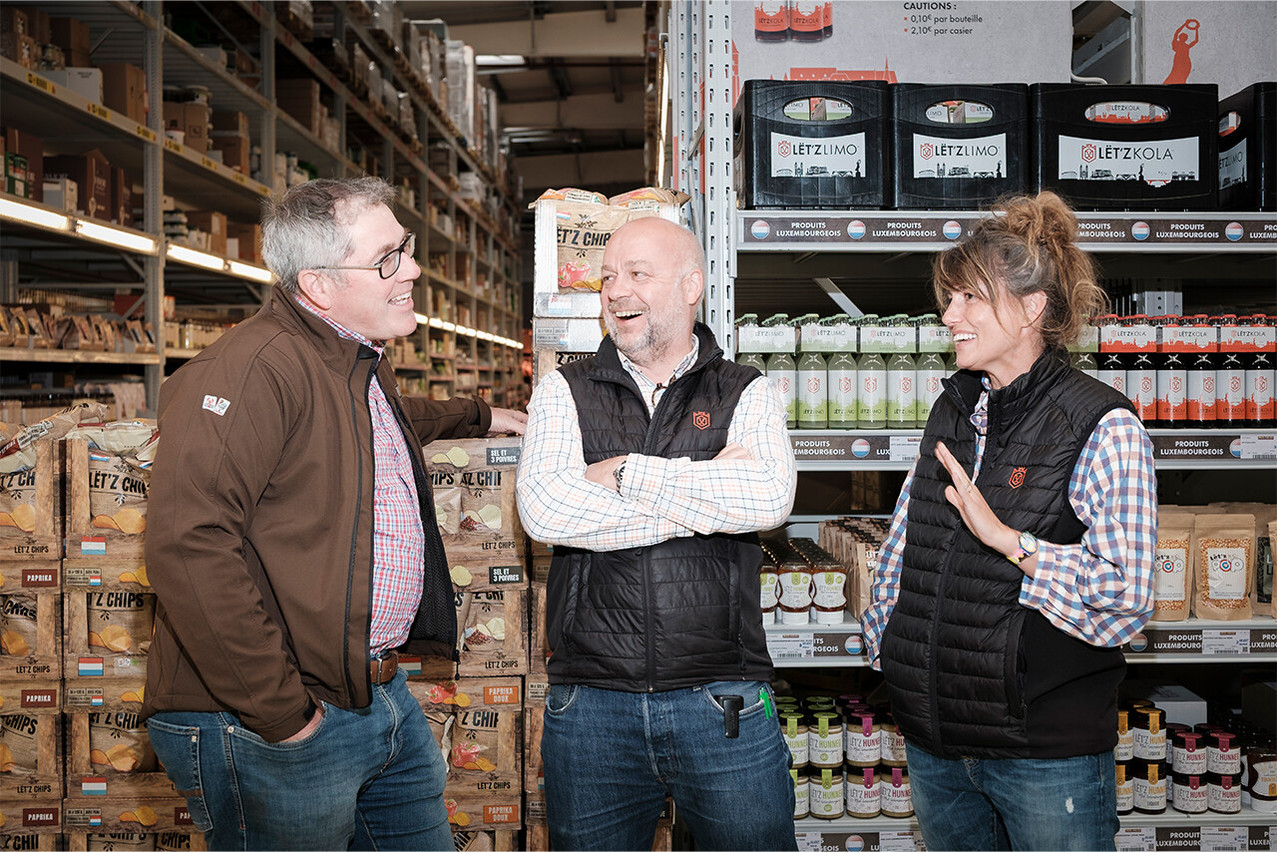
The Lët’z brand was born from this vision. Every product developed responds to an identified need and a local production opportunity. More than a food range, Lët’z has become a genuine ecosystem bringing together more than 1,100 Luxembourgish producers. “Our objective is not simply to market local products. We want to create sustainable outlets that enable producers to diversify their income streams and secure their business activities over the long term,” explains Georges Eischen, Managing Partner of La Provençale. This partnership-driven approach is reflected in a strong commitment from the Leudelange-based company: guaranteeing the purchase of the entire output of its partner family farms.
This approach first led to the creation of Lët’z Frites. A few years later, when Georges Eischen realised that no Luxembourg-made potato chips could be found on supermarket shelves, the idea of producing Lët’z Chips became an obvious next step. The example of Marc Nicolay, a farmer based in Fingig, perfectly illustrates the multiplier effects of this initiative. Starting with a modest half-hectare potato crop in 1999, he gradually expanded his production to supply the chips and fries value chain. Today, nearly 300 hectares are under cultivation, including 170 hectares dedicated to La Provençale. The Luxembourg-grown potatoes destined for aperitif consumption are processed using the traditional “kettle-cooked” method, ensuring premium-quality chips with an authentic taste.
The same logic of creating a fully local consumer product later led to the launch of Lët’z Kola and Lët’z Limo. Observing the absence of a soft drink produced entirely in Luxembourg, La Provençale and Brasserie Simon decided to combine their expertise and take up the challenge. To bring the project to life, Betty Fontaine, owner of the Wiltz-based brewery, invested €1.5 million in new production and pasteurisation equipment. The result is a range of beverages made exclusively from natural ingredients, free from artificial colours and flavourings, and packaged in a returnable bottle system.
Beyond the products themselves, the initiative forms part of a broader environmental commitment. Reusable packaging, short supply chains and reduced transport distances all help significantly lower the carbon footprint of the value chain.
Today, the Lët’z range comprises 27 products and continues to expand. The original marketing strategy supporting its sales growth remains fully aligned with the terroir-based values it promotes. Under the emblem of the Roude Léiw (the Luxembourg Red Lion), local tourist destinations are highlighted through the packaging design. This strong identity is also expressed through a sustainable streetwear collection featuring the stylised lion.
The growing figures reflect a broader reality: when entrepreneurs, producers and processors work together around a shared vision, local production becomes a genuine growth driver. Consumers, meanwhile, are not simply enjoying a premium taste experience; they know they are directly supporting the economy, autonomy and agriculture of the entire country.
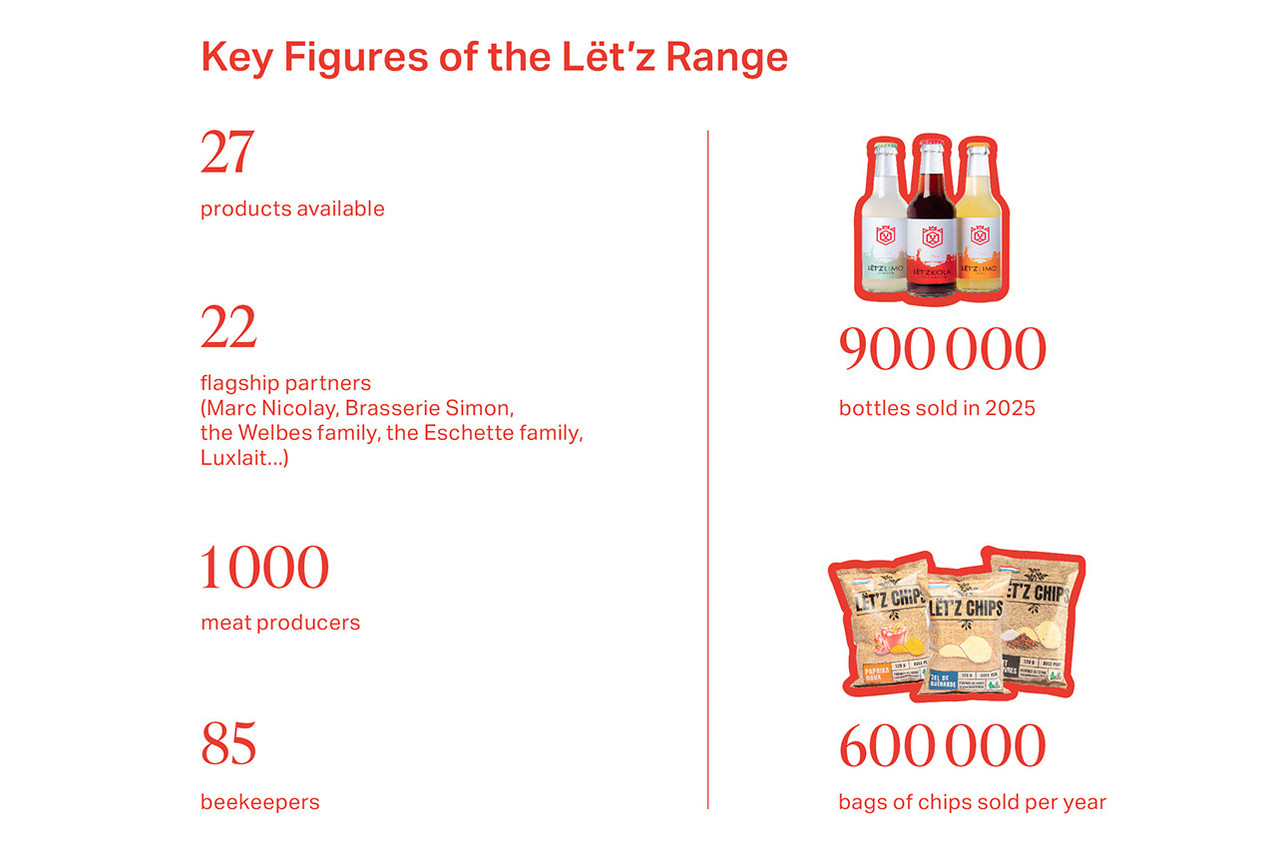
Key figures of the Lët'z range Paperjam