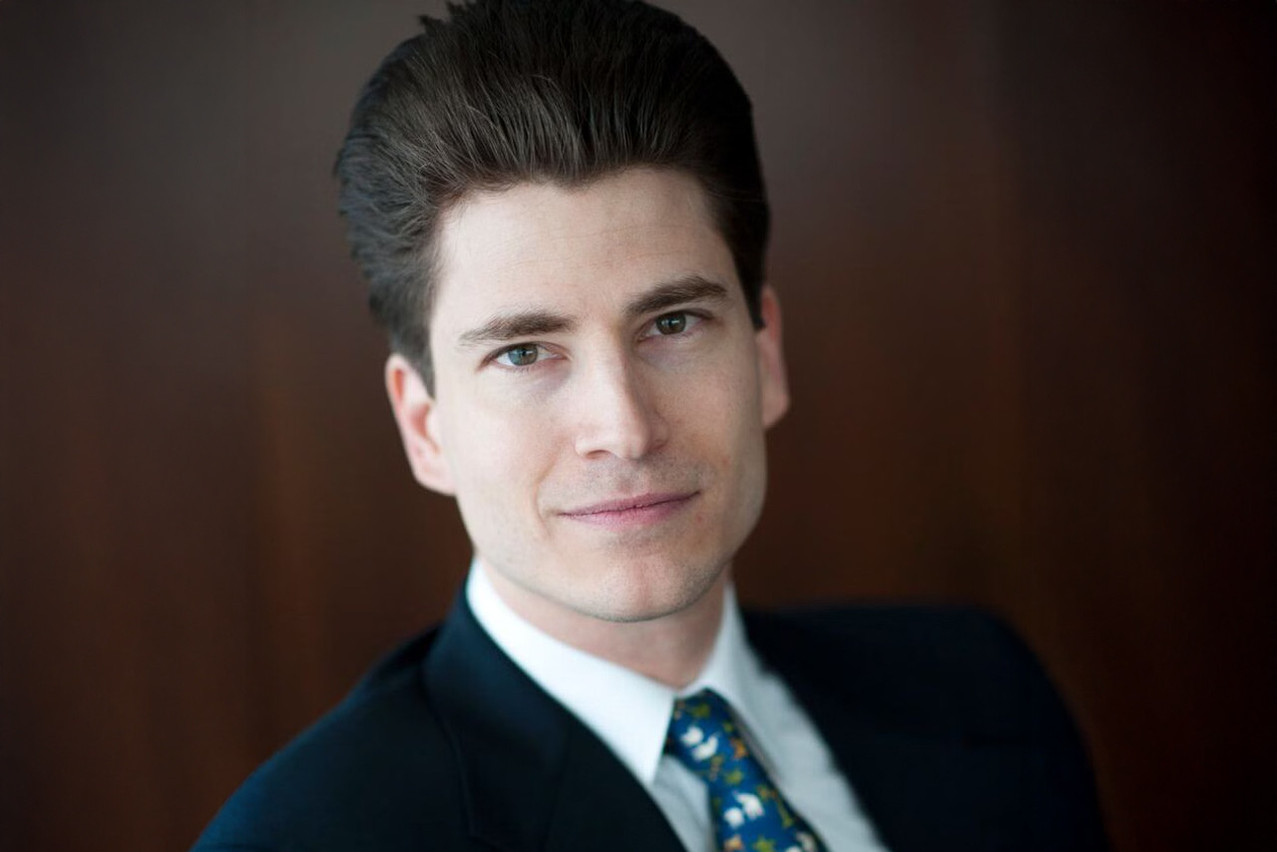
Discreet but open, the Swiss financial centre continues to embody stability and excellence, despite the end of banking secrecy and the demise of Credit Suisse. For the director of the Association of Swiss Private Banks (ABPS), Jan Langlo, Switzerland remains the world leader in wealth management, while Luxembourg is asserting itself as its natural partner in the field of funds and sustainable finance.
ABPS, Swiss financial centre, banking secrecy
Has the end of banking secrecy transformed Geneva as a financial centre?
Jan Langlo. – “Not really. Geneva remains a stable, personalised place of excellence. Clients haven't left: they've regularised their affairs and stayed, because it's reassuring to keep part of your assets in Switzerland. This image of reliability and security has not disappeared. Discretion remains a core value - not just in law, but in culture. Banking secrecy still exists: the article of the law that provides for it has not changed. A bank employee cannot talk about what he or she learns in the course of his or her work, either to friends or colleagues. This legal framework of confidentiality comes on top of a broader, deeply Swiss discretion: here, even well-known personalities can live undisturbed.
Is Switzerland still the world leader in cross-border wealth management?
“Absolutely. Switzerland is still by far the world leader. Some rankings place Hong Kong at the same level, but they are comparing different things: private cross-border assets in Switzerland, around 2,400 billion, are not the same as the institutional assets included in Hong Kong. If these are taken into account, Switzerland has around 4,200 billion under management. This position is due to our expertise, the country's political stability and legal certainty.
How do we maintain this advantage against competitors such as Luxembourg, Singapore or New York?
“By remaining focused on our core business and practising it at the highest level. Switzerland does not have a huge domestic market, so it is naturally open to the world. Our clients know that they can invest in any currency, on any market and in any financial product. Singapore and Hong Kong are growing fast, but only because wealth is increasing faster in those regions. We, on the other hand, rely on consistency, quality of service and risk control.
The absorption of Credit Suisse by UBS marked recent financial history. What lessons have you learned from it?
“This is a very sad episode. The demise of Credit Suisse does not reflect a failure of the Swiss financial centre, but of a single bank, the victim of repeated management errors over many years. The Swiss system as a whole stood firm. Many Credit Suisse clients remained in Switzerland, but transferred their assets to other banks. The private and cantonal banks saw new clients arrive, but did not approach them. This shows that confidence in Switzerland as a business location has not been shaken.
We are not members [of the EU] and do not wish to become members. But it is essential to have stable relations with our main economic partner.

Is Switzerland still attracting talent?
“Yes, very much so. Thanks to free movement with the European Union, Swiss banks can recruit easily. The country's quality of life, security and stability are considerable assets. Quotas apply to talent from outside Europe, but rare profiles are sought after and well integrated. Swiss finance remains an attractive employer: salaries are competitive, but it is above all the working environment and international reputation that appeal.
How do you view the work of the regulator, Finma?
“Finma plays an essential role, but its approach has changed. Its new director comes from the European Central Bank and brings with him a more interventionist supervisory culture, very different from the Swiss tradition. This choice is understandable: after the Credit Suisse crisis, we needed a regulator capable of standing up to UBS. But proportionality remains a challenge. Small banks suffer from an excess of administrative constraints: ratio calculations, repeated reports, little-read publications that do little for the customer. A small bank has no systemic impact on the market, yet it must comply with numerous obligations, just like the big banks.
The former head of Finma, now head of Bafin in Germany, wants to introduce a lighter regime for small German banks, inspired by the Swiss model. This is proof that the balance between rigour and proportionality is a real issue for the whole of Europe.
Switzerland remains outside the European Union. Is this an advantage or a hindrance for the financial centre?
“We are not a member and do not wish to become one. But it is essential to have stable relations with our main economic partner. The Bilateral Agreements have provided a framework for these relations for 25 years, and their update - the 'Bilaterals III' - is currently being discussed in Switzerland. It's like a software update: we need to adapt the framework so that the agreements continue to work.
The two models are complementary: clients deposit their assets in Switzerland and then invest in products domiciled in Luxembourg.

At present, our banks are not allowed to actively approach and serve European clients. To do so, they have to go through branches in the Member States. But customers want an account in Switzerland. We therefore support a so-called "institute-based" approach: each Swiss bank could, on a voluntary basis, adopt certain European rules and be supervised by an EU authority in order to gain greater access to the European market. This model already exists in the United States. It would make it possible to strengthen financial ties while respecting our sovereignty.”
Switzerland and Luxembourg, complementary strengths
What do you think are the main strengths of Luxembourg and Switzerland?
“They are two solid places, but with different models. Luxembourg is agile, responsive and at the forefront of funds and sustainable finance. It has also benefited greatly from the presence of Swiss banks, which have set up structures for their funds here. Finance accounts for around 23.5% of Luxembourg's GDP, compared with 9% in Switzerland, so political attention is naturally higher there.
Switzerland, on the other hand, remains the global benchmark for private wealth management: cultural proximity, stability, currency diversity and quality of advice. Luxembourg is attractive because of its European framework, fund taxation and regulatory expertise. The two models are complementary: clients deposit their assets in Switzerland and then invest in products domiciled in Luxembourg. The Swiss financial centre is doing well and will continue to do well, provided we avoid any major blunders, especially political ones. And, of course, we want Luxembourg to do well: it is in the interests of both our markets to remain complementary.
Is Switzerland behind the curve on sustainable finance?
“No, but it has chosen a more demanding approach. We have revised the definition of sustainable funds: from 3,000 billion in announced assets, we have gone back to 1,800 billion, because we have excluded products that did not meet credible criteria. Luxembourg leads the way in terms of volume, but above all because it hosts more funds in all categories. Switzerland remains attentive to the quality and comparability of ESG data. The big issue is transition labels: supporting companies that are improving, rather than excluding those that are still polluting.
How is Switzerland promoting its financial centre internationally?
“It also depends on the politicians. Under Federal Councillor Ueli Maurer, promotion was very active: he travelled a lot, to Asia, the Middle East and Latin America, to support Swiss finance. His successor, Karin Keller-Sutter, had to deal with the Credit Suisse crisis, which logically changed priorities.
Today, the SIF remains committed, and the Swiss Bankers Association is working with Switzerland Global Enterprise, the agency that promotes the Swiss economy abroad, to raise the profile of our financial centre. But it is true that Switzerland lacks an institutional structure equivalent to Luxembourg for Finance. Luxembourg has succeeded in bringing together under a single public-private label the promotion, coordination and international visibility of its financial ecosystem. It's a model that we observe with interest: it gives a coherent and legible image of the financial centre. In Switzerland, promotion remains more fragmented between cantons, associations and federal authorities.
What is the role of the SIF in this strategy?
“The State Secretariat for International Financial Matters (SIF) plays a central role. It coordinates relations between the Confederation, Finma, the Swiss National Bank and foreign partners. The SIF is our main point of contact for European and international issues, from tax agreements to sustainable finance and innovations such as stablecoins. We have an excellent relationship with the SIF: it is a discreet but highly effective player that ensures the competitiveness of the financial centre while guaranteeing its integrity.”