Luxembourg’s parliament debated the monitoring of surgical outcomes during a plenary sitting on Thursday evening, 22 January, sharpening political sensitivities around patient safety and institutional trust.
The debate took place as media coverage focused on an orthopaedic surgeon at Hôpitaux Robert Schuman who was internally suspended following allegations of unnecessary knee operations. The case remains under procedure and is subject to the presumption of innocence.
Legal response
The surgeon has rejected the allegations through his lawyer, who said in a statement dated 23 January that the health minister’s decision to suspend his client from performing operations constituted a serious breach of rule-of-law principles. The lawyer argued that the measures were arbitrary and disproportionate, based on anonymous denunciations lacking factual precision, and announced that the decision would be challenged before the administrative court, while stressing that the presumption of innocence must apply as the case remains under investigation.
The debate itself was not formally about the case in question, which remains under investigation and is subject to the presumption of innocence. Instead, MPs focused on whether the health system is sufficiently equipped to detect medical risk early, and whether existing evaluation tools should be strengthened without undermining confidence in a system the government insists is fundamentally sound.
Former health minister Paulette Lenert (LSAP) brought the issue to the floor through a motion calling for faster implementation of outcome-evaluation mechanisms already referenced in the national health plan. Her intervention was framed as institutional rather than punitive, emphasising system design over individual responsibility.
Trust and outcomes
She presented outcome evaluation as a preventive tool rather than a reaction to current events, stressing that patients want to know “whether what was done had a purpose and whether you get better afterwards”. Such mechanisms, she argued, are intended to reinforce confidence by making treatment effects more transparent over time.
Several opposition MPs echoed that view, backing the use of patient-reported outcome and experience measures alongside clinical data. Orthopaedics and ophthalmology were cited as fields where international experience already exists, particularly as more procedures are performed outside traditional hospital settings.
Members of the governing majority were more cautious. They warned that patient-reported indicators can be influenced by non-medical factors and risk oversimplifying complex clinical realities if used as oversight tools in isolation.
Government response
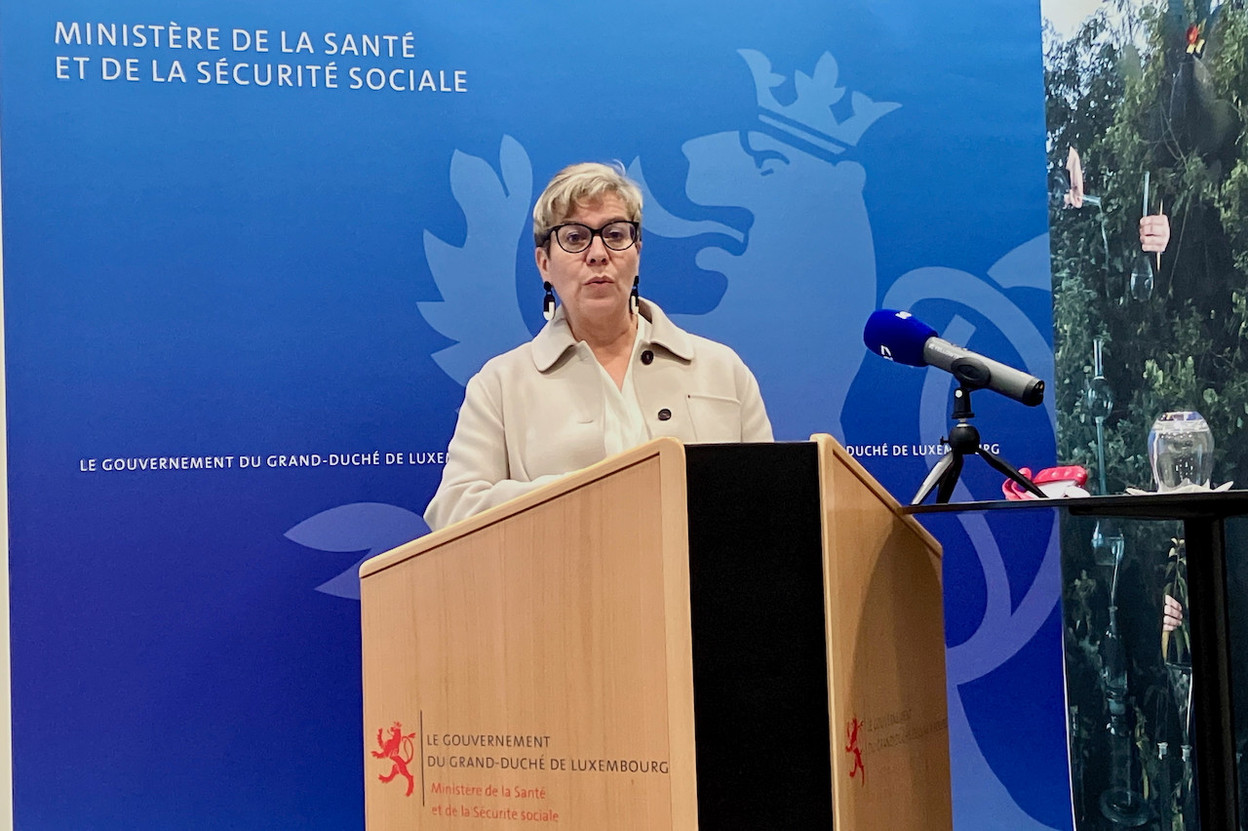
Martine Deprez, minister of health and social security (DP), rejected any suggestion that the media reports point to a systemic failure. “This individual case is not a symptom of a system,” she said, cautioning against drawing broader conclusions from a case still subject to legal scrutiny.
Deprez defended the overall performance of Luxembourg’s healthcare system, citing international benchmarks, while acknowledging limits in the data currently available to assess quality comprehensively. “We do not yet have enough data,” she said, to support system-wide outcome analysis at the level some MPs were advocating.
Rather than accelerating patient-reported measures, the government pointed to plans set out in the coalition agreement to establish a Centre of Medical Excellence, designed to centralise structured treatment data and allow for more systematic evaluation across hospitals, clinics and practices.
The motion was ultimately rejected by the governing parties. While the vote closed the immediate parliamentary sequence, the debate underscored a question likely to resurface: how to strengthen early warning mechanisms in healthcare without weakening public trust in institutions already under pressure.