Naked. Naked as a worm. Summer or winter. Wind or snow. When a European enters the United States today, there’s virtually nothing the American authorities don’t know about him or her. Before even taking off from the Findel, the traveller has already given, disciplined or pragmatic, his full identity, date of birth, passport details, communicable diseases posing a risk to public health, arrests and convictions for certain crimes, history of visa revocation or deportation and even his social networks. To obtain his Esta, he will need a credit card, so he will also give his credit card details. Beware of anyone tempted to conceal anything, because by this time the American authorities have already checked their Terrorist Screening Database (TSDB), DHS/CBP, FBI and State Department, as well as certain Interpol databases. Three days before departure, the airline will also have provided at least all the information in its possession since the customer’s reservation: itinerary, contact details, method of payment. When the traveller arrives at the airport, the Americans add fingerprinting and biometric data.
Every day, the Department of Homeland Security examines the data of more than 2 million travellers on its passenger screening systems. But as the US administration integrates more and more technology, it is methodologically developing an algorithmic sorting of those entering the United States, with very early warnings of "problematic" cases. And it wants to go much further in accessing European data - whether at European or Member State level.
European attractiveness, American annoyance
To what extent is the government involved in the negotiations concerning the extension of the visa waiver programme with the United States? Can Ministers give details of the Government’s position on these negotiations? Do the ministers have more detailed information on the databases to which the US authorities are demanding access so that EU countries can continue to be part of the Visa Waiver Programme?" ask the two Green MEPs Djuna Bernard and Meris Šehović.
There was no discussion at the General Affairs Council on 16 December, which was attended by the head of diplomacy, 
The text, prepared a month earlier by the General Secretariat of the European Council, did not explicitly provide for the automation of checks, or even their exclusion. Instead, it provides for transatlantic cooperation in strict compliance with the RGPD, the Police/Justice Directive 2016/680 and the European AI Act. The question from our two MPs should not be what the government is doing, but how it intends, once the European Union has given the Americans access to highly sensitive data, to ensure that the data is not kept in their databases and used in a context other than the trip. Because the negotiating framework provides precisely for such re-use - which raises questions in the context of the AI Act - to combat irregular migration, prevent serious crime or combat terrorism. The negotiating framework is already outside the box, since proportionality and all the fine values around these data exchanges disappear even before an agreement.
And what will this change for access to the Visa Waiver Program, in place since 2000? It won’t. And why is that? Because the European Union has already started to launch its own external border control tools, which have also already provoked a reaction from its American counterparts. For example, Washington has asked that its military and NATO personnel be exempted from the identification systems currently being deployed. "Don’t panic: they’re not concerned", was the basic response from the Presidency of the European Council, which nonetheless offered a bold little "that said, our diplomats have to undergo all the checks in your country"...
You don’t have to go to the United States to be exposed....
What makes this debate somewhat surreal is that the European Union is itself in the process of building a technological architecture very similar to that which it criticises in the United States. For some years now, Brussels has been developing a system for interconnecting databases relating to visas, asylum, security and border controls. The Schengen Information System (SIS), the Visa Information System (VIS), Eurodac - the biometric database for asylum seekers - as well as the new Entry/Exit System (EES) and Etias should gradually function as an integrated whole. The project is based on what European regulations call "interoperability": the ability for a border official or security authority to query several databases simultaneously in a single search.
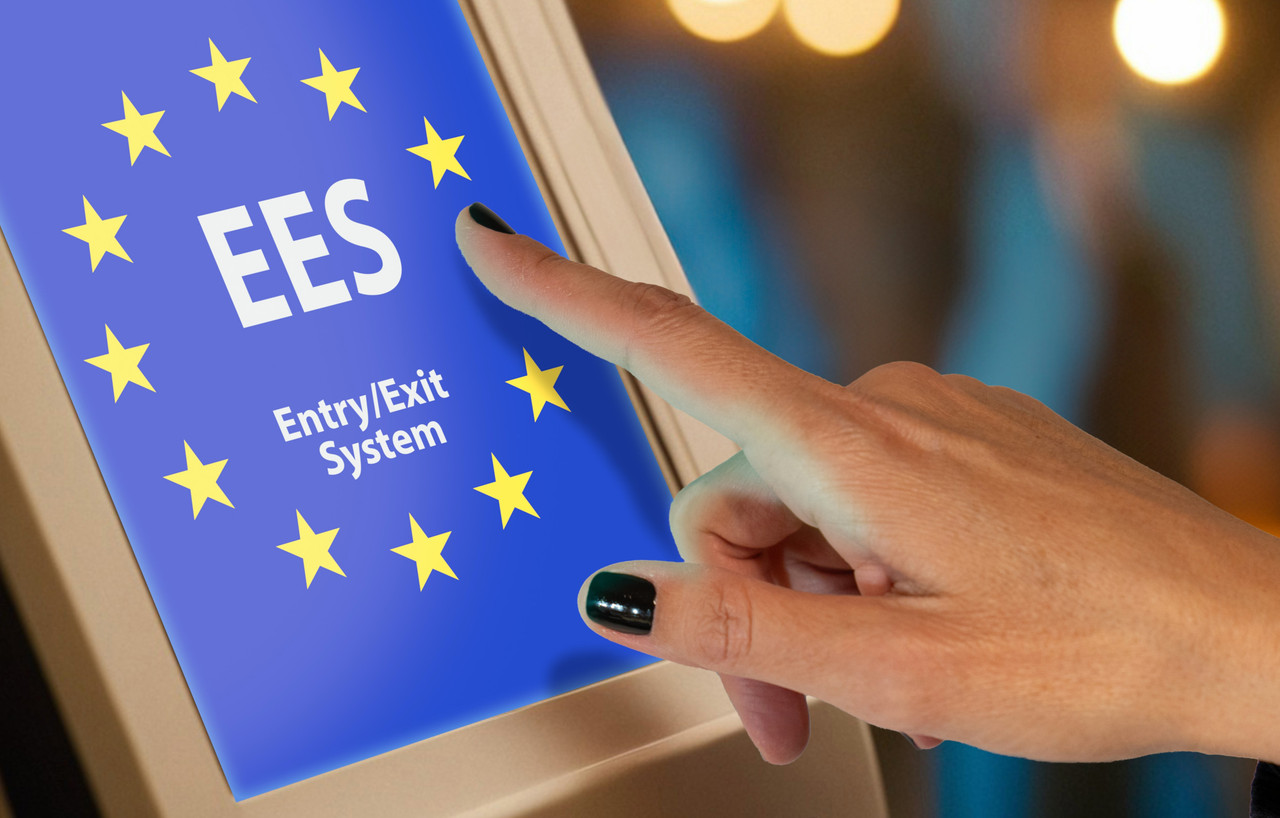
One of the pillars of this system, the Entry/Exit System, is due to replace the traditional stamps in passports with systematic digital recording of the entry and exit of all third-country nationals making a short stay in the Schengen area from 10 April 2026. At each border crossing, the authorities will record the travel document data, fingerprints and facial image of the traveller. The system will automatically calculate the authorised length of stay - 90 days out of a 180-day period - and immediately report any overstays. This centralised biometric register should make it possible to detect multiple identities, document fraud and people who have already been banned from entering the country. In this model, border control largely becomes an automated comparison between biometric data and existing databases.
By the end of the year, the Etias system will add an additional filter even before the traveller arrives. Inspired by the American Esta, it will require nationals of visa-exempt countries - the United States, the United Kingdom, Canada, Japan or Australia - to obtain an electronic authorisation before travelling to the Schengen area. The information provided in the application will be automatically compared with several European and international databases, including SIS, Eurodac, VIS and certain Interpol databases. But the system is not limited to a simple check. It also incorporates 'risk indicators', i.e. statistical criteria for identifying traveller profiles likely to present a migration or security risk. If one of these indicators is triggered, the request is automatically flagged up for analysis by a national unit.
The real innovation, however, lies in the interoperability infrastructure adopted by the European Union in 2019. It provides for the creation of a "Common Identity Repository" (CIR), a common repository that will bring together identity data from several European systems - names, dates of birth, nationalities and biometric data. Eventually, this database could contain the identities of more than 300 million people who have interacted with European visa, asylum or border control systems. A common biometric engine, the Shared Biometric Matching Service, will automatically compare fingerprints and facial images across all these databases. Added to this is a Multiple Identity Detector, a tool responsible for automatically identifying multiple identities by comparing the biometric data associated with different files. If all goes to plan, everything should be in "production" by the end of 2027.
A post-algorithmic check to come
In practice, these tools mean that a border official will be able to make a single biometric request and obtain matches in several European databases in a matter of seconds. Human checks will still be carried out, but often after an initial sorting by computer systems. The border thus becomes an algorithmic infrastructure capable of analysing traveller data, detecting anomalies or flagging up profiles deemed atypical even before the traveller physically crosses.
It is in this context that the negotiations with Washington take on a particular dimension. The United States wants to extend access to certain European data under the Visa Waiver Programme, in order to improve its own systems for screening travellers. But they also know that Europe is in the process of putting in place a biometric architecture on a comparable scale. Perhaps the real question is no longer what data the United States wants. But how far Europe itself is prepared to go in transforming its borders into automated systems for screening travellers.