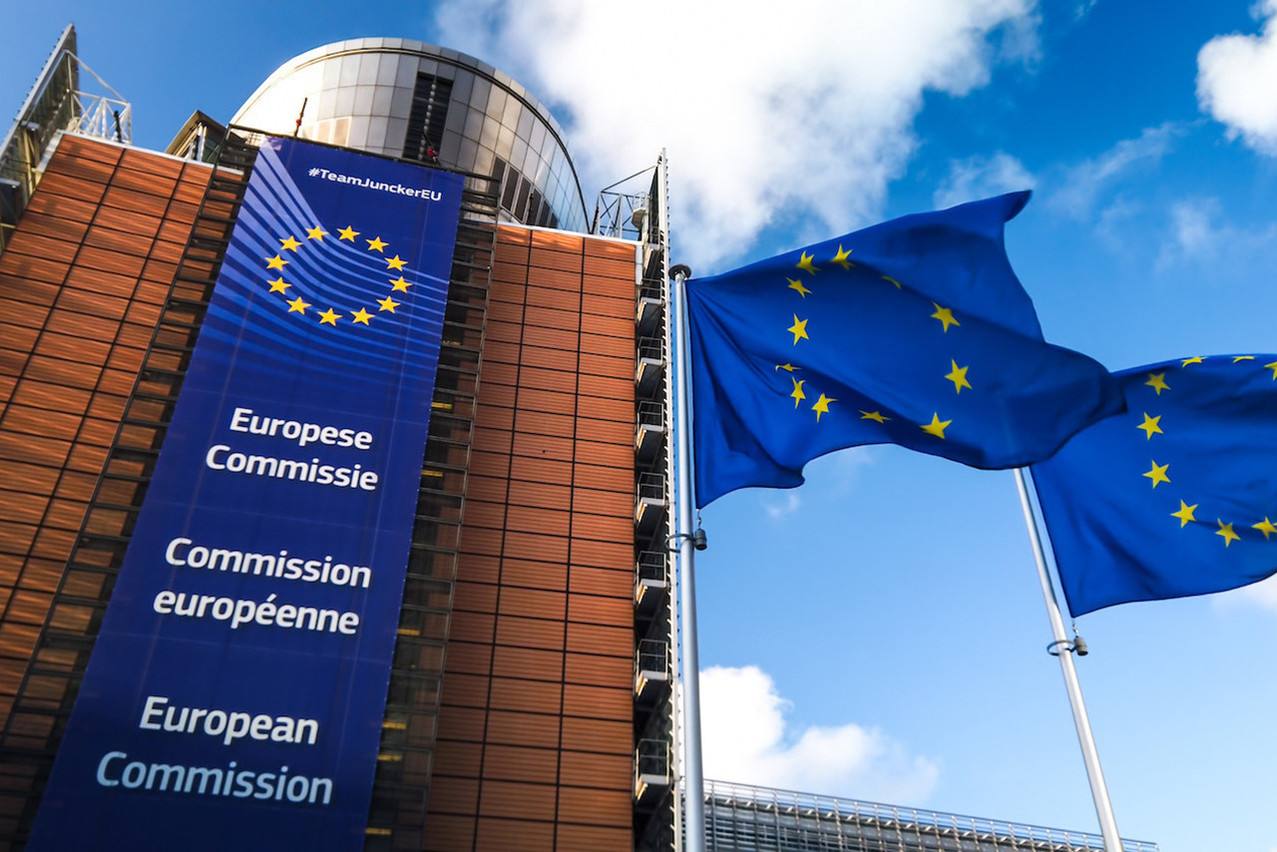
Presented as an exercise in administrative simplification, the draft “Digital Omnibus” regulation, which the European Commission is preparing to unveil on 19 November, could turn out to be the most far-reaching overhaul of the General Data Protection Regulation (GDPR) since it came into force in 2018. Behind the technocratic terms of “simplifying the digital acquis”, this text of around 200 pages actually amends several pillars of European data law: the Data Act, the Data Governance Act, the ePrivacy Directive—and above all the RGPD.
The proposed changes, which passed almost unnoticed until a leak spotted by Austrian NGO Noyb, risk reshaping Europe’s digital economy and restricting the effective scope of the fundamental right to personal data protection.
The draft, drawn up under the leadership of the Connect Directorate General, is part of the “A simpler and faster Europe” strategy promised by Ursula von der Leyen to lighten the regulatory burden on businesses. The stated rationale is clear: to merge and harmonise a number of texts in order to reduce compliance costs, speed up data exchanges and facilitate the use of artificial intelligence (AI). But the implementation of these principles results, in the case of the GDPR, in a discreet but fundamental reversal of its philosophy: it is no longer the data that is protected, but the use that each company makes of it.
Profiling excluded from the scope of the GDPR
First major break: the very redefinition of what constitutes personal data. The text introduces a so-called “subjective” approach, according to which information is only considered personal for a company if it has “means that are reasonably likely to identify the individual”. In other words, if a company does not have the tools or databases to associate an identifier with an individual, it can process this data outside the scope of the RGPD. This legal nuance opens up a considerable loophole: a large proportion of targeted advertising, audience measurement or pseudonym profiling activities could be exempt from the current obligations.
Second shift: the protection of so-called “sensitive” data - those relating to health, religion, sexual orientation or political opinions - would be restricted to “directly revealed” information. Data that makes it possible to infer these elements without explicitly mentioning them would therefore cease to be protected by the strengthened regime of Article 9 of the GDPR. In practice, a company could exploit behavioural correlations to infer that an employee is pregnant or that a user belongs to a religious minority, without falling foul of the strictest rules.
The text adds two new exceptions to the ban on processing sensitive data. The first authorises the use of biometric data to verify identity, provided that it remains “under the exclusive control” of the person concerned. The second permits their “residual” use for the development and exploitation of AI models, subject to “appropriate technical and organisational measures”. This last provision, presented as a necessary adaptation to the era of generative AI, in reality opens up the possibility for companies to train their algorithms on masses of personal data, including sensitive data, on condition that it is anonymised afterwards.
Another novelty that has been glossed over: the limitation of citizens’ fundamental rights. The Commission’s draft provides for a company to be able to refuse requests for access, rectification or deletion if they are deemed “unreasonable” or “irrelevant to data protection”. An employee requesting access to his or her timesheets in order to contest non-payment could be refused on the grounds that his or her request is not explicitly aimed at defending his or her privacy rights. The reform thus reintroduces, by the back door, a hierarchy of grounds for access that had been abolished with the GDPR in order to guarantee a uniform and unconditional right.
Cookies without consent
The Commission also lightens information obligations: a controller would no longer be required to notify data subjects individually of its use of the data if it has “reason to believe” that they already have the required information. Data breach notifications - currently required within 72 hours of a risk being identified - would be limited to cases presenting a “high risk” and could be sent up to 96 hours after the incident is discovered. All these communications would go through a single platform managed by the European cybersecurity agency (Enisa), which would become the central point for reporting leaks, incidents or cyber attacks.
Even more discreetly, the Digital Omnibus incorporates the ePrivacy Directive, a 2002 text governing the use of cookies and trackers, into this new system. The stated aim is to “reduce consent fatigue” and simplify the experience of users faced with ubiquitous banners. In practical terms, the ePrivacy rules would be aligned with those of the GDPR: certain processing of data collected on or from users’ terminals - notably for statistical, security or aggregate measurement purposes - could be carried out without explicit consent. In practice, this would mean legalising much of the anonymous tracking and behavioural advertising that had been restricted since 2018.
“Easing disproportionate constraints”
For the EU executive, these adjustments are aimed at “clarifying key concepts” and “alleviating disproportionate constraints” for businesses, particularly SMEs and small mid-caps. The text highlights a savings target of four billion euros over three years for the entire European digital sector. But it offers no additional compensation or control mechanisms for citizens, nor does it strengthen the powers of data protection authorities.
On the contrary, lawyers and associations defending digital freedoms see this as a political shift. The GDPR, designed to establish a global standard for the protection of personal data, would become a framework of exceptions that could be modulated according to economic usage. By introducing the concepts of “reasonable risk” and “directly revealed data”, the European Commission is creating a considerable margin for interpretation that weakens the universal scope of the regulation. Max Schrems, cofounder of Noyb, believes that “the Digital Omnibus violates not only the Charter of Fundamental Rights, but also the established case law of the Court of Justice of the European Union”, particularly on the broad definition of personal data and the unconditional nature of consent.
The project also has a knock-on effect on other sectors. Data from connected devices, intelligent vehicles or digital health infrastructures would fall under this new unified regime. By revising the hierarchy of texts, Brussels is merging the Data Act, the Data Governance Act and the Open Data Directive into a single legislative instrument. This consolidation will enable public authorities to set differentiated conditions according to the size of companies and to impose higher charges for access to their databases, particularly on the gatekeepers covered by the Digital Markets Act. The Digital Omnibus therefore also presents itself as an industrial policy tool, combining data openness and the protection of European economic interests.
The Cnil and the BfDI are worried
On the political front, the Commission is proceeding cautiously. Officially, the text is motivated by the need to reduce regulatory complexity and boost competitiveness in the face of the United States and China. The Member States, consulted as part of the preparatory dialogues, have so far only expressed technical reservations. But several national data protection authorities, including France’s CNIL and Germany’s BfDI, are already concerned about the lack of transparency in the process and the risk of emptying the GDPR of its substance through successive amendments.
The manoeuvre is reminiscent of other episodes of “omnibus” legislation, where the Commission lumps together disparate adjustments to avoid isolated political debates. By incorporating substantial changes to the GDPR in a text presented as technical, it is de facto bypassing the public debate on the protection of privacy in the age of artificial intelligence. This procedural choice, if validated by the European Parliament and the Council, will reduce MEPs’ margin for amendment and focus the discussion on points of legal consistency rather than substance.
The Digital Omnibus is due to be officially presented on 19 November in Brussels. While its content remains similar to the current draft, it will mark a historic shift: from a GDPR conceived as a charter of digital rights to a text integrated into the logic of industrial competitiveness. For the defenders of freedoms, this would be the end of the European data protection model as it has inspired the whole world since 2018—an end that came about not by a solemn vote, but by an amendment slipped in at the bend of a regulation on administrative simplification.