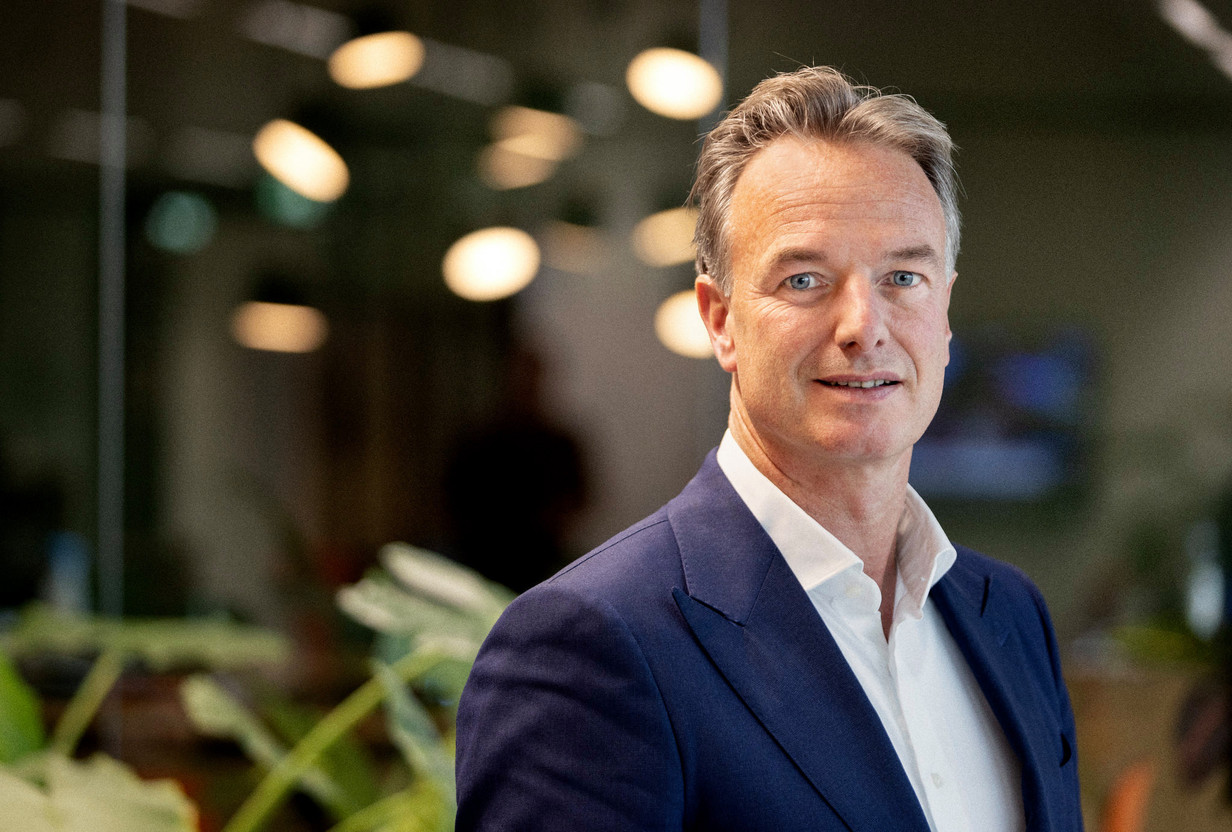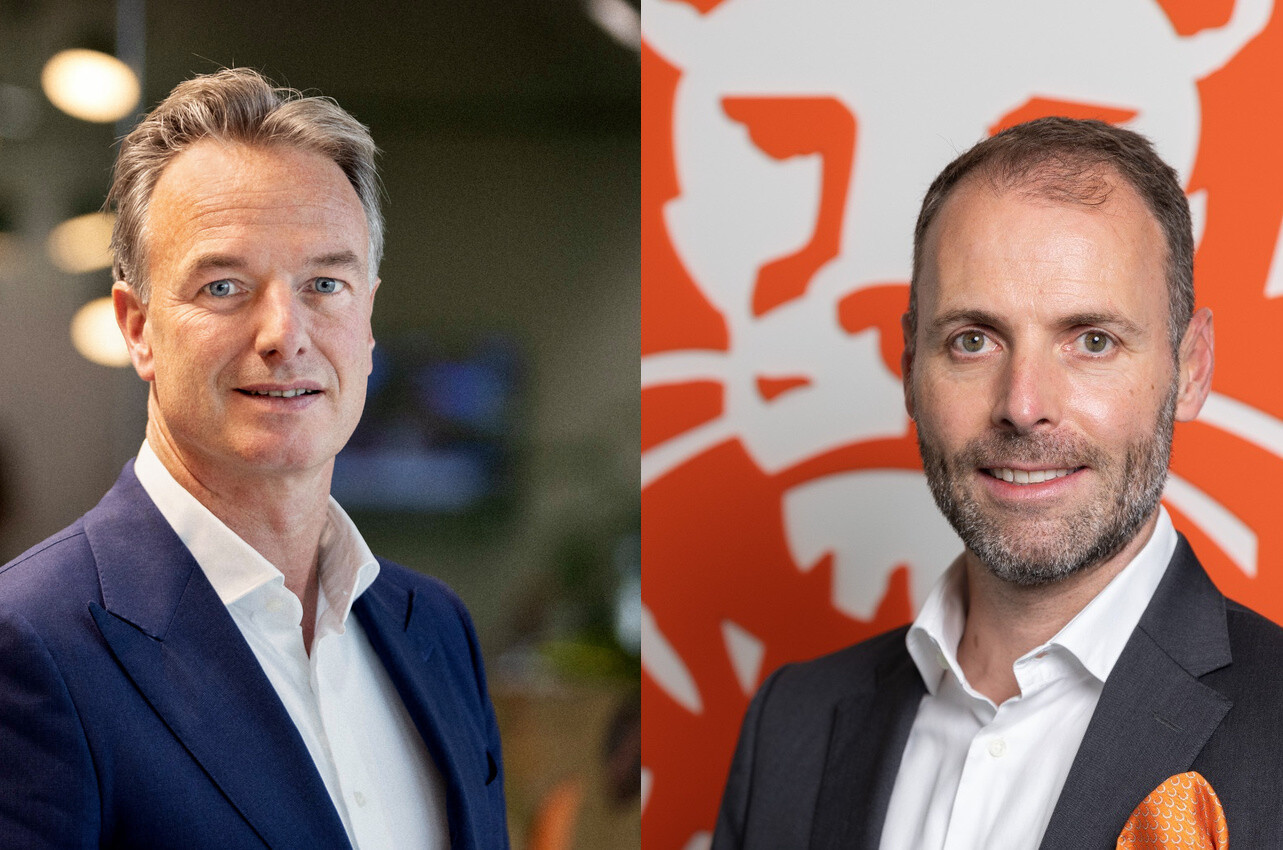
A year ago, ING Group CEO Steven Van Rijswijk agreed, whilst in Luxembourg, to explain the strategic reorientation of the Luxembourg entity within the context of the group’s strategy. In a follow-up that is quite rare at this level, the CEO was back in Luxembourg on Friday 2 October to take stock of the situation.
How are things going for you, a year on?
Steven van Rijswijk. – “A lot has happened and we have made significant progress with our transformation, which is now drawing to a close. This has been a trying and difficult period for our staff here. The good news is that we are now focusing on the contribution we want to make to the Luxembourg market, on our positioning and on our purpose here. We are prioritising core activities within the ING Group and redefining our presence in Luxembourg around two pillars.
The first is wholesale banking: our Luxembourg entity serves as a hub for treasury and asset custody activities for financial institutions, including investment funds, across Europe and globally.
The second is private banking. We are developing private banking and wealth management across the entire ING Group. We operate in ten countries and have recently launched these activities in markets where we were not previously present, such as Spain, Italy and Poland, complementing our established operations in the Netherlands and Belgium. Luxembourg also plays a special role in this area. The services offered locally are more advanced. Whilst clients may wish to access private banking services in their country of residence, they are also seeking international wealth management solutions for their family businesses.
Luxembourg meets these needs. We have recruited private banking managers, expanded our teams and hired specialists proficient in foreign languages to serve clients from other countries where we operate. We are also enhancing our offering through our unified investment platform. In both these areas, Luxembourg serves as a hub for our European private banking activities.
Where exactly are you at? Are you at the start of the transformation, halfway through, or is it complete and are you ready to meet your customers’ expectations?
S. v. R. – “We are just a few months away from completing the transformation, and its implementation is going well. I am very pleased with the professionalism shown by Michael and his team, as well as with the way in which we have supported our staff during this difficult period. As I said last year, we are determined to remain here, with a much clearer purpose for our Luxembourg entity than in the past.
Our two main activities in Luxembourg serve a clear role as a hub.

Do you have any specific figures to share regarding the past year, particularly concerning staff leaving, those who have remained with the bank and new hires?
Michael Burch. – “In full-time equivalent terms, the reduction of 124 posts announced as part of the redundancy plan has been achieved. Outside this scope, staff numbers have remained stable. We have placed great emphasis on internal mobility, with staff taking on new roles within the organisation. We have also carried out significant external recruitment, particularly in private banking. As Steven mentioned, we are actively recruiting private bankers to strengthen our expertise, particularly in cross-border activities.
Is the workforce in Luxembourg still over 700 people?
M. B. – “There are 760 people. The FTE figure is, of course, lower than the number of people, due to part-time work.
The redundancy plan expires at the end of this year. Has everything been sorted out by now?
M. B. – “We are now in the final phase. The process has gone smoothly and we have received positive feedback from former staff who have found new roles, which shows that our employees remain highly sought-after in the job market. Once this final phase is complete, this chapter will be closed and we will be able to focus entirely on the future.
Net profit fell by 41 per cent last year. How much of this fall is structural, and how much is due to one-off costs associated with the transformation?
M. B. – “The bulk of this stems from one-off costs, specifically write-downs and expenditure relating to processing.
The wholesale banking portfolio has increased by 900 million euros as part of your new strategy, whilst the results for this business have declined. How do you explain this?
M. B. – “Wholesale banking activities can be volatile, particularly in payments and cash management, a business influenced by cycles of fund deployment. We have kept our costs strictly under control, whilst recruiting high-calibre talent and rolling out a new platform for our custodian business. The underlying business remains sustainably profitable, but we have allocated part of these resources to systems, tools, solutions and teams in order to support our long-term growth ambitions. This is reflected in the figures.
How does the multi-year strategy in Luxembourg fit into the Group’s roadmap?
S. v. R. – “Our two main activities in Luxembourg fulfil a clear role as a hub. In wholesale banking, the centralised treasury and asset custody functions for the 35 countries in which we operate – with activities across 100 markets worldwide – are managed from Luxembourg. This commitment sets out a five- to ten-year outlook for our organisation, during which we will continue to develop these capabilities.
The same applies to private banking. ING manages around 320 billion euros in assets, compared with less than half that amount five years ago. We have a large client base with significant potential in private banking, which remains relatively untapped. Luxembourg possesses specific expertise that is difficult to replicate elsewhere, as well as a regulatory framework suited to international investment management. This enables it to play a leading role across our nine retail banking markets. We are strengthening the team, expanding our offering and linking Luxembourg to our international platform – something that did not exist before. Historically, our private banking model was local, serving local clients. We are now integrating cross-border expertise into our local entities.
Our size and our network across Europe, Asia and the United States enable us to provide access to international asset managers, who value our base of 42 million retail clients. Luxembourg acts as a bridge between their local wealth management needs and cross-border solutions.
Many institutions are expanding their private banking and wealth management services. It is a highly competitive market. What extra or better services do you offer to attract clients?
S. v. R. – “ING has one of the most integrated banking networks in Europe. We are among the top five banks in the Netherlands, Belgium, Poland, Germany and Romania. We rank sixth or seventh in Spain and are making progress in Italy and Turkey. We support our clients throughout their entrepreneurial journey: from setting up a business and building wealth to international expansion through our wholesale banking division.
Our size and our network across Europe, Asia and the United States enable us to provide access to international asset managers, who value our base of 42 million retail clients. Luxembourg acts as a bridge between their local wealth management needs and cross-border solutions. This integrated model is an advantage that many competitors are unable to offer.
How does technology support this strategy, particularly given the changing expectations of customers from one generation to the next?
S. v. R. – “Digital is in our DNA. Twenty-five years ago, ING Direct was a pioneer in digital banking without physical branches, long before the term ‘neobank’ came into use. Our focus on digital is at the heart of our business model. Of our 70,000 employees worldwide, around 20,000 work in technology and 20,000 in operations: there are therefore more technical and operational roles than traditional banking roles.
We have been using AI for ten years to streamline operations and run chatbots in contact centres. Going beyond machine learning and robotics, we are the first European bank to introduce agent-based AI into the processing of mortgage applications, initially in the Netherlands, before rolling it out to other markets. This reduces the approval time for complex applications by several days. Whilst standard mortgage applications can be processed digitally in 30 minutes in markets such as Germany, non-standard applications require additional documentation. Processes utilising AI agents significantly reduce this processing time.
Our AI roll-out is based on four pillars. The first is data infrastructure: our digital organisation and our structured data lakes provide an effective foundation for implementing AI. The second is identifying use cases: we have prioritised generative AI in five strategic areas: customer insight, contact centres, personalised marketing, credit operations and software development. The third concerns strategic partnerships: we rely on Google Vertex as our primary data platform and on Broadcom for our private cloud infrastructure. The fourth is demonstrating results: in addition to mortgage applications processed using agent-based AI, we are rolling out generative AI in our customer knowledge centres and in the conversational tools used in our support centres.
Agency-based approaches deliver results in a specific context
A company has just opened an AI laboratory in Luxembourg to develop an agent-based AI layer dedicated to European regulation. However, many organisations are struggling to demonstrate a tangible return on their implementations. Do you have any specific metrics you could share?
S. v. R. – “For non-standard mortgages in the Netherlands, we have reduced the approval time from seven to five days. In our contact centres, agent-based AI has enabled us to increase the proportion of enquiries resolved automatically from 40% to 75%.
Our performance gains are spread across three areas. In software development, of our 20,000 technology staff, 15,000 are engineers. Programming assistants based on agent-based AI are expected to reduce coding time by between 20% and 35%, although overall operational efficiency depends on their integration throughout the entire process. In operations, particularly in customer insight and customer service, AI improves the consistency and reliability of service. Finally, on the commercial front, faster decision-making translates into additional volumes. In the Dutch mortgage market, where our share of the total outstanding loans is 14%, our share of new loans has reached 18% to 19%, largely thanks to these applications of AI.
The use of the most advanced technologies also carries risks of external dependence, particularly if US suppliers are subject to geopolitical constraints. Does this affect the bank’s governance and resilience?
S. v. R. – “Without high-quality data and rigorous governance, you end up with poor results based on poor data. When I took up my post, I separated operations from technology and brought a Chief Technology Officer onto the executive committee. When technology drives strategy, technical expertise must be represented at the decision-making table. Our Head of Information Systems Security reports to the Chief Technology Officer, and cybersecurity remains an ongoing priority at the highest level of governance.
More broadly, geopolitical fragmentation is shaping a multipolar environment in which funding, data and critical infrastructure may become targets. Our priority is operational continuity in the event of a major crisis. We test our resilience to systemic shocks and avoid becoming overly reliant on a single operational centre. For example, we recently set up a service centre in Spain to bring certain key functions closer to Europe, rather than relying excessively on offshore sites.
European financial institutions remain heavily reliant on US technology providers for hardware, enterprise software, cloud services and AI models. Europe must assess its ability to develop sovereign solutions to reduce these dependencies in IT, cybersecurity and defence. At ING, this requires actively utilising multiple suppliers, identifying single points of failure and maintaining a robust private cloud environment in order to retain operational control.
Operational security must keep pace with innovation. Models carry the risk of hallucination, which we mitigate through rigorous testing in isolated environments before deploying them to customers. Furthermore, the rapid release of open-source and state-of-the-art models accelerates the discovery of vulnerabilities in the code. Managing these vulnerabilities requires the rapid application of patches on a large scale, rather than traditional risk-based prioritisation: the interconnected vulnerabilities within models transcend conventional risk categories.
A phased approach to IT integration
Regulators are placing increasing emphasis on immediate operational resilience: the ability to detect, decide, rectify and respond within very short timeframes. How is the bank preparing for this?
S. v. R. – “Historically, risk management has prioritised prevention. The current environment requires an equal investment in detection and immediate response, as incidents inevitably do occur. Rigorous testing and the systematic application of patches require a robust data architecture. The sector must strike a careful balance between 99.999% system availability and the necessary security measures. Continuous operation must not compromise system security.
Your latest annual report mentions a multi-year modernisation of the IT architecture. What are the stages and the timetable for this?
M. B. – “Our digital transformation supports our refocusing on wholesale banking and private banking. In wholesale banking, we began migrating to the Group’s centralised platforms 18 months ago. In private banking, we are moving to a Group-wide architecture that offers a modern digital experience to the next generation of high-net-worth clients, combining digital tools with support from a dedicated relationship manager.
What synergies exist between the group’s platforms and the specific requirements of the Luxembourg financial centre?
M. B. – “The size of the group enables significant IT synergies. When Luxembourg requires a specific infrastructure, particularly for custodian and asset custody activities, we have developed this centre of expertise locally and made it available to the rest of the group. Similarly, specialised private banking products, such as Luxembourg unit-linked life insurance policies, require local configurations. For core banking infrastructure, using the group’s platforms avoids having to build local systems that duplicate existing capabilities.
What are the main strategic challenges ahead for the group and for Luxembourg?
S. v. R. – “Banks reflect the macroeconomic environment. The main opportunities lie in financing Europe’s significant capital requirements – for defence, the green transition and digital modernisation – as well as in mobilising European savings through an integrated Savings and Investment Union. The main obstacles stem from geopolitical fragmentation, trade protectionism, systemic instability and the long-term governance of emerging technologies such as generative AI.
Luxembourg is working on the tokenisation of funds. Is ING involved in any European initiatives in this area?
S. v. R. – “ING was one of the founding participants in what has become Wero, alongside earlier work on blockchain and the Calypso stablecoin initiative. Calypso brings together more than thirty European banks working to establish a regulated framework for a euro-denominated stablecoin in the Netherlands. This initiative is preparing the banking sector for the tokenisation of markets. For this to be rolled out on a large scale, operational mechanisms for interbank liquidity and settlement are required. The evolution will naturally move from stablecoins towards tokenised bank deposits.
What do you think of the digital euro project?
S. v. R. – “The roll-out of a digital euro for retail customers remains a political decision. As part of the European Payments Initiative, European banks have developed Wero, a pan-European, interoperable instant payments network based on the infrastructure of Dutch and Belgian institutions. With the addition of Spain and Italy, Wero now covers the majority of European consumers. Policy-makers must assess the specific added value that a central bank digital currency for retail users would bring compared to what European banks have built with Wero. The legacy iDEAL system remains the primary means of digital payment in the Netherlands. It takes time for consumers to adopt a new payment standard. Even the roll-out of routine updates to mobile apps generally causes temporary difficulties for customers, before satisfaction ratings return to normal levels over a period of 12 to 24 months.
What key message would you like to convey about ING’s positioning in Luxembourg?
S. v. R. – “We are positioning Luxembourg at the heart of our international network in Europe. Our entity has a clear mission: to provide the group with our cross-border expertise in asset preservation, treasury and wealth management, whilst offering local clients direct access to our European network.”