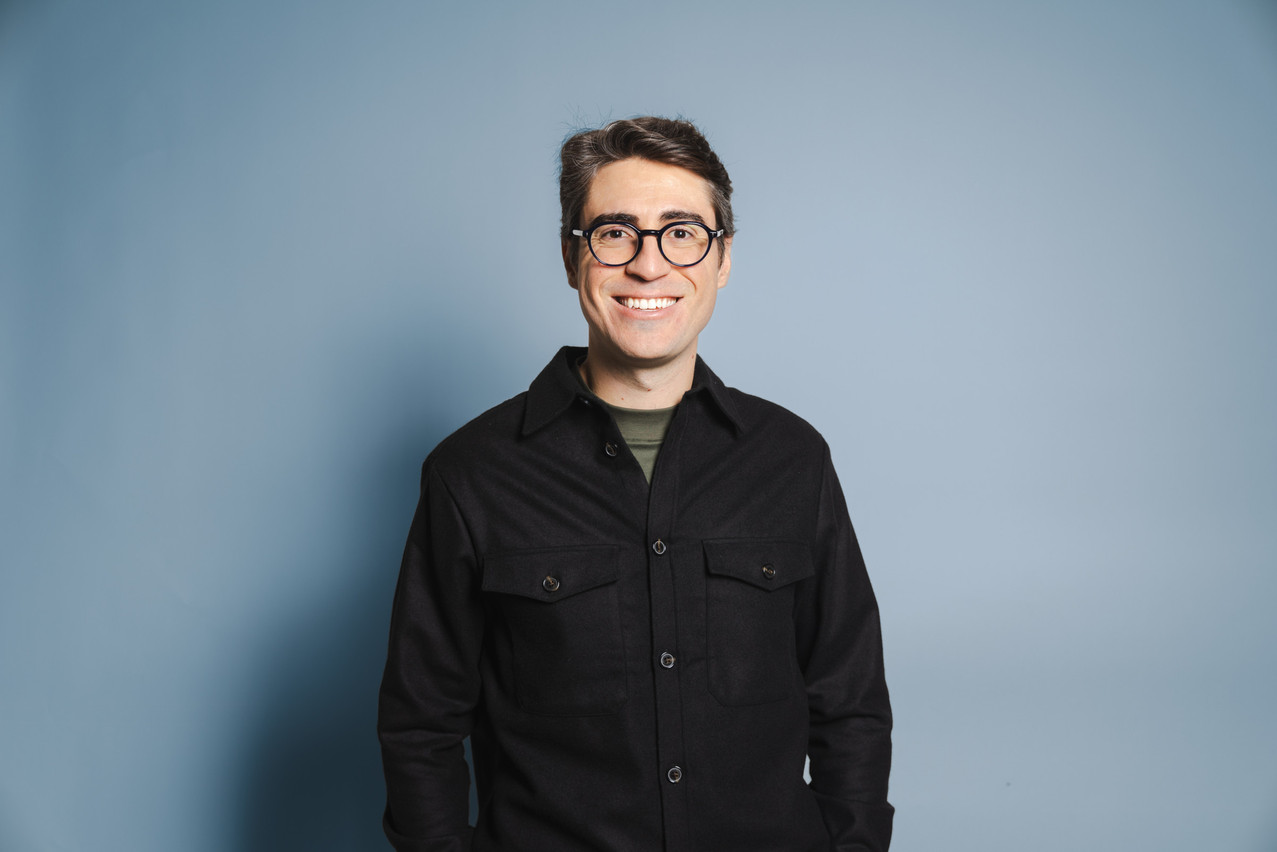
Mission: make Eltifs mainstream. After more than 10 years spent in the tech and finance industry, this is now Steven Halmaghi’s full-time job.
Halmaghi, who’s originally from the US state of Michigan, began hearing about European long-term investment funds (Eltifs) and the democratisation of private markets when he relocated to Luxembourg in the summer of 2022 for his wife’s new job. “All those things piqued my interest,” he explained. “I’ve been an active investor myself, being from the US and working at these startups. And I was very intrigued.”
After arriving in the grand duchy, he started working in alternative investment solutions at State Street, where he got more exposure to the Eltif regime and learned more about Eltifs by talking to players--from law firms to asset managers--in Luxembourg’s financial ecosystem.
Differences between investing in the US and Europe
Investing in Europe is “much more fragmented” than in the US, said Halmaghi. There are stock exchanges across the continent--the London Stock Exchange, the Luxembourg Stock Exchange or Euronext, to name just a few--while a variety of fintechs are prevalent in the countries they were created in.
The approach in the US is more “uniform,” he argued, and thanks to schemes like the 401K or Roth IRAs (individual retirement accounts), people can easily invest in specific stocks for their retirement. Apps such as Robinhood, which was launched in 2013, have democratised the the US investment market, allowing people to trade stocks, exchange-traded funds and more. “Anybody and everybody who wants to do something--they can do it via Robinhood.” But here in Europe, people seem more “risk-adverse” when it comes to investing, said Halmaghi.
Leveraging technology to fill the gaps
So where did the idea of an app for Eltifs come in?
“If I did not move to Luxembourg, if I did not work for State Street, if I did not connect with people in this ecosystem and get exposed to Eltifs, I definitely would not have had this idea. So it’s a case of right place, right time and right person,” said Halmaghi. “Coming from the startup world, I have that entrepreneurial mindset. And the mission of Eltifs--to me, at least--is to democratise private markets. Democratisation to me means anybody and everybody is able to have access to this investment opportunity.”
I felt like there was a gap between what was being said--the mission--and what was actually happening

And with the Eltif 2.0 regime--the amendments to the regulation were published in the EU’s official journal in March 2023--minimum investment thresholds for retail investors have been removed. This “now should open up the doors,” he said.
But many asset management firms still have minimum tickets. “It just seems that the industry isn’t there yet in terms of truly democratising private markets. I felt like there was a gap between what was being said--the mission--and what was actually happening. And I wanted to leverage technology to fill those gaps.”
Hence the development of his app, which aims to make it simpler to access and invest in Eltifs.
“The intention of Jayd is to really productise and digitise the Eltif value chain, from start to finish, and be the copilot to all these stakeholders, from asset managers to custodians and law firms,” said Halmaghi, who founded Jayd in July 2023 with the goal of filling these gaps.
Players like Bitpanda, Revolut or N26--which offer digital banking and stock trading, amongst other services--already have distribution networks, said Halmaghi, and the question is how to take advantage of their users. “Private markets would be the next natural step for a lot of these fintechs. We want to be the enabler in that platform, to give access to those players.”
“High pain tolerance” to start a company
His app, however, isn’t ready for the public just yet.
Halmaghi pitched his idea at Luxembourg’s Venture Days in late October, which is where I met him for the first time. “It was definitely valuable for a variety of reasons.” One was connecting with fellow entrepreneurs from around the world and hearing about their ideas. “I was very impressed by that.”
Moreover, “it’s a painful journey, starting a company,” he added. “You have to have high pain tolerance!” Besides meeting and discussing with other entrepreneurs, Venture Days also gave him the the opportunity to connect with the “local Luxembourg ecosystem,” such as the Luxembourg House of Financial Technology (Lhoft), House of Fintech, as well as people from the government and venture capital sector.
Halmaghi’s next steps are to continue to fundraise. “In this market, it’s very difficult. It’s not like what it was two years ago,” he noted, citing rising interest rates and the geopolitical environment. “It’s much more difficult to fundraise as a startup--especially as a solo founder in fintech. The focus right now for VCs has been AI the past year, which is obvious and for valid reasons--that is definitely going to be a technology that will revolutionise many industries.”
But “another challenge for me in fundraising is getting VCs and angel investors up to speed on Eltifs,” he added. As it’s still not widely known outside Luxembourg, he has to pitch not only his startup, but Eltifs as a whole.
“I want to partner with everybody”
“We do have an existing mockup, developing the minimal viable product as well, where we have been presenting and showing it potential VCs, investors,” said Halmaghi. He’s been having conversations with stakeholders from asset management firms to show them what it looks like, what he envisions and to hear about the gaps that they experience when it comes to creating Eltifs. “So that’s been very valuable feedback.”
“When it comes to the CSSF [Luxembourg’s Financial Sector Supervisory Commission], those conversations have been fruitful. It’s still to be determined--on my side, at least--what licence, if any, would be required, since our first focus right now is developing the business-to-business platform. So whatever is required, obviously, we will adhere to that in terms of a licence standpoint.”
I want to be a partner in this space. I want to make Eltifs mainstream

“What I’ve been telling VCs and stakeholders is: I want to be a partner in this space. I want to make Eltifs mainstream. And that is a story that is not just shared by me…but others as well. For it to truly be mainstream, this is something that the whole industry needs to get behind. I’m here to help and I want to partner with everybody.”
This article was published for the Delano Finance newsletter, the weekly source for financial news in Luxembourg. Subscribe using this link.