
Having arrived as expats themselves, the Spaniards Javier and Salvador were quickly confronted with the reality of the market. That reality involved finding a room – a challenge that all too often felt like an obstacle course of vague adverts, fierce competition, endless viewings and substandard accommodation. The young men soon realised the truth: there was a real shortage.
Rather than simply putting up with it, the friends decided to take on this challenge, which was worthy of The Hunger Games. Their idea was to create a platform dedicated to flat-sharing and co-living, capable of connecting landlords, estate agents and tenants in a more structured and efficient way than what had been available until then. In short, to simplify the search for accommodation without having to trawl through countless Facebook groups or go through time-consuming procedures.
Two years after its launch, the project has found its audience. Growth is on the cards, driven by clearly identifiable peaks in activity such as the start of the academic year or the start of the calendar year – periods when demand for housing reaches its peak.
Meeting a very real need
To boost their visibility, the two entrepreneurs rely mainly on Google Ads and social media. This strategy is paying off, as traffic is increasing, as is the number of users – a sign that the platform is meeting a very real demand.
Today, Roomie Radar has struck a good balance between supply and demand. The platform mainly attracts expats looking for accommodation, whilst offering landlords an effective channel for advertising their properties. Over 100 rooms have already been listed on their website, with a steady turnover reflecting a dynamic market.
To bring greater transparency to the market
Beyond simply connecting landlords and tenants, the founders are also relying on data analysis to support landlords. Understanding tenants’ expectations, adjusting prices or tailoring listings is becoming a key factor in improving occupancy rates, underpinned by a desire to bring greater transparency to the market.
Financially speaking, the business is not yet profitable. Javier and Salvador are reinvesting their earnings into the platform’s development in order to accelerate its growth. This is a sensible strategy given that demand for housing remains strong and structurally tight.
Roomie Radar is part of a wider trend: that of digital solutions designed to streamline markets that have traditionally been complex. In Luxembourg, where housing is a key issue, the initiative is a natural fit.
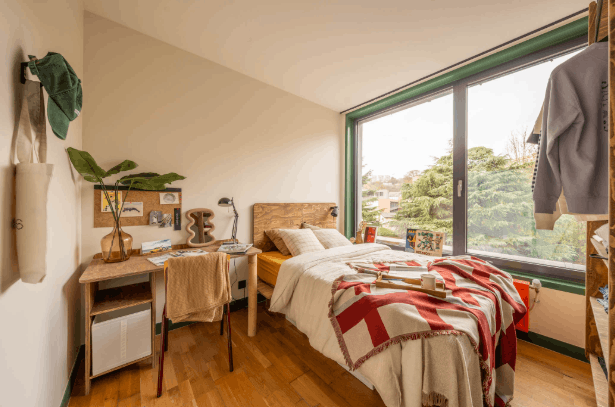
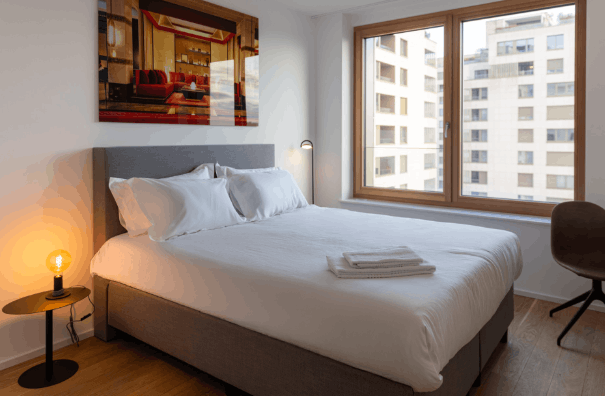
The figures confirm this momentum. Since its launch, website traffic has increased by 150% year-on-year. The platform now has over 1,000 registered users, up 154%, 85% of whom are expats actively looking for accommodation. More than 200 listings have been created to date, with around 60 active at any one time. Finally, over 1,200 applications for rooms have been submitted via the platform, with a rejection rate of less than 10% in 2026, the main reason being that the properties had already been booked.
In a country where finding somewhere to live can quickly become a challenge, the start-up offers a practical solution to a problem faced by many.