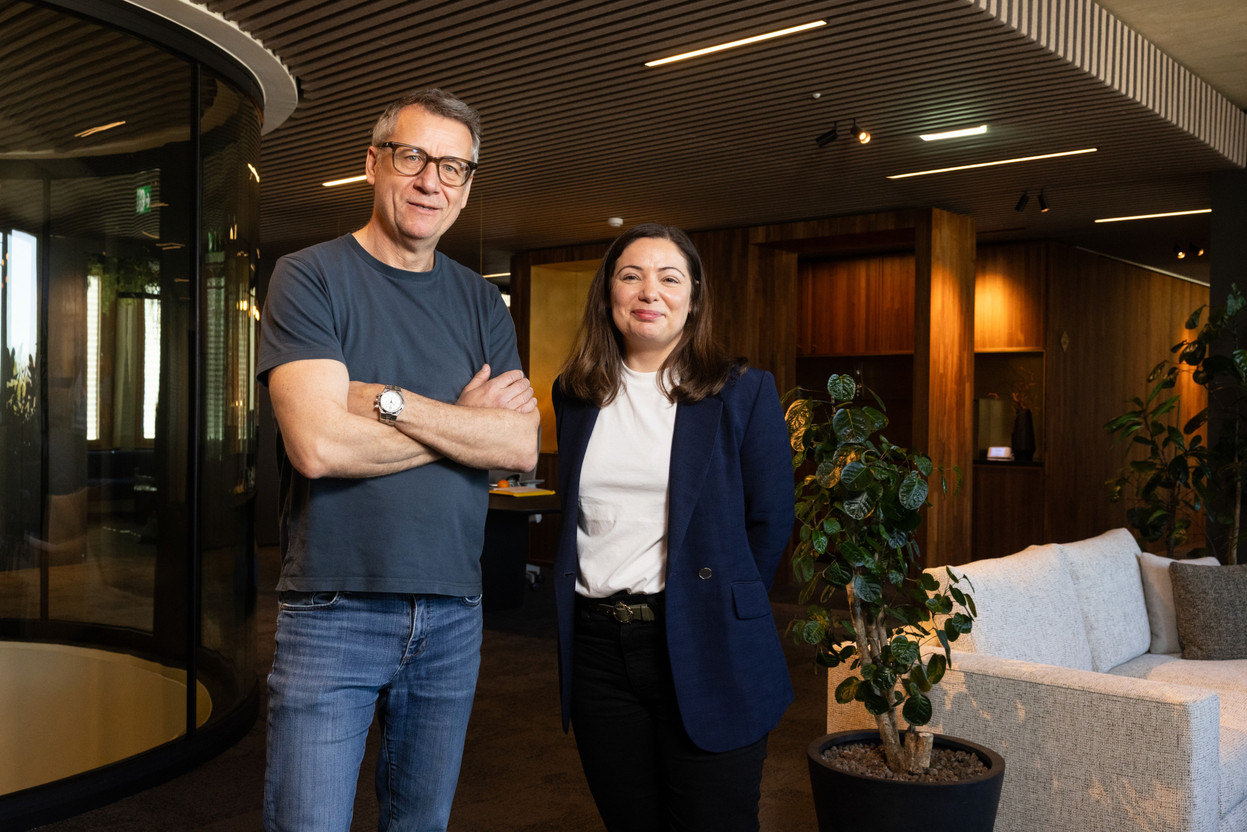
As Mipim approaches, Paperjam is offering a two-part series to decipher the state of the Luxembourg property market through two complementary perspectives: that of a professional in the field and that of an institutional player, the director of the Chamber of Commerce Carlo Thelen, in our next episode. Same questions, but different analyses.
Beyond networking, what does Mipim “measure”?
Sandra Huber. - “Beyond networking, Mipim above all measures the state of confidence in the market. It’s a European barometer: we can see whether or not capital is returning, the ability of players to plan ahead and the changing priorities of investors. It takes the pulse of a market that is in the process of recomposing itself: which segments remain liquid, which strategies are being redesigned and where the new expectations in terms of risk, sustainability and use lie.
What does Mipim mean to you?
“For me, it’s first and foremost a strategic reading space. It’s not just a trade show, it’s a time to pick up on weak signals: the way in which major investors arbitrate between European markets, the sectors they favour and the conditions for their return. It’s also a place to build long-term partnerships, in a market where execution and credibility matter more than ever.
Why is it important for Luxembourg to be present this year?
“Because in a Europe where investors have become very selective, absence is immediately noticeable.
Luxembourg remains a stable and solid location, but it must continue to assert its visibility and attractiveness in a context of increased competition between European markets. Being present at Mipim means showing that Luxembourg is not undergoing the transformation of the sector, but that it wants to be a player in it, with structuring projects and an ability to reinvent itself and be a driving force behind proposals.
This year, Antoine Xhignesse and Xavier Dubois will carry the voice of IKO, with a particular focus on structuring our investment solutions, both in tertiary and residential real estate.
Is there currently a gap between the rhetoric surrounding real estate and the reality on the ground?
“Yes, very clearly. There is sometimes talk of a recovery, but on the ground, volumes remain low. And the idea that all you have to do is lower prices is too simplistic: a project has to remain viable. The cost of housing is currently very difficult to reduce in Luxembourg, between scarce land, demanding standards, long lead times and significant upstream investment.
What strikes me is that in Luxembourg, I experienced real pragmatism and very direct dialogue with the State. Today, in the crisis, I find this spirit less so. The discourse is sometimes a little backward-looking, even accusatory, whereas the priority should be to get the whole ecosystem moving again to produce housing. We lack concrete actions to support production and restore fluidity.
The market has become more selective and demanding, with buyers who are better informed and more attentive.

Structural crisis or adjustment after years of euphoria?
“I think we’re experiencing both. There is a cyclical adjustment after a period of euphoria when money was available and rates were historically low and this adjustment is not specific to the Luxembourg market, it is a European property model that has to reinvent itself.
But what we are going through is also deeply structural with Luxembourg specificities. The balance between developers, banks, investors and end users has changed. Cycles are longer, marketing is slower and consumer confidence needs to be rebuilt. This also means rethinking the financial tools: construction loans, but also more appropriate residential investment products. International investors have been interested in Luxembourg for a long time, but have not always found a sufficiently structured or accessible product to really position themselves. In a Europe where capital is arbitrating between several markets, Luxembourg must become even more attractive and legible, by offering formats adapted to today’s needs.
We are therefore witnessing a profound transformation, with a necessary professionalisation of the players and consolidation of the sector. Against this backdrop, the role of the developer is naturally changing. The market has become more selective and demanding, with buyers who are better informed and more attentive. As well as the property itself, they now expect structured support, transparency, clear communication and a relationship of trust throughout the process. The questions that have arisen in recent years are certainly due to a more constrained economic environment, but also to a heightened expectation of quality of service. This change is prompting developers to step up their role in providing support and education, in order to reassure buyers and meet the new demands of the market in the long term.
The environmental transition has become an unavoidable issue, but it is not reflected in the same way depending on the type of asset.

Is Luxembourg still attractive for international real estate today?
“Yes, but differently. Automatic attractiveness is a thing of the past. Today, Luxembourg must convince through the clarity of its plans, its ability to execute and its positioning in a Europe in transition. The fundamentals remain very solid: stability, legal framework, demographic growth, housing needs. But attractiveness is now being actively built and is a collective affair.
When you talk about Luxembourg in Cannes, what is it that still attracts interest?
“What is attracting interest is the rare combination of stability and potential. Luxembourg remains a European hub, at the heart of finance, with strong structural demand, particularly for residential property. Investors are looking for markets that are legible, resilient, capable of offering quality projects that are well located, aligned with ESG expectations but above all with real needs.
Has the environmental transition become a real driver of value creation?
“The environmental transition has become an unavoidable issue, but it is not reflected in the same way depending on the type of asset. In the case of commercial property, it is clearly an essential factor in terms of liquidity and value. In residential property, it is obviously essential to integrate these dimensions, but the approach must be put into perspective with comfort of use and control of operating costs for households. Issues such as energy, resource management, building efficiency and the durability of materials are becoming very tangible levers. They are directly reflected in monthly charges, which are now a central decision-making criterion for both tenants - in both residential and office buildings - and owners.
The need for housing is now expressed in a more pragmatic way, directly linked to the economic reality of households.

Do you see new real estate uses or needs emerging?
“Yes, very clearly, and one of the major issues today is the cost of housing. We need to produce more affordable property, but this is becoming increasingly complex in the current context. Property developments are taking place in a much more demanding environment: long lead times, complex procedures, high costs.
The housing environment has changed radically as a result of pressure on purchasing power and a more cautious approach to financing. The need for housing is now expressed in a more pragmatic way, directly linked to the economic reality of households. There is a growing demand for housing that is designed above all for use, cost control and, above all, a location that brings living and working closer together.
The central issue is no longer that of the theoretically ideal product, but that of the home that can actually be financed today, without sacrificing insulation quality and comfort. The challenge is to reconcile quality, sustainability and economic sustainability.
Which property segments are currently holding up best?
“We are seeing a gradual recovery in office property for both investment and rental, provided that the projects are well located, of high quality and in line with ESG and taxonomy standards. In such cases, vacancy remains low. In the residential sector, it’s difficult to assess, because sales volumes have fallen sharply in recent years despite an identified need. The structural demand is there, but the market is in a transition phase.
By 2030, what do you think will be the main paradigm shift?
“The main paradigm shift is that real estate is going to have to be thought through in a much more integrated way. The players involved will have to evolve towards a role as urban planners: capable of combining housing, services, infrastructure, energy, mobility and quality of use. This will also require the sector to become more professional and adaptable in a demanding environment. Between now and 2030, those who know how to produce projects that are useful, sustainable, economically viable and capable of being part of the transformation of cities will succeed.”
This article was written for March 2026 issue of the Paperjam magazine, published on 25 February. The content is produced exclusively for the magazine. It is published on the site to contribute to Paperjam’s comprehensive archive. Click this link to subscribe to the magazine.
Is your company a member of Club Paperjam? You can request a subscription in your name. Let us know via club@paperjam.lu