In the third quarter of 2025, salaried employment rose by 0.5% (or around 2,400 jobs) compared with the previous quarter and by 1.3% over one year (or around 6,300 jobs), marking an improvement on previous quarters. However, this trend continues to vary from one sector of activity to another.
As in previous periods, growth is being driven mainly by administration and other public services, where the number of jobs has risen by 1.1% over the quarter. Over the year as a whole, this sector posted a marked increase of 4.1%, confirming its role as the main driver of job creation. Central government services and social action activities, excluding accommodation for the elderly or disabled, accounted for most of this increase.
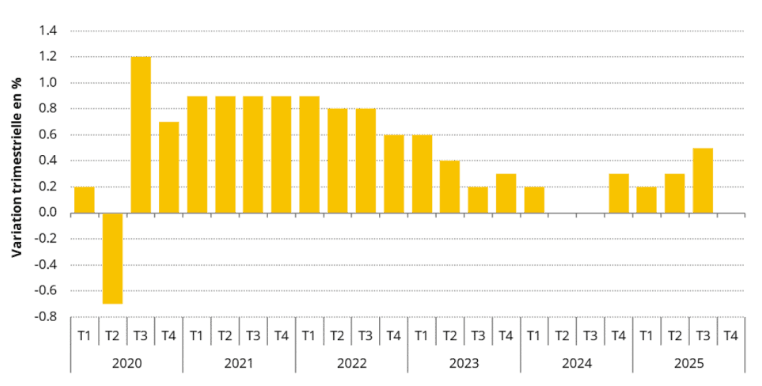
Changes in salaried employment (compared with the previous quarter) (Graph: Statec)
In contrast, construction and industry recorded a decline in the number of employees in the third quarter of 2025. In terms of annual variation, the construction sector shows a significant fall of 2.1%, with job losses particularly pronounced in the construction of residential and non-residential buildings.
As regards the status of workers, the increase in employment concerns both resident employees and cross-border commuters, but at slightly different rates. Between the second and third quarters of 2025, the number of resident employees rose by 0.5%, compared with 0.6% for cross-border commuters.
Over one year, the trend in cross-border commuter employment remains uneven depending on the country of origin. Employment of German cross-border commuters fell by 0.6% compared with the third quarter of 2024, while it rose for cross-border commuters from other neighbouring countries.