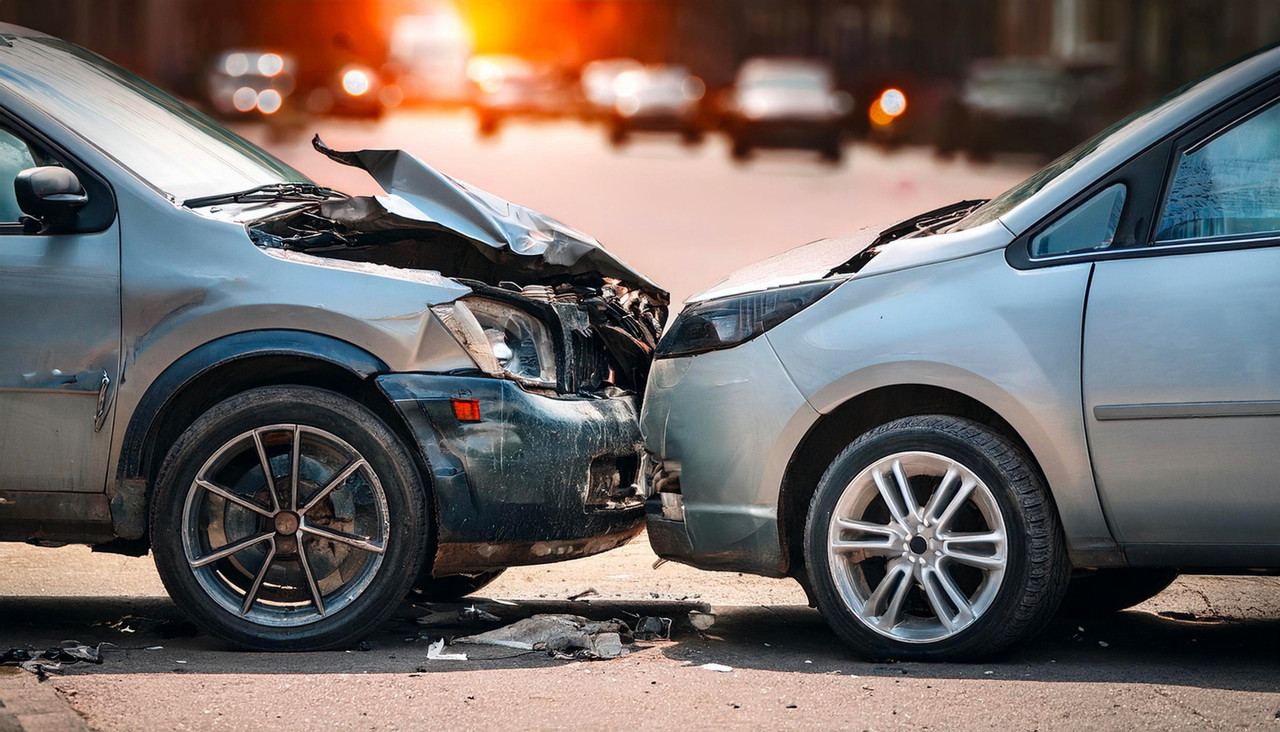
Luxembourg significantly reduced road fatalities in 2024. According to preliminary figures published by the European Commission on Tuesday, March 18, the country recorded a rate of 27 deaths per million inhabitants, a 31% decrease from 2023 (39 deaths per million). This performance places Luxembourg fourth among EU countries with the safest roads, behind Sweden (20/million), Malta (21/million), and Denmark (24/million).
Encouraging results, certainly, but they should be interpreted with caution, as annual variations tend to be more pronounced in a small country, where each fatal accident has a greater statistical impact.
At the European level, the benchmark for road safety is not an EU country but Norway, which recorded just 16 deaths per million inhabitants—the lowest rate on the continent. At the other end of the spectrum, Romania remains the most affected EU country, with 77 deaths per million inhabitants, closely followed by Bulgaria (74/million). This is all the more striking given that Romania has reduced road fatalities by 21% since 2019, yet still remains at the bottom of the rankings.
On average, the European Union recorded 44 road deaths per million inhabitants in 2024, with an estimated total of 19,800 victims—a 3% decrease compared to 2023.
Rural roads still more dangerous
The 2023 data confirms that rural roads remain the deadliest, accounting for 52% of fatal accidents, compared with 38% in urban areas and 9% on motorways. Men continue to be significantly over-represented among victims, making up 77% of fatalities. Meanwhile, senior citizens are becoming increasingly vulnerable: in 2024, people aged 65 and over accounted for 31% of road deaths, despite representing just 21% of the population. Young adults (18-24) also remain at high risk, accounting for 12% of fatalities while making up only 7% of the population.
Motorists bear the heaviest toll, accounting for 44% of fatalities, followed by users of motorized two-wheelers (20%), pedestrians (18%), and cyclists (10%). The risks associated with motorbikes and scooters remain a major concern: according to the European Commission, the number of passenger-kilometres traveled by cars is up to 35 times higher than that of motorized two-wheelers, which significantly amplifies the fatality rate for the latter.
Another worrying statistic concerns city centers, where 70% of fatalities among vulnerable road users occur. This highlights the growing challenge of ensuring safe coexistence between pedestrians, cyclists, and motorized vehicles.
Objectif 2030: une ambition encore loin
While the overall trend is declining, the European Commission warns that, at this pace, most Member States are unlikely to meet the target of halving road deaths by 2030.
"Too many lives are still lost on our roads every year. Every death is one too many and we remain determined to achieve our Vision Zero goal", said the Commissioner for Sustainable Transport and Tourism, Apostolos Tzitzikostas.
Will the key lie in safer infrastructure, stricter enforcement of risky behavior, or the rise of autonomous vehicles and new mobility solutions? One thing is certain: Nordic countries like Norway and Sweden are demonstrating that a different approach to road safety is possible.