Formal rules can give digital-finance firms the certainty to innovate, but industry self-regulation may catch risks earlier, regulators from Luxembourg and China said at Nexus Luxembourg on Wednesday.
Claude Marx, director general of Luxembourg financial regulator CSSF, argued that regulation can help markets develop when it clarifies legal questions around areas such as blockchain-based transfer of title and collateral arrangements.
Ma Chao, deputy secretary of the CPC Committee and secretary-general of the National Internet Finance Association of China, described the association, known as Nifa, as a self-regulatory bridge between regulators, industry participants and the market.
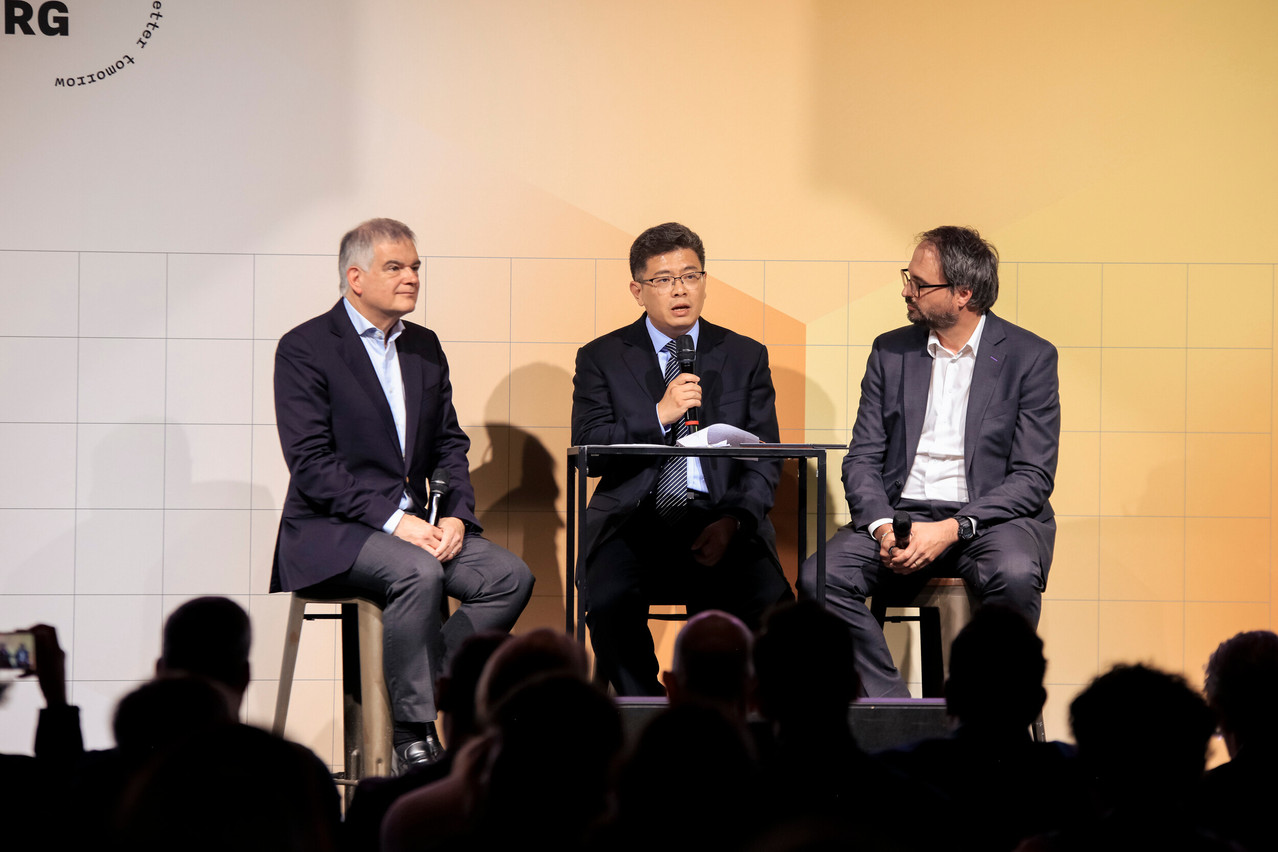
Their discussion, moderated by Luxembourg for Finance CEO Tom Théobald, came as financial firms face new rules on crypto-assets, artificial intelligence, operational resilience and sustainability. It set out two different points of intervention: public regulation to give firms legal certainty, and industry discipline to identify risks before they require tougher action.
Regulation as certainty
Marx said regulation reflected societal choices and could therefore differ from one part of the world to another. For supervisors, he said, the task was to work with existing rules and apply them as pragmatically as possible.
He pointed to blockchain as an example of regulation helping innovation rather than blocking it. Firms need legal certainty on issues such as transfer of title and collateral before blockchain-based finance can progress, he said.
“Innovation and regulation is not necessarily one against the other,” Marx said. “There are instances where without regulation it is difficult to progress.”
Luxembourg’s blockchain laws, Marx said, had been designed to provide that certainty. In that case, he argued, regulation could make the country more attractive as a financial centre.
The CSSF does not write the rules, Marx said, but it can help firms understand how to operate within them. Before formal licensing begins, the regulator’s innovation hub works with potential applicants, explains expectations and can organise workshops over a period of time.
Marx said CSSF licensing and supervisory teams also remain available during the process to answer questions. That dialogue, he said, was one way to help firms deal with the volume of regulation facing them.
He added that he hoped the European Commission’s simplification agenda would look closely at rules that had not proved useful.
Before enforcement
Ma described a different model, with self-regulation acting earlier in the chain. Nifa’s role, he said, is to connect public authorities, financial firms and the wider market in China’s digital-finance ecosystem.
“Nifa acts as a bridge connecting regulators, industry participants and the market,” Ma said.
He said the organisation’s work is based on prevention, proactive self-regulation and collaborative governance. It includes risk monitoring, self-regulatory standards, tiered evaluation and shared risk-control infrastructure.
Ma cited virtual-currency activity as one example. Last year, he said, Nifa worked with six other major industry associations to define red lines and prohibit members from engaging in domestic virtual-currency issuance.
He also pointed to a client due-diligence collaboration platform developed this year to support anti-money-laundering information sharing while protecting user privacy and institutional data ownership.
The aim, Ma said, is to intervene early, clarify compliance boundaries and improve how regulatory rules are applied before problems require tougher enforcement.
Ma said trust in digital finance would also depend on protecting data while keeping pace with market expectations. “We must hold the bottom line for data security to stabilise consumer and market expectations,” he said.
AI raises the speed test
The pressure on both models is growing as artificial intelligence accelerates the pace of change in financial services.
Marx said financial firms often plan changes to core systems over three to five years, while AI tools are developing far faster. That mismatch creates both opportunity and risk, because firms that adapt quickly can reshape their operating models while slower institutions may fall behind just as fast.
Traditional financial players are not used to that pace of change, Marx said. The challenge is similar on the risk side, where new AI releases can quickly create new ways for systems to be misused.
“For me, the biggest challenge, but also the biggest opportunity, is the speed in which we will incorporate the opportunities now into our operating models,” Marx said.
Ma said digital finance is moving towards greater intelligence, refinement and personalisation, driven by AI technologies and big data. Those forces, he said, will increasingly shape product development and risk management.
He said consumer and market expectations are becoming central to trust in digital finance. Regulators and industry bodies therefore need to keep pace with those expectations, protect data security and set clearer boundaries for services and operations.
Europe, Ma added, had done “a great job” on data security compared with many other countries.