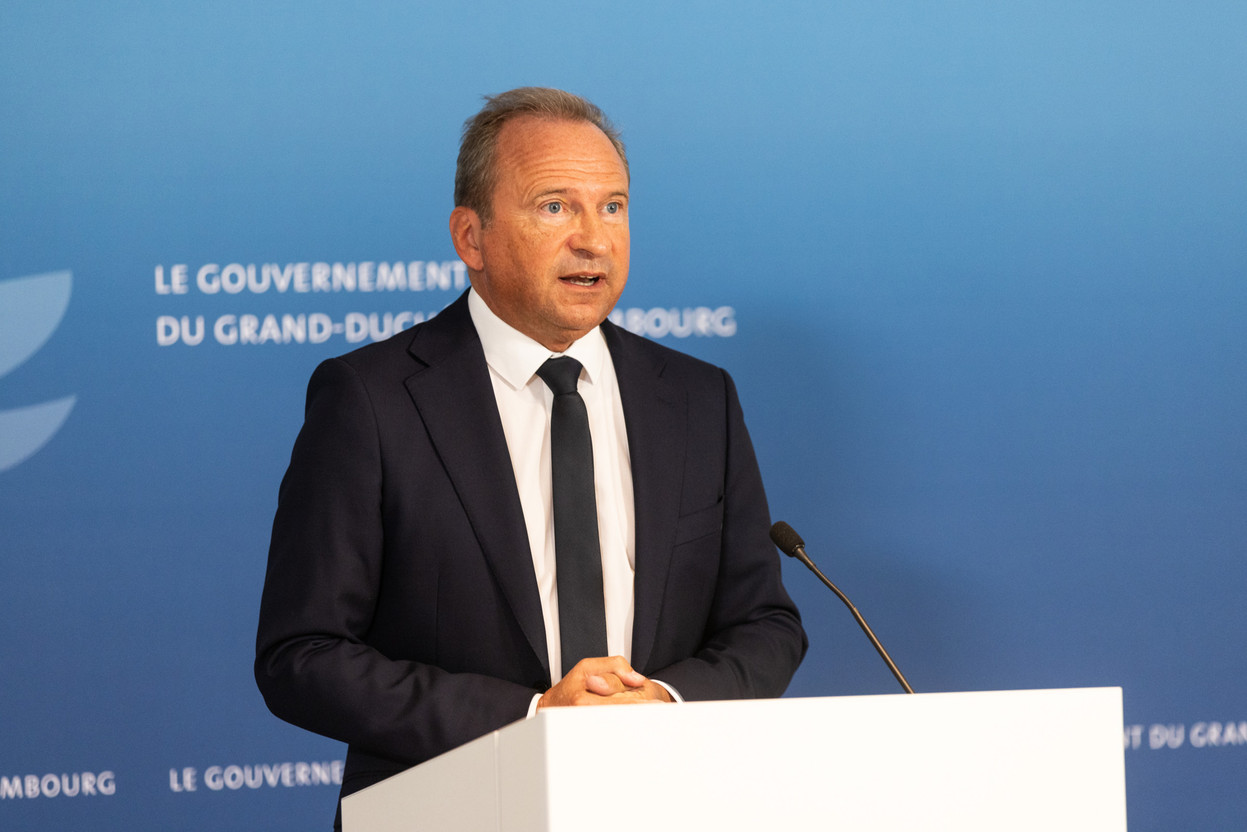
On Tuesday, 20 May, the National Council of Public Finance (Conseil National des Finances Publiques or CNFP) presented its assessment of Luxembourg’s medium-term budgetary and structural plan (PBS). The institution also takes stock of the annual progress report.
Luxembourg--and other member states--must reduce its debt ratio, as set out in the EU’s new fiscal governance framework adopted a year ago. It is within this framework that the member states were required to present their budgetary and structural plans (BSPs), which detail the medium-term trajectories of net primary expenditure (NPE). This is what Luxembourg did in autumn 2024, basing itself on an average increase in net primary expenditure of 4.9% for 2025-2028.
Although the trajectory of this expenditure respects the requirements in terms of public debt (i.e. less than 60% of GDP) and public deficit (less than 3% of GDP), the increase is 1.7% below the historical average (1996-2023), “and would therefore require efforts to slow spending growth,” says the institution in a press release issued on 20 May 2025.
The fact that the CNFP mentions that the projected increase in NPPs “would require efforts” suggests that achieving this trajectory, while slower than the historical trend, is not automatic and would require active management to slow the pace of increase in public spending in order to achieve the PBS debt and deficit targets.
The CNFP also points out that, given the ageing population and without major policy changes, spending trends are likely to lead to an increase in the deficit by 2038, although it should still not exceed 3% of GDP.
The ceiling exceeded this year
Also on the subject of spending, if the ceiling is respected in 2024, it could be exceeded in 2025, warns the CNFP. “According to the annual progress report published at the end of April, the rate of growth in NPPs will be 6.7% in 2024 and 7.1% in 2025, representing a deviation of 1.3% percentage point from the 5.8% ceiling.” It should be noted that “the government is forecasting the same level of public spending as in the 2025 budget, despite the downward revision of the level of public spending for 2024, which amplifies the rate of increase in NDP for 2025.” This projected overrun for 2025 is a concrete illustration of the challenge of keeping spending growth within set limits.
For reasons of reliability, the CNFP is calling for “a complete update of the DPN data and forecasts in the next AARs,” says the statement. It noted an inconsistency between the downward revision of public spending for 2024 and the forecast for 2025, which maintains the same level of spending. Furthermore, out of 87 projects described in the progress report, it was noted that 29% had been achieved, 66% were being implemented and 6% had been announced.
This article was originally published in French.