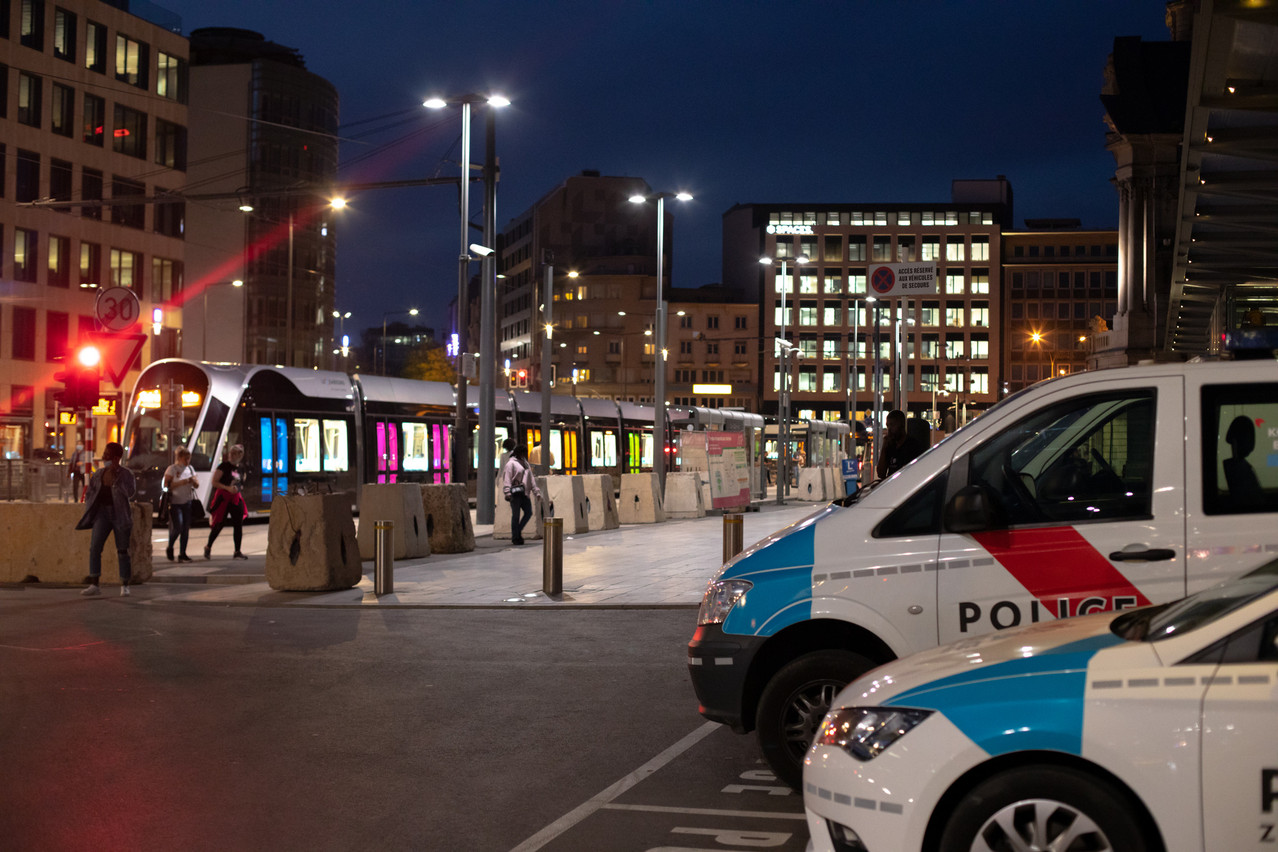
At the cabinet meeting on Wednesday, a bill was approved that strengthens the policy of “Platzverweis,” the Luxembourgish word for “eviction.” It gives the police greater powers to remove a person “not only when they obstruct entry to or exit from a building, but also when they behave in such a way as to disturb public order, obstruct public traffic or prevent the free movement of passers-by on a public road or annoy them.”
This law introduces conditions relating to the duration and distance of the removal and adds the possibility for the authorities to pronounce a temporary interruption of place “in the event of repeated disturbances committed by a person.”
“Public space belongs to everyone,” wrote home affairs minister 
“With the enhanced ‘Platzverweis,’” he added, “the government is providing the police, as provided for in the coalition agreement, with a policing measure with an extended scope and clearly defined procedures.”
The document specifies the behaviour targeted and the concrete measures.
—The targeted behaviours: obstructing the entrance to or exit from a public or private building that is accessible to the public in such a way as to impede the freedom of movement of others; disturbing public peace, health or safety; obstructing traffic on a public throughway; interfering with the freedom of passers-by to come and go on a public road and in places accessible to the public; annoying pedestrians on a public street and in places accessible to the public.
—The stages of the “reinforced Platzverweis” procedure: a call to order by the police; an order to leave by the police; removal by the police; if necessary, removal may be by force, within a radius of no more than one kilometre and for a period of 48 hours; a report is drawn up for each removal; in the event of non-compliance (at least twice in the space of 30 days), the mayor may impose a temporary ban on the premises for a maximum period of 30 days.
Two years ago, when he was a member of parliament, Gloden wanted to go even further. In particular, he wanted “Platzverweis” to be introduced across the board, i.e., not just at the entrance or exit of buildings accessible to the public, and for it to be possible to take offenders to the police station in the event of repeated offences.
This article was originally written in French.