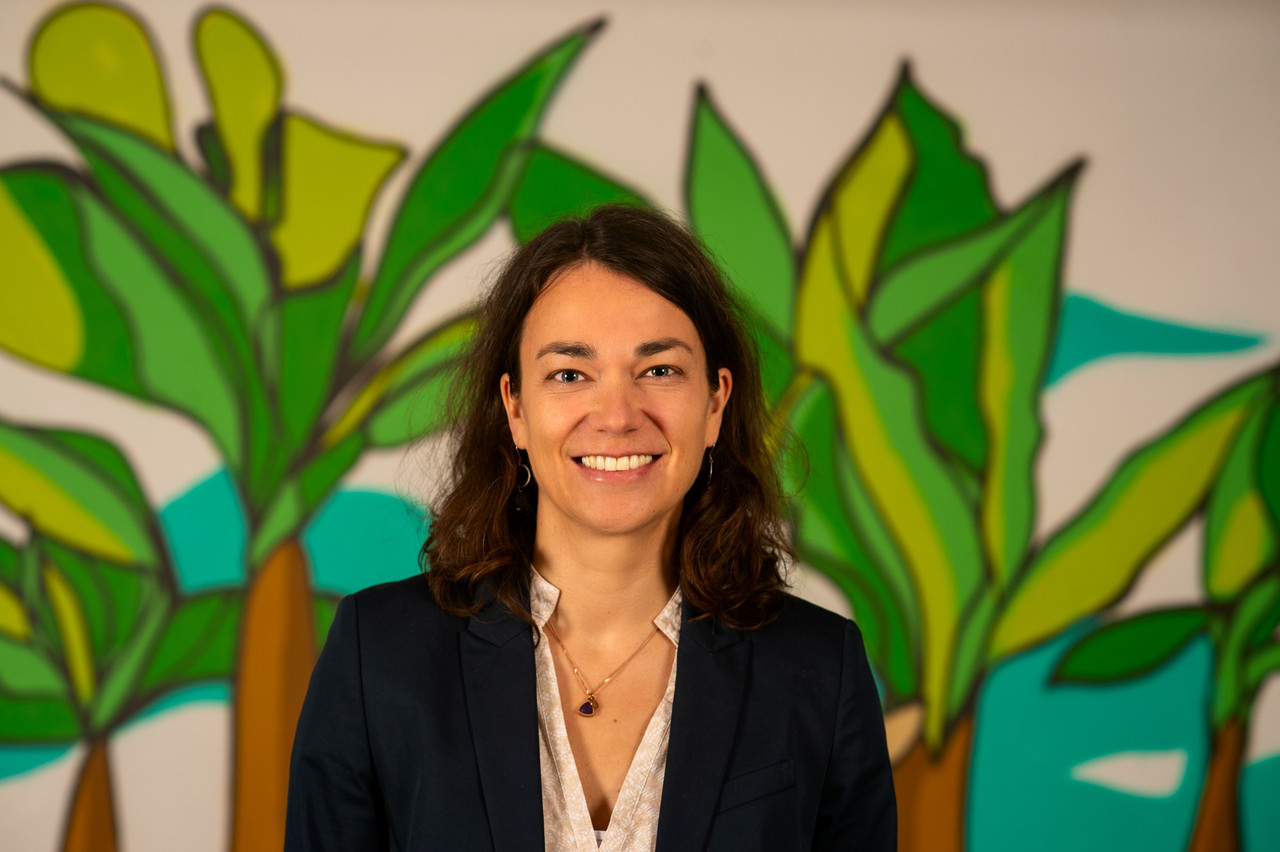
“The major strength of the EU deforestation regulation (EUDR) is that it addresses a global challenge by acknowledging that agriculture is a major driver of deforestation in many regions of the world,” said Christina Ehlert, head of programmes, agriculture and forestry value chains at Ada Microfinance, during an interview on 18 January 2024. She thinks that European players buying the commodities that are contributing to deforestation must take their responsibilities.
“We need to make agro-food systems are more sustainable without relying on cutting wood,” stressed Ehlert. She noted that the regulation’s weakest points lie with the lack of focus on “conservation, livelihood and providing alternatives.”
Ensuring a livelihood and inclusiveness
On the EUDR, Ehlert is concerned that “purely monitoring for a compliance issues” will not solve deforestation. She explains that spatial data helps Ada, an inclusive finance NGO, to develop programmes that are reversing the trend on deforestation. More globally, the goal of Ada is to promote “local economic models based on natural forest regeneration reforestation and afforestation… that are inclusive.” Consequently, “we pay producers for sustainable forest management to make a livelihood out of it.”
She provided an example in Guatemala where Ada organises roundtables between producers and off takers to support value chain integration and to access finance (e.g., loans to maintain the forest) that is inclusive for small scale producers.
Besides, Ehlert explained that their forestry programme is to optimise management models for small-scale forest, so that “producers enter a cycle of positive management and production and innovation.” Grants may help to add “technical capacity… to access market solutions.”
Finding the relevant partners to improve the value chain
“In Guatemala, we have a partner organisation that on a regional scale, supports companies, but also does technical capacity building for producer,” said Ehlert. Ada sees itself as playing a crucial role “to promote the less known [wood] species… to support producers”. Ada thinks it can help various stakeholders by reaching out to the competent partners thanks to its extensive network.
The challenge of data
Elhert expressed some concerns that smallholder farmers may be too dependent on third party data providers regarding geolocalisation. She explained that owning and accessing data become key for these farmers, as it gives them the ability to prove that they are compliant with the regulation and negotiate more advantageous terms with other off takers, if need be.
European off takers and buyers are not ready

Ehlert noted that Fairtrade International is providing data access to support its cooperatives with “remote sensing” to ensure “transparency, and good data stewardship and ownership.”
Is the press covering the EUDR enough?
The specialised press such as the Global Partnership for Forest and Forest News are covering the sector well and are aware of the regulation, but she is not sure the whether the “larger public knows what is coming and why it's there.”
Ready for EUDR?
Compliance with the new regulation is required for 30 December 2024. Yet Ehlert thinks that “European off takers and buyers are not ready.” She expects the value chain of local farmers and the transformation companies to be in conformity to maintain their partnerships.
Yet Ehlert is particularly wary about the additional burden for smallholder farmers to stay within the supply chains given their limited financial resources to stay up to speed with global regulations. She explained that that Ada is supporting their “partner organisations” to address their weaknesses, such as helping a firm in Honduras developing their own data management system and to move out of certain value chains to improve their compliance with the EUDR.
With the help of Luxembourg, Switzerland and Liechtenstein, as well as nine impact investors, Ada coordinates larger scale investment programmes called smallholder safety net upscaling programme (Ssnup) to “foster investment readiness of investees in agriculture with a focus on Africa,” said Ehlert. The programme helps in terms of “traceability and data information systems for risk management and risk assessment.” These are all matters that the EUDR is attempting to address.
A life outside EUDR
Ada is also involved in activities outside the scope of the EUDR. Ehlert cited Ada’s agricultural financing programme in Senegal where the farm plot is small--around one to two hectares--and serves local markets.
This article was published for the Delano Finance newsletter, the weekly source for financial news in Luxembourg. Subscribe using this link.