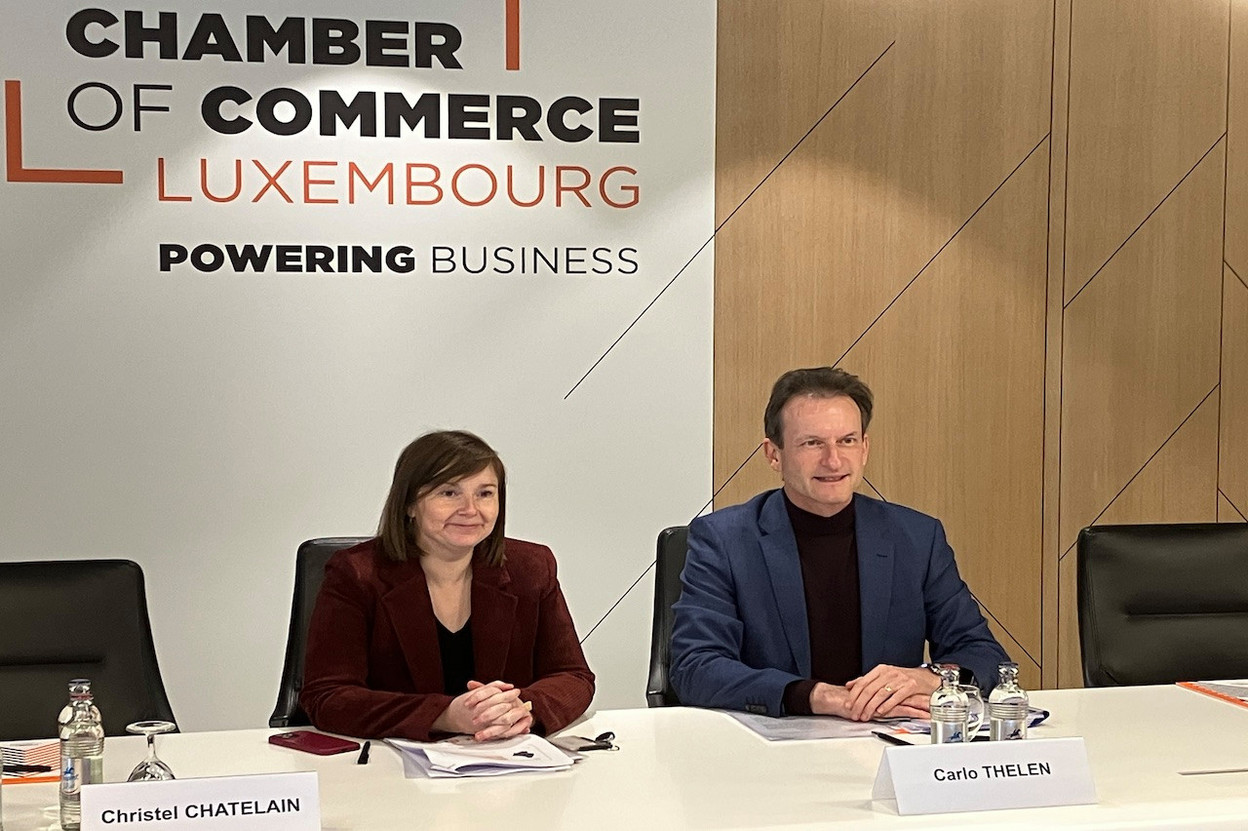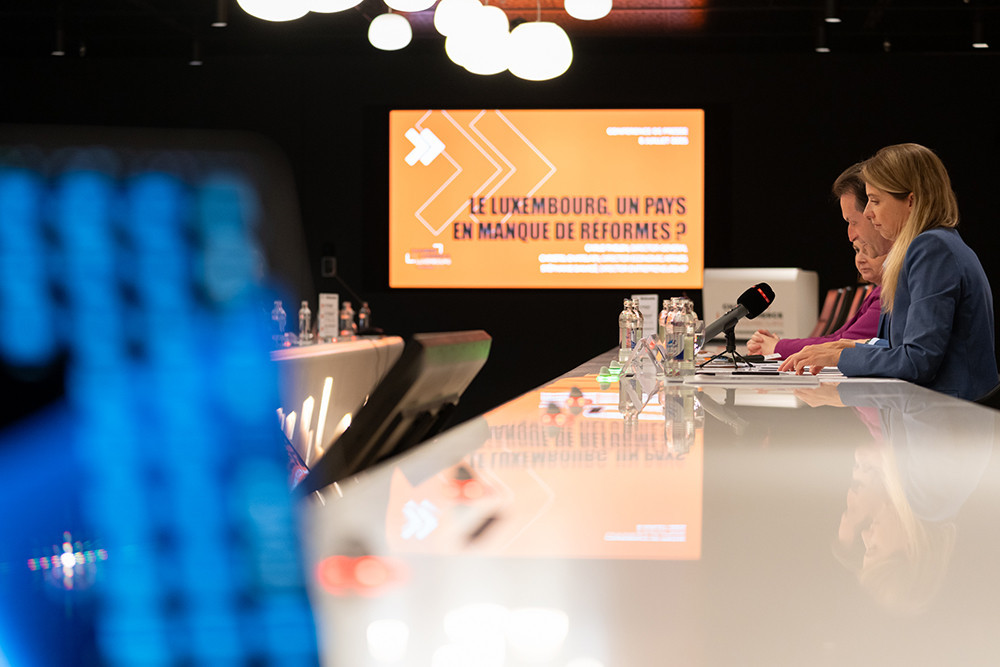
“We chose a slightly provocative title for this thirteenth Barometer of the Economy survey,” Chamber of Commerce director-general 
Among the highlights of this latest economy barometer, “we note that uncertainty reigns with persistent geopolitical tensions. Businesses are proceeding cautiously, but the 2.1 point rise in the barometer’s overall score compared with the previous six months reflects a slight improvement in the outlook for activity, employment and investment. The start of European monetary policy easing in 2025 is giving businesses some breathing space, but sectoral disparities remain and the score is still a long way from pre-crisis levels (63.3 in H1 2019, compared with 51.4 currently). This slight rebound in the business climate is encouraging, but it remains extremely precarious and in order to be able to redistribute wealth, it must first be created,” continues Thelen.
“Business confidence is very heterogeneous depending on the sector. Manufacturers are regaining confidence in the medium-term future of their business (+27.5 points), while the financial sector, which usually trumps the surveys with its optimism, is down 15.5 points for confidence in the future of their business,” comments Christel Chatelain, director of economic affairs.
Same reservations from the financial sector
“The outlook for profitability and investment also remains worrying. As far as profitability is concerned, 54% of companies expect it to remain stable, while 24% expect it to fall, particularly in industry and commerce (30%). After several half-yearly declines, the overall level of investment remains worrying. 58% of companies expect investment to remain stable, 24% to fall and 18% to rise. With the exception of Horeca, the proportion of companies forecasting a fall in investment is increasing in all sectors,” adds Chatelain.
In detail, 21% of companies are not even forecasting any investment in 2025 and 2026. This figure rises to 26% for very small enterprises (VSEs) alone, 32% for transport companies and 27% for those in the hotel and catering sector. “Without targeted stimulus and appropriate incentives, we risk compromising the ability of businesses to innovate, transform and remain competitive,” insists the Chamber of Commerce’s director of economic affairs. Companies in the financial services sector are also cautious: only 18% plan to increase their investments.
This is felt on the employment side, with 70% of companies planning to maintain their workforce, 18% to increase it and 13% to reduce it. “Admittedly, this represents five points less than in the second half of 2024 in terms of job cuts, but it does not represent much of an increase in new positions.” The transport sector, meanwhile, shows a deterioration, with 25% of its companies planning to cut jobs, compared to 13% six months ago.
Administrative simplification still a long way off
Although the government has made administrative simplification one of its priorities, “companies are struggling to see the effects. Only 3% have seen procedures simplified over the past 12 months, a figure that is falling, while 35% feel that procedures have become more complex, a perception that is rising. A striking fact is that not a single company with more than 250 employees has noted any simplification in this area,” points out the Chamber of Commerce in its press release.
Also present on Tuesday 8 July, the Chamber of Commerce’s director of entrepreneurship, 
For 71% of businesses, administrative procedures are a drain on their profitability. “In addition to being cumbersome, it is an administrative approach that is perceived as punitive that is worrying: almost a third of managers (29%) criticise an approach that focuses on punishment rather than support. Added to this is the complexity of the tax formalities to be completed without assistance (28%) and the lack of real-time monitoring of the administrative procedures submitted (28%).”
“Administrative complexity has become a structural brake on competitiveness,” laments Damgé. “We need to simplify procedures to free up time and resources for innovation and growth. When it comes to simplification measures, three priorities stand out: at the top of the list, the availability of a single point of contact (guichet), online and in person, connected to the various administrations (deemed useful by 75% of business leaders), the strengthening of the right to make mistakes (73%) and the generalisation of the ‘once-only’ principle (71%).”
This article was originally published in French.