You arrived in Luxembourg just before the festive season to take up your post at the beginning of January. What has struck you most in the first few weeks?

The second thing is the very high level of expertise of the employees. What was also surprising for me was seeing so many different cultures: that’s unique in a country and gives it a real dynamic.
In terms of your career, what does this new challenge represent for you?
“It’s the first time I’ve found myself in a situation where I have all the business lines in the same territory and within a bank that already has a strong culture. This requires both a good understanding of local culture and the time to get to know all the business lines. I’m very curious about all these things! So I’m really keen to get on with it, and build our new roadmap for the next few years.
When you’re “sent to Luxembourg” from Paris, do you feel it more like a promotion or a punishment?
“For me, it’s a promotion! Having all the banking professions concentrated in one area is extremely interesting. But it also brings challenges, particularly in the face of new players entering the Luxembourg market. In a context where technology is a determining factor for growth, players like the neobanks are pushing us to really anticipate, adapt and strengthen all our commercial franchises.
We invest around €60m a year… There will be some innovations this year, moreover.

How do you plan to outperform these new players?
“For us, the challenge is to roll out our innovations as quickly as possible and continue to maintain a high level of investment over time. During our Growth, Technology and Sustainability [GTS] plan, which we have been implementing since 2022, we have invested massively, and our aim is to continue to do so.
How much?
“We invest around €60m a year. In the face of the new players, we are banking on artificial intelligence [AI]—we have a dedicated team—but also on the continued digitalisation of the entire customer pathway, not just for day-to-day banking, but also for savings, loans and professional and business customers. In fact, there will be some innovations as early as this year.
Rapidly after your arrival, you met representatives of the Luxembourg government, which is also your local shareholder with a 34% stake. What were the first topics discussed?
“In fact, in the governance of our bank, the State is represented on the Board of Directors, and the Chairman of the Board [Bob Kieffer, editor’s note] is one of its representatives. The main topics were innovation, with several discussions around artificial intelligence and how to project ourselves into the future.
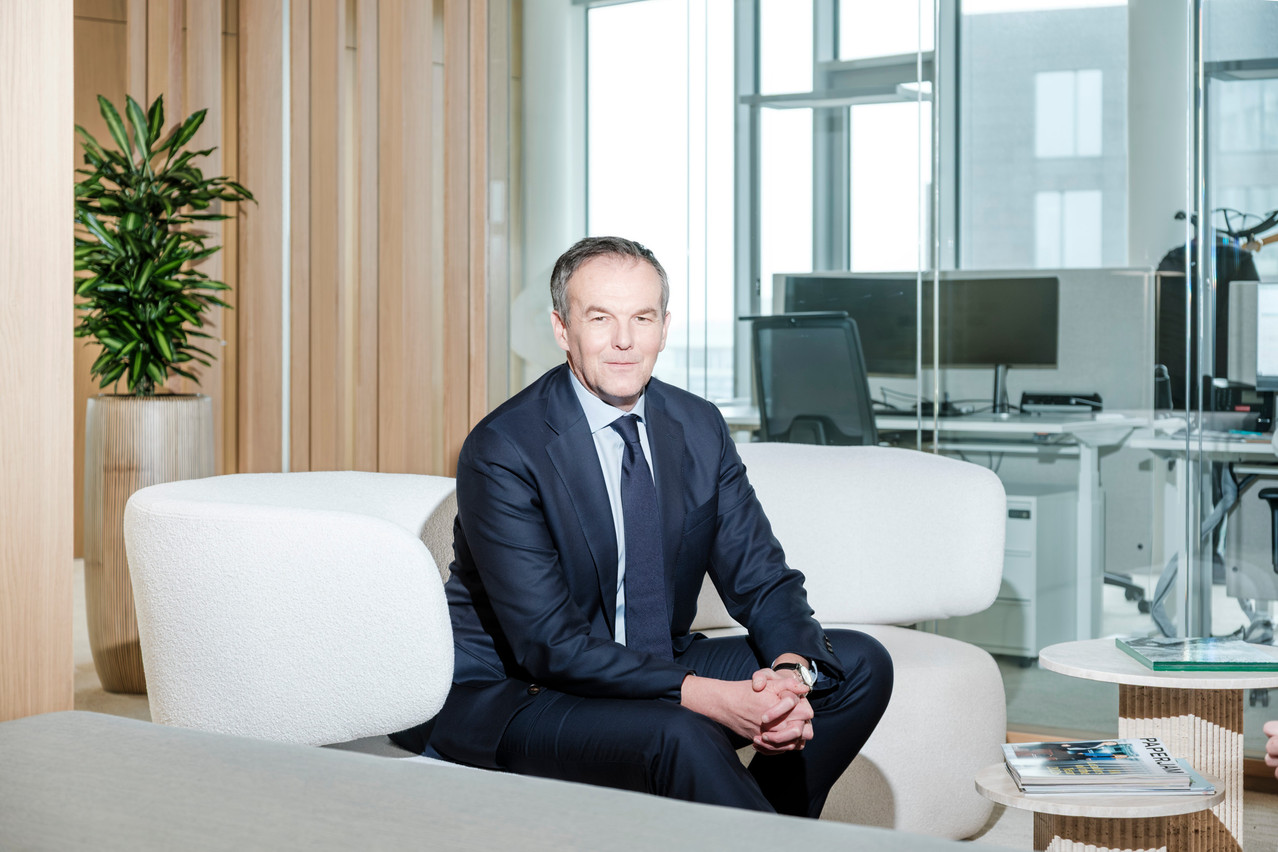
Nicolas Otton has built his career on hard work: sales network, regional management in Île-de-France, then since 2020, head of private banking France, the market leader with €122bn in assets under management and nearly 2,000 employees. (Photo: Jan Hanrion/Paperjam)
Is the state a good shareholder?
“A good shareholder, in the end, whatever its nature, is a stable shareholder. And the state has been stable for over 15 years and supports both our projects and our investments. So yes.
What is your view of the Luxembourg financial centre and how do you think it could be made even more competitive?
“I think its main strengths are its agility, its ability to act quickly and its very good understanding of the ecosystem. These are strengths that need to be maintained. Then, in order to maintain the momentum—and this is very much on the minds of the public authorities—the main topic will be innovation and how the Luxembourg financial centre can contribute to it. I find that Luxembourg, for its development, has many cards in its hand: a multicultural, dynamic and agile environment, with an ability to change rapidly, and this I was able to observe as soon as I arrived.
There are also challenges?
“Yes, particularly that of attracting talent. Today, skills are changing: we need a lot of skills in AI, particularly in data and digital. So we need talent and we also need to support academic research in universities. In 2024, we signed a partnership agreement with the University of Luxembourg. We have around ten employees specialising in AI, who are delighted to be able to share their experience. It’s a winning public-private approach.
BGL BNP Paribas is part of a large group. What decisions are still taken at local level? Is Luxembourg a decision-making centre or an operational platform for the group?
“The group sees us as a bank with very good customer franchises that are growing. We have invested heavily in recent years: in hosting our applications and our core banking system in the cloud—which means we can prepare for future technologies—in developing our business lines, and in building our new seKoia headquarters. In this, no, we are not a platform.
It’s true that certain businesses, particularly those designed to improve data service, especially in B2B or Securities Services, require the support of a high-performance platform. Above all, we are client franchises that provide expertise.
For BGL BNP Paribas, being part of a major international group is a factor that accelerates growth, as we benefit from BNP Paribas’ integrated model and innovations. For example, this year we will be launching a completely digital management mandate.
In our four domestic markets—Belgium, France, Italy and Luxembourg—we share a common ambition: to invest together. This gives us great strength and power.
In my opinion, a good leader practices modern management: [he] knows how to listen to his employees, and […] takes the time to do so.

Banks are becoming technology companies in their own right. How does AI mean we need to speed things up even further?
“We are already a technology company, and this is true across all our businesses, but always with human support, expertise and personalisation. That’s what really lies at the heart of our added value.
At the inauguration of the seKoia building, your predecessor, Béatrice Belorgey, spoke of a technology stack of around 1,500 pieces of software. Isn’t that hell to manage?
“We had to simplify. That’s why, for us, it’s essential to continue to invest in data, in simplified digital journeys and in AI, particularly in virtual assistants. It is absolutely necessary to continue to adapt to new technologies, such as with the emergence of agentic AI, and to be a leader in these areas.
In the context of instability and slowdown that we are experiencing, what are the main risks that you identify and how do you apprehend them?
“Firstly, in the face of all these risks, BGL BNP Paribas is a solid bank, with one of the highest solvency ratios [of over 23%] and significant profitability, which means that we have a solid bank within a group that is also solid. In the face of risk, this solidity is essential. What’s more, we have to be beyond reproach when it comes to cyber security, so that our customers’ transactions can take place in complete safety. We invest on an ongoing basis and have a permanent training scheme to ensure that everyone is aware.

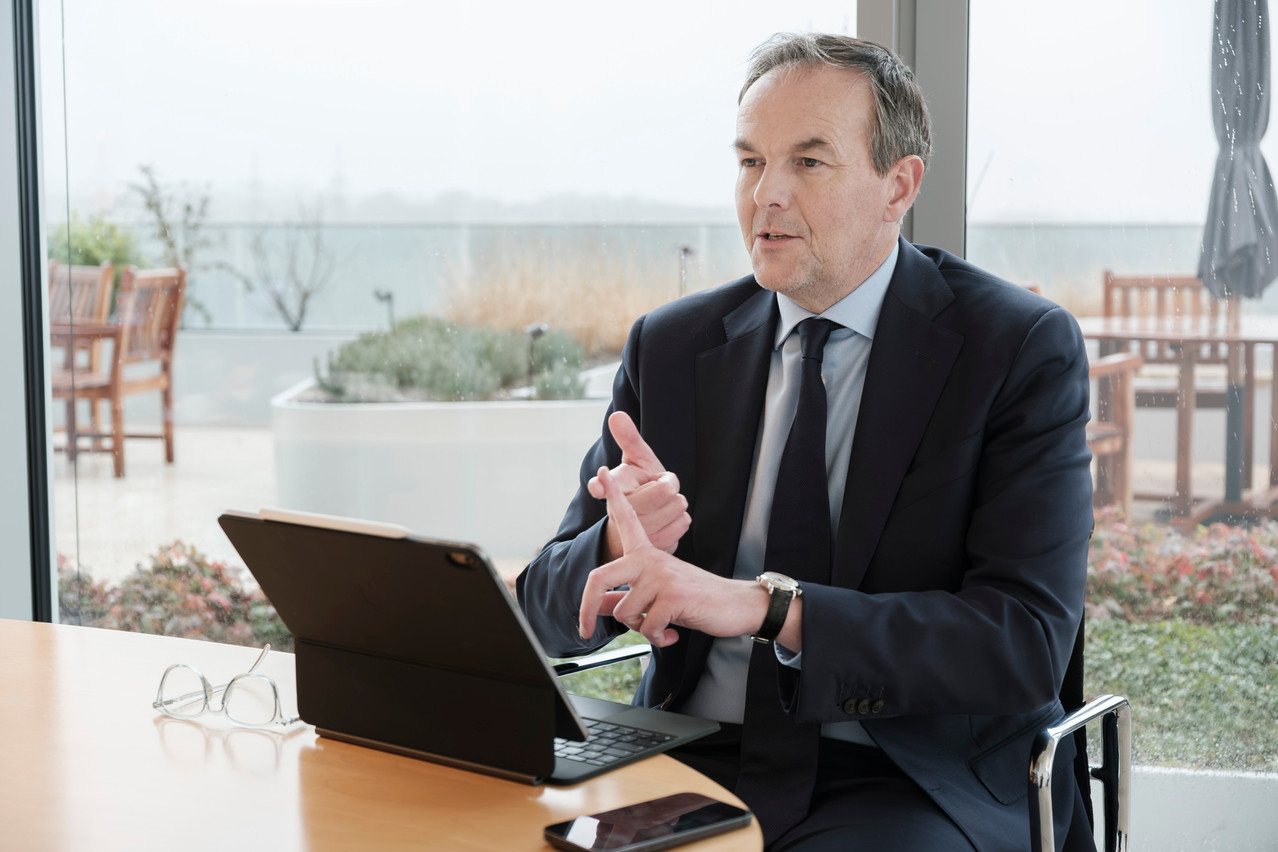
Nicolas Otton’s hallmark: adaptation. Faced with the rise of a new generation of entrepreneurs, he has changed the organisation, strengthened the wealth and legal skills of advisers and decompartmentalised expertise. (Photo: Jan Hanrion/Paperjam)
For you, what makes a good leader?
“In my opinion, a good leader practices modern management: it’s a manager who knows how to listen to his staff, and takes the time to do so, who provides a clear and simple vision, and who knows how to combine benevolence and high standards with his teams.
And do you have a red line?
“For me, the essential quality of an executive today is their reliability. It’s an important factor, perhaps even more so than their level of performance.
If you had to sum up your roadmap in three elements?
“For me, what will make the difference in the coming years is customer culture, which we will continue to strengthen. The second is continued investment in all our franchises. And then the third thing: making BGL BNP Paribas a leader in technology and innovation.”