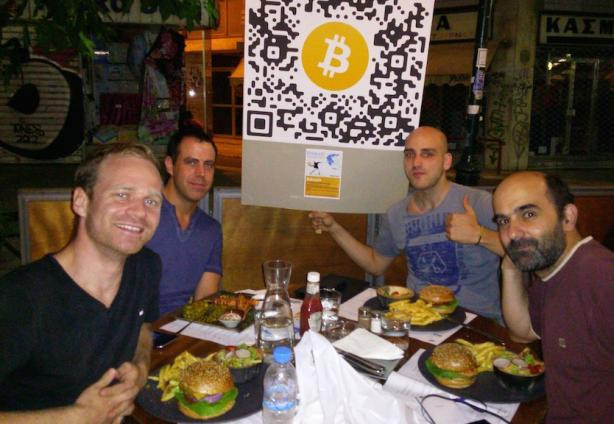
A bungee jump and a scuba diving licence. What most of us would pay with cash or a traditional credit card, Luxembourger Felix Weis has paid with the digital currency bitcoin. Combining his love for travelling and his interest in bitcoin, the freelance computer programmer has travelled the world paying only with bitcoins.
His idea originated in 2013, after he moved to Berlin and discovered a restaurant that has been accepting bitcoins since 2011. Having used bitcoins to pay for beers and burgers in the restaurant, Weis was sceptical at first about this “currency without borders, secured only by strong cryptography.” But he quickly started to appreciate the digital currency and how “easy and fast transactions over the block chain were.”
This changed his view on the first decentralised digital currency for good and he took on the challenge to only pay in bitcoin while travelling the world.
Ever since converting his savings into bitcoins, Weis has visited much of Europe, Turkey, Israel, Ukraine and has just begun the Asian leg of his adventurous journey. In order to try his best, Weis has laid down some rules. No credit cards, pay as often in bitcoin as possible, and small amounts of local currency are only allowed by trading bitcoins with the people he meets in that particular country.
Wherever he goes and wants to use the digital currency as payment he has to be very convincing, as many people have never heard of bitcoin. The 28 year old is aware that many people remain sceptical about the currency. Especially those who are not “very-tech savvy” he says, but “the idea of bitcoin is to have a fair, global currency for everyone, not only computer geeks”. So far his success rate is looking good, he was able to buy one item with bitcoin in each country, he told Delano while traveling in Hong Kong and Macau.
This worked particularly well in Budapest, the capital of Hungary, with many restaurants accepting the digital currency. While some people were startled when Weis asked whether he could pay in bitcoin, the best reaction was from a hostel owner in Sofia, the capital of Bulgaria. It took him 5 seconds to react and “he just said ‘yes’”. “We helped him get set up with a bitcoin wallet app on his iPhone and less than 60 seconds later, the payment was settled.” Weis remembers the man’s surprise in how “easy it was to receive the digital money”.
Language barrier
In terms of practicality, Weis says using the electronic currency has one challenge: the language barrier. He explains that bitcoin wants to be the first non-governmental form of money. The reference software has been translated collectively by community members into 136 languages, but it can be tricky to explain to someone who can only speak basic English what the advantages of bitcoins are.
The digital currency is also accepted in Luxembourg; five places already accept payment in bitcoin. To find those spots and learn more about the cryptocurrency, check out the “Bitcoin Luxembourg” Meetup group, or go to Weis’s blog.