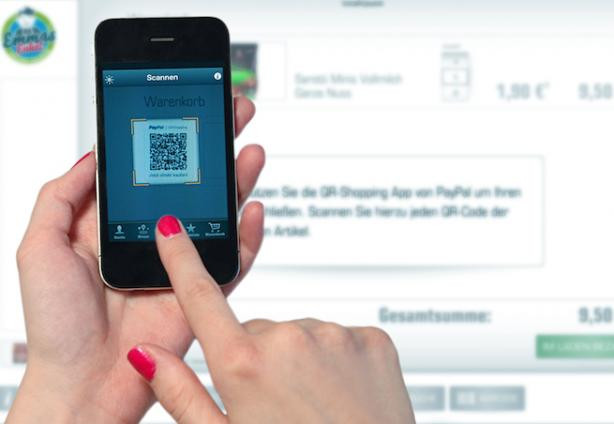
Consumers in the Grand Duchy use and trust mobile payment technologies less than elsewhere in Europe, a survey conducted for a big retail bank has found. Luxembourg banking customers are also less likely to use their mobile or digital currencies to replace cash, according to the ING’s “The rise of mobile banking and the changing face of payments in the digital age”, a published earlier this year.
“More than three quarters of Luxembourg’s residents (77%) declared they have never used a mobile payment app, compared to 63% for the European average,” ING said in a press release.
Just more than half (52%) said they “don’t trust” such technologies, compared to the European average (weighted by population) of 42%. Nearly one-third (32%) said they “never had the opportunity to use it”, in contrast to the 41% European average.
The survey was carried out for the bank by research firm Ipsos which polled 14,829 residents of 15 countries--12 EU members states, Australia, Turkey and the US--at the beginning of the year. The report was released in April.
“The Netherlands is the ‘most developed’ mobile banking market in the ING International Survey 2015, with the United States in second place, closely followed by the United Kingdom,” the report stated.
Respondents in the Grand Duchy were least likely to “indicate their money management has improved since using the technology” out of the 15 nations. 71% in Luxembourg said so, compared to 94% in Turkey, 89% in the US, 84% in the UK, and 79% in Belgium, 78% in France and 77% in Germany.
Replacing cash?
More than a third (38%) of Luxembourg survey-takers said they used “much less” physical cash than the year before. But, for comparison, that figure is lower than in Turkey (68%), Poland (63%), Italy (60%), and Australia and the European average (both 50%). Only Austria and Germany (both 31%) ranked behind the Grand Duchy (although cash dominates consumer transactions in those two countries at a much higher rate than seen elsewhere in the developed world, according to the European Central Bank).
ING’s communiqué also noted: “Alternative currencies have yet to catch [on] in Luxembourg as only 5.1% of residents trust bitcoin, a digital currency, versus 14% for European average. In Luxembourg, 12% of those aged 18 to 24 trust bitcoin versus only 2% of those aged 55 and more.”