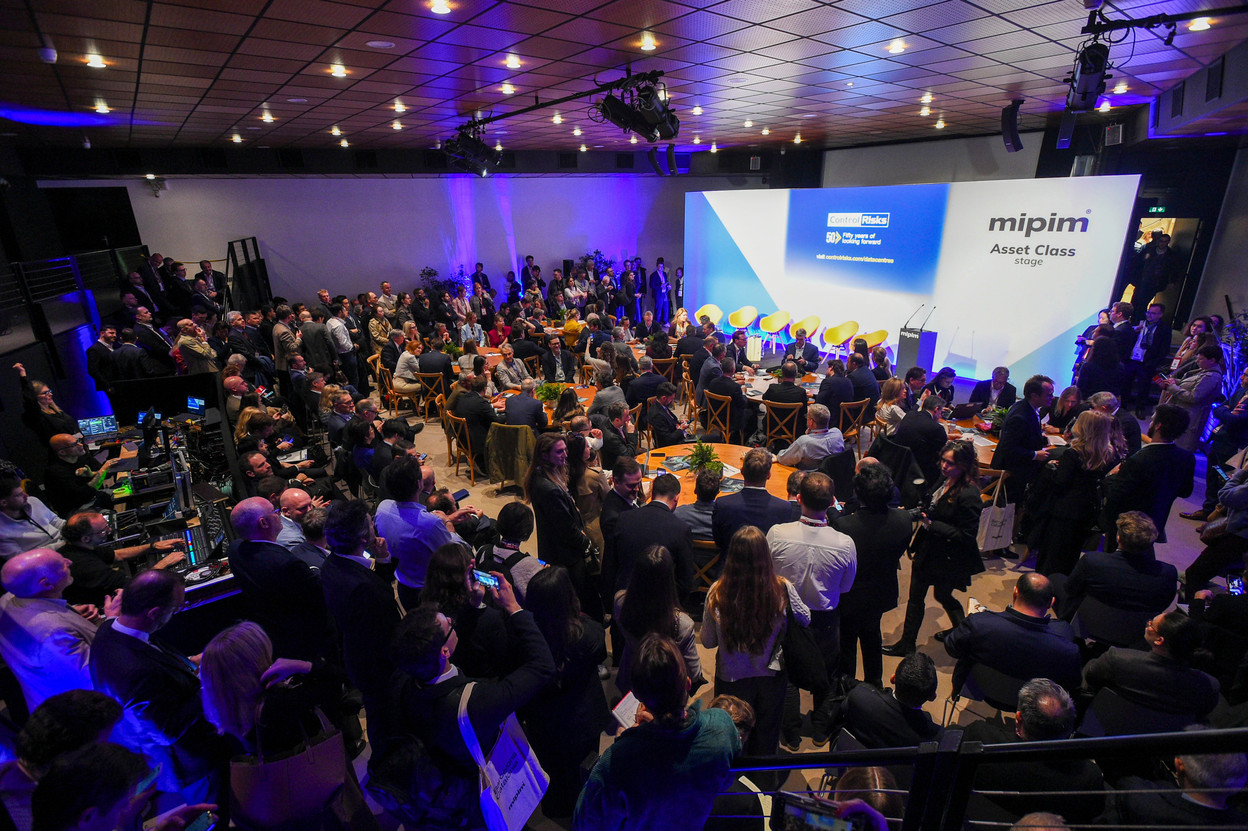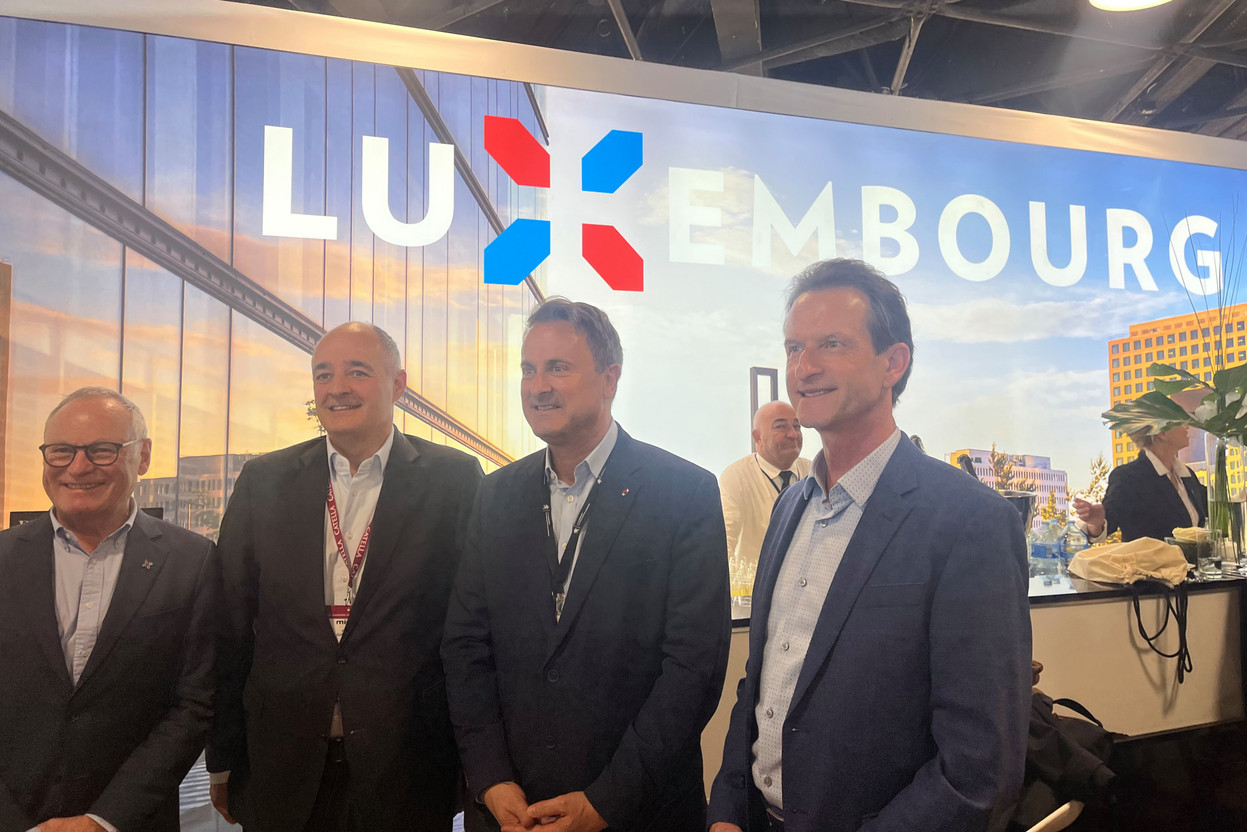
On the Croisette, the Luxembourg stand once again acted as a magnet. “At the start of Mipim [which took place from 9 to 13 March, editor’s note], we can tend to keep to ourselves, happy to meet up again to take up communications started beforehand and which can come to fruition here,” smiles the director of the Fonds Kirchberg, 
Because the “entre-soi” is just a starting point: very quickly, the international opening takes over. “We alternate meetings with foreign town planners, architects and developers, who form an essential breeding ground for future projects in Kirchberg.” The logic is clear: work together… on a European scale. “The calls for tender that we publish are European,” explains the director of the Kirchberg Fund. “This regulatory constraint has become a strategic opportunity to open up to other knowledge and other techniques via European companies or offices.”
At heart, the pipeline is dense. “Housing projects, competitions, the appointment of a winner, an accelerating timetable… But we’re ready for the challenge,” continues Marc Widong. The development is based on a well-oiled machine. “The Special Development Plan (SDP) [how a specific plot of land or area can be built or developed in terms of layout, height and construction, editor’s note] provides the template and type of structure before the operational phase. It’s a long process, but one that structures urban quality.”
We receive no subsidies from the state, the system is based on the added value that is used to cover our costs.

Beyond the figures, the mission remains political
Through its economic model, the Kirchberg Fund cultivates its independence. “We receive no subsidies from the state,” emphasises Marc Widong. The system is based on a simple principle: “The added value created must be used to cover our costs.” A circular model, reinvested entirely in the area.
“But our aim is to ensure that Luxembourg remains an attractive European capital while communicating the Kirchberg Fund’s stated social dimension, i.e. to position itself 40% below the open market price for housing.” In practical terms, this effort is reflected in a slight downside: “At present, we are on a waiting list of between two and three years for property deliveries…”
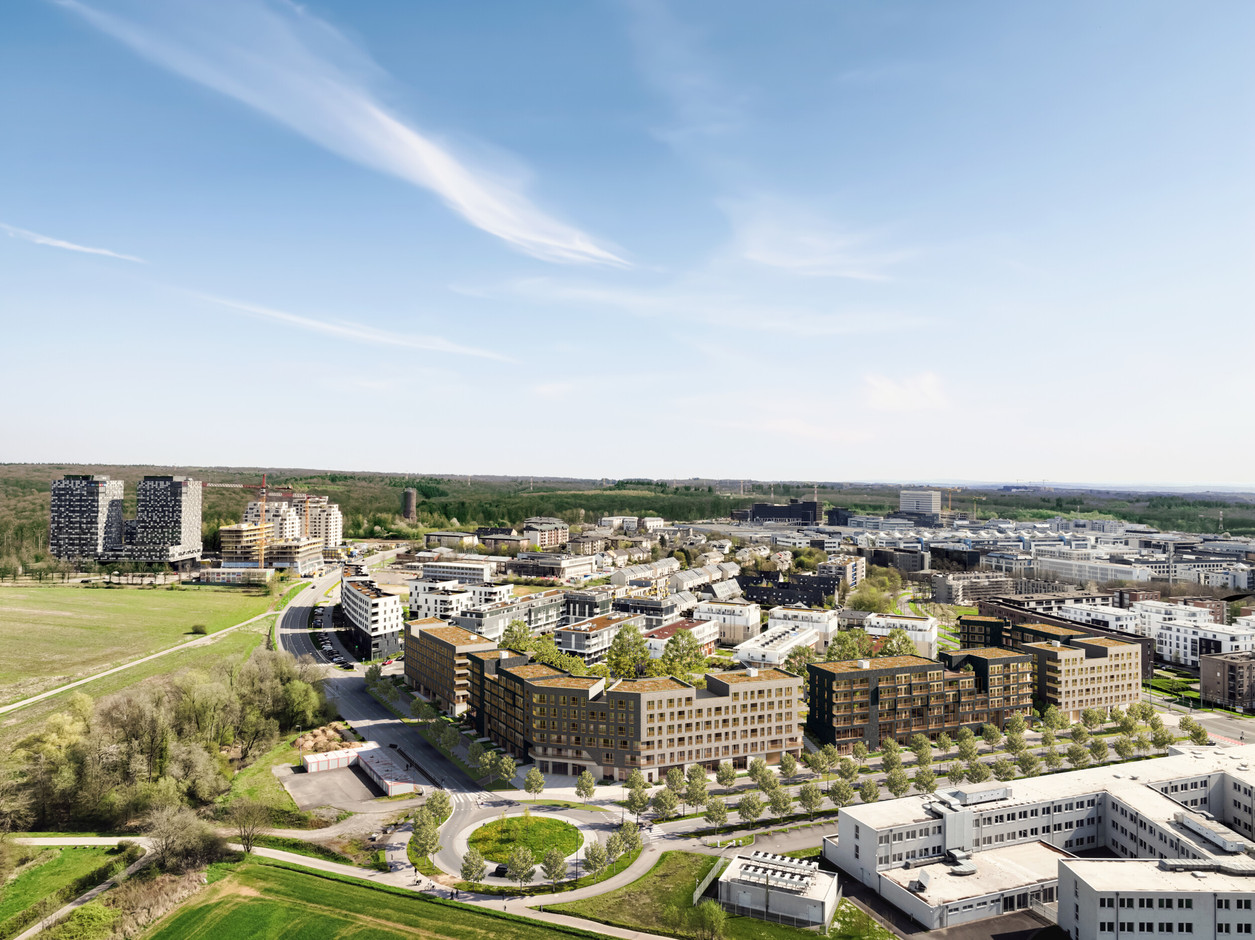
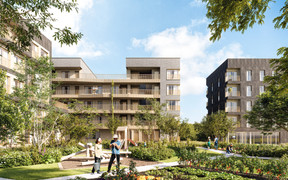
After the Kirchberg, we are now moving towards Howald, the Fund’s new expansion site.

The good news, however, is that the fund’s field of investigation is expanding: “We are now tending towards Howald, a new area of expansion.” Not enough to rename the fund, but certainly something to celebrate.
For the chair of the board of directors, Sylvie Siebenborn, this is also a time to rejoice at her first foray into Mipim: “I’m finding a lot of interest and a most inspiring international dynamic.” Sylvie Siebenborn, too, insists on the human element and the wealth of exchanges and contacts with developers, architects and investors in Mipim mode and mood.
Some investors are not yet represented here even though they would allow diversification and attractiveness.

One point in particular catches his attention: “Certain investors are not yet represented in Luxembourg, even though they would offer tremendous leverage in terms of diversification and attractiveness. That’s why we’re here,” concludes the chair of the board of directors.
On the Mipim stand, the demonstration is also visual. The head of communications for the Fonds Kirchberg, 
Nature as the matrix of the urban project
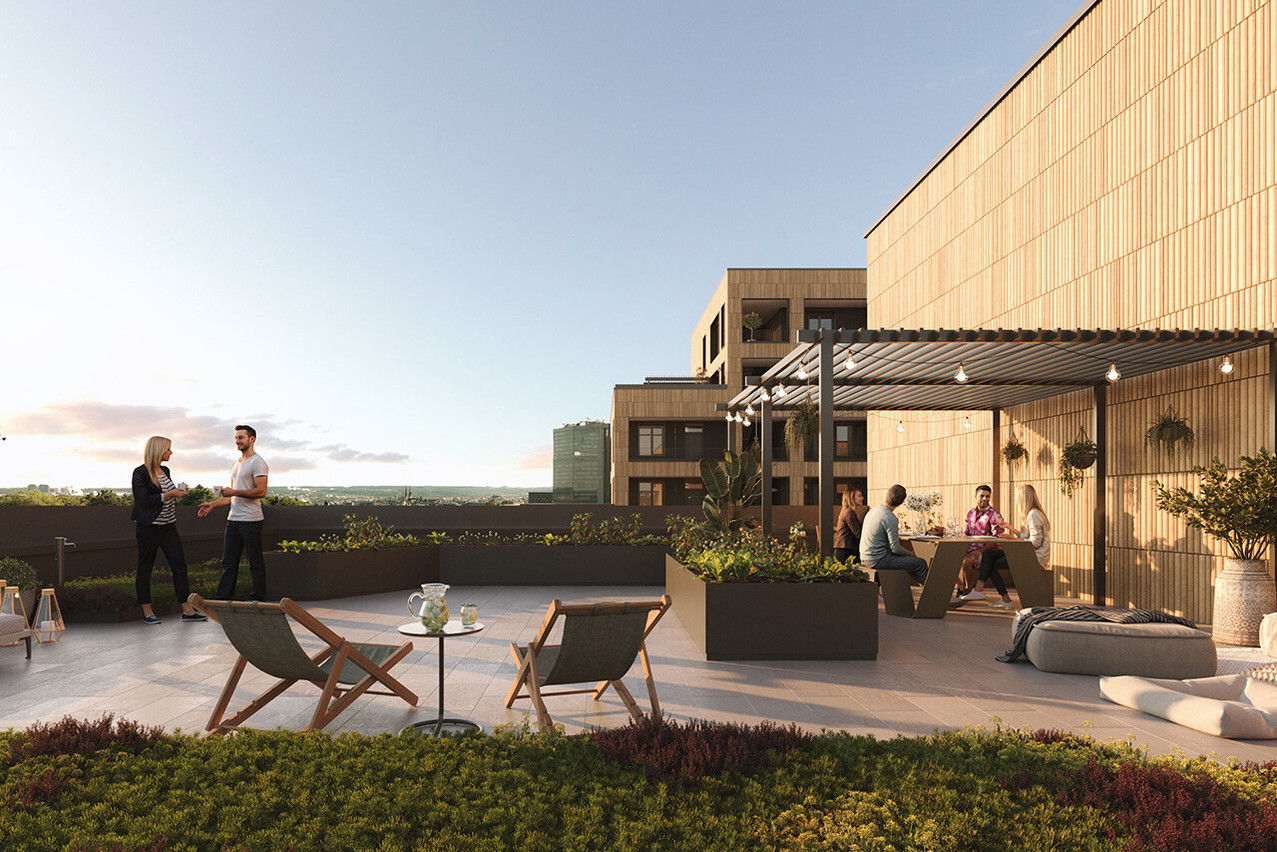
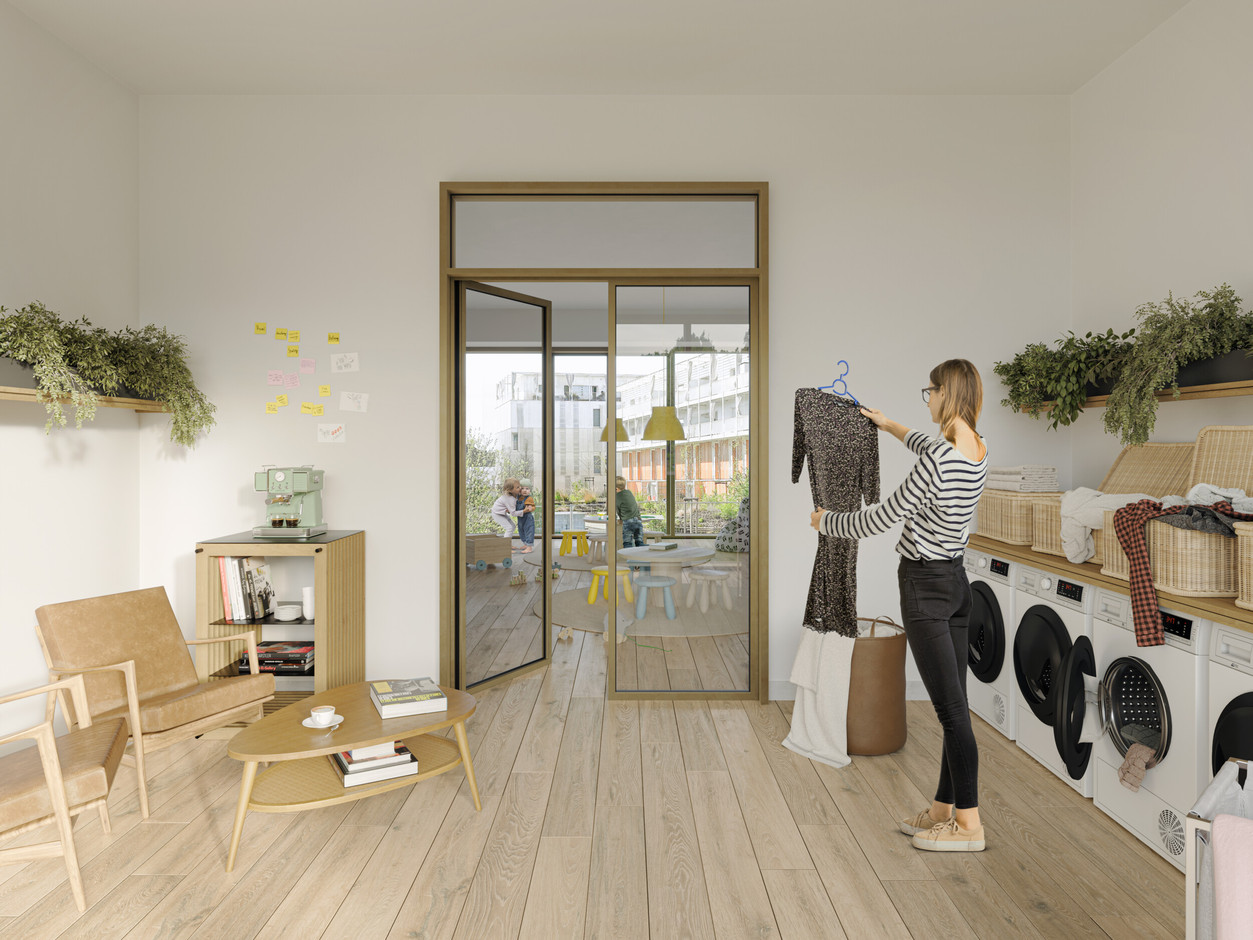
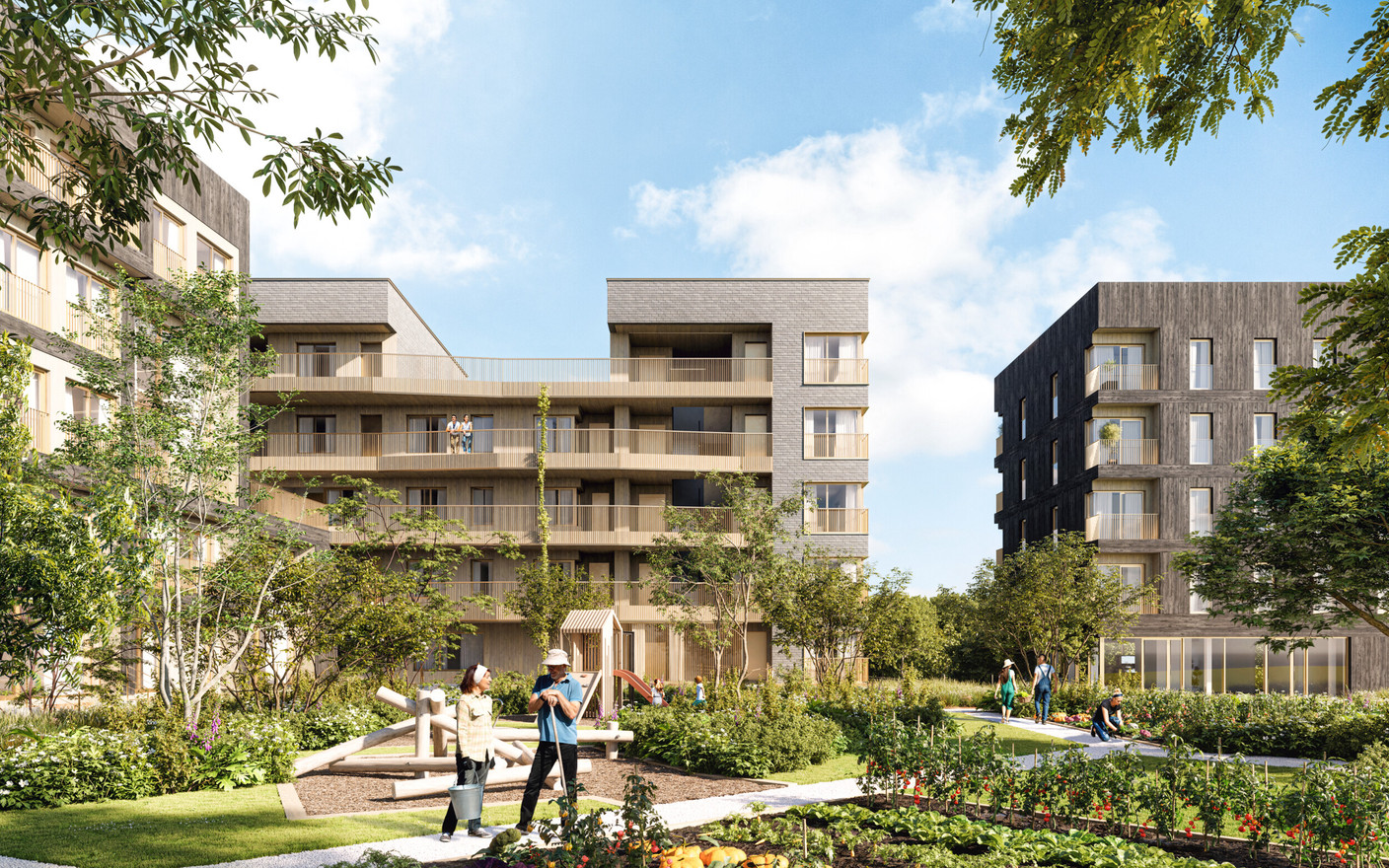
“The results of the competition will be announced at the end of the year and represent a key milestone in the development schedule. Over and above all these projects, it’s a philosophy that is asserting itself. For example, the first thing we think about before building is the presence of trees,” explains Céline Coubray. She takes the opportunity to give a concrete illustration of this with the concept of the urban farm. “One of our prerequisites is to re-establish a direct link with nature and to produce locally. It is the symbol of a more productive and educational urbanism that will soon be efficient.”
But the work initiated by the Fonds Kirchberg is also changing the urban landscape. “The Kirchberg is gradually changing its face. More mixed, more inhabited, more connected, projects like Kennedy South embody this transition and this desire to create a link between the institutional and residential districts,” concludes the head of communications for the Fonds Kirchberg.
Between economic ambition, environmental requirements and urban innovation, the Fonds Kirchberg is moving forward methodically. And at Mipim—network in hand, 3D model to back it up and long-term vision—it made that clear!