Corporate banking can be characterised as a “hidden jewel” within Luxembourg’s total financial output. The Grand Duchy has developed into a sophisticated international hub with well-capitalised banks that are deeply integrated into global markets and offer a full range of corporate banking services.
Luxembourg stands as a dynamic force at the core of Europe’s corporate banking sector, blending a tradition of stability with cutting-edge innovation and a distinctly pro-business environment, according to the position paper.
“With its expanding CIB (corporate and institutional banking) capabilities, Luxembourg is becoming a natural gateway for large corporates seeking efficient access to eurozone markets, sustainable investment vehicles, and centralised treasury management,” said François Masquelier, chair of the Luxembourg Corporate Treasury Association (ATEL) and chair of the European Association of Corporate Treasurers (EACT).
Five enablers of growth
The PwC Luxembourg and ABBL report identifies five key enablers underpinning Luxembourg’s success in the corporate banking arena.
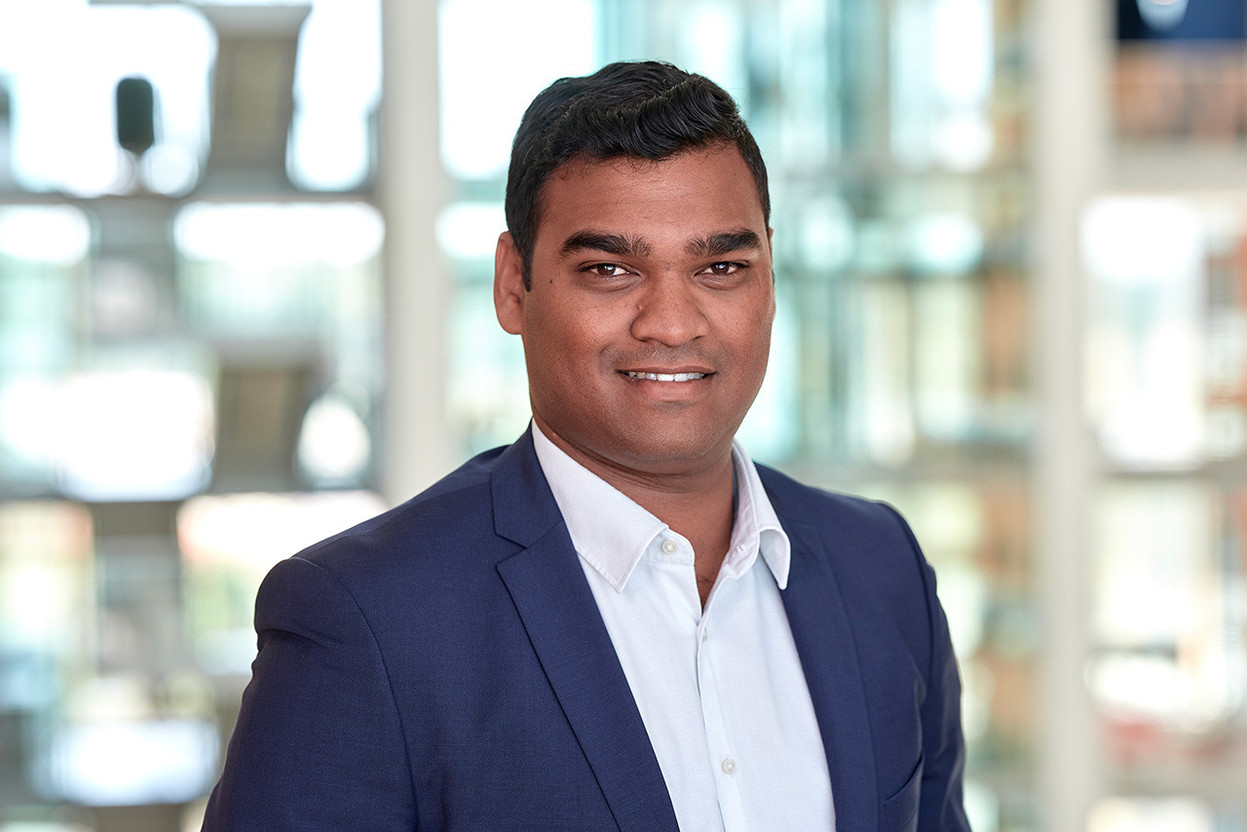
“Having worked with corporate banks across different markets in Europe and beyond, I’ve seen how Luxembourg uniquely blends trust and innovation,” said Ryan Davis, a PwC banking partner responsible for PwC’s contribution to the report.
The report “clearly demonstrates why Luxembourg stands out as a leading centre in corporate banking, while giving bankers and their clients the opportunity to showcase the unique added value our financial ecosystem provides,” added Hélène Lange, head of business coordination at ABBL, in the press release accompanying the full report.
Stability and access to decision-makers
First among these enablers is Luxembourg’s regulatory stability and governance. A well-established legal and regulatory framework ensures predictability, investor protection and confidence in long-term operations.
The country’s small scale and supportive government policies allow close access to government and supervisory decision-makers, fostering collaboration and agility. “All key stakeholders in Luxembourg are approachable and distances are short,” Deutsche Bank Luxembourg CEO Daniel Zapf noted. “This makes a difference day-to-day.”
“The Luxembourg government recognises the importance of the financial sector as the biggest GDP contributor and has an open-door policy,” Zapf added.
The financial centre’s workforce is highly skilled and multilingual. Professionals commonly speak at least three languages, allowing financial institutions to service diverse international clients effectively. The total number of employees in credit institutions reached 26,150 in 2024.
Depth of local expertise
Luxembourg can also offer local expertise and a deep financial ecosystem. The financial centre has attracted a concentration of international banks, advisory firms and legal specialists, which facilitates sophisticated deal-making, corporate finance and structuring.
With a thriving fintech and regtech ecosystem, supported by government initiatives such as the Luxembourg House of Financial Technology, the country is well-placed to support innovation and digital integration.
On ESG and sustainable finance, Luxembourg continues to lead Europe’s green finance agenda, serving as the institutional home to the Luxembourg Green Exchange (LGX) and LuxFLAG.
Strong contribution to banking revenues
Corporate banking makes a substantial contribution to total banking revenue, accounting for approximately 35% of the total. The profitability of local credit institutions is exceptionally high, reflecting consistent sector strength. Net profits surged to €7,200 million in 2024, up from €3,000 million in 2020.
The Luxembourg banking sector’s balance sheet total reached €937,400 million in 2024. This growth has been accompanied by a prudent and risk-averse approach, reflected in high prudential ratios.
The average capital ratio of the whole banking sector stood at 23% in 2024, remaining well above the regulatory threshold of 10.5%. The weighted average liquidity coverage ratio (LCR) was 244%, far exceeding the 100% minimum regulatory threshold as of 31 December 2024.
Impressive macroeconomic trajectory
Luxembourg has demonstrated an impressive trajectory of growth and economic prosperity over the past two decades. Its GDP reached US$96,600 million in 2025. The country maintains a longstanding tradition of political stability and social dialogue, helping to deliver exceptionally high levels of wealth.
Luxembourg boasts one of the highest GDP per capita rates in the world.
The country has consistently maintained a very low public debt-to-GDP ratio thanks to prudent and well-designed fiscal policies. Luxembourg has held a coveted AAA rating with a stable outlook from Moody’s since 1999, and from Fitch Ratings and S&P Global since 1994.
“The AAA rating of Luxembourg enhances market perception and trust, which is particularly important for structured financing transactions and cash management services,” said Abigail Bustamante, head of syndications, leverage and structured finance at Bank of China (Europe) S.A.
This confidence reflects successive governments’ prudent approach to public finance management despite multiple exogenous shocks.
Global crossroads for corporate banking
Luxembourg acts as a crucial crossroads for international finance, hosting a diverse mix of global institutions. Global players such as J.P. Morgan, Deutsche Bank, Intesa Sanpaolo, BTG Pactual, Bank of China and Bank of America operate alongside leading domestic institutions including BCEE, BIL and Raiffeisen.
J.P. Morgan has operated corporate banking activities in Luxembourg for more than 50 years, recognising the country’s pivotal role as a financial hub. Its strategic location serves as a booking centre for core cash and treasury services. Bank of America opened its Luxembourg branch in 2023 to meet demand from large corporates for cash management capabilities.`
Dual identity, broad service offering
The corporate banking sector is uniquely positioned to serve both investment funds and corporates due to Luxembourg’s dual identity as a global hub. Services cover the full suite of traditional banking needs, from working-capital financing and treasury solutions to structured finance and syndicated loans. Companies benefit from proximity to funding opportunities and support from supranational sources such as the European Investment Bank (EIB) and the European Investment Fund (EIF).
Looking ahead, the report foresees continued growth driven by European capital markets integration, the accelerating rise of sustainable finance and rapid digital transformation. The country’s combination of prudent regulation, technological readiness and strong international connectivity underpins its continued prominence as a cornerstone for corporate banking in the EU and beyond.
Predictable rules, pragmatic regulator
Luxembourg’s regulatory environment is firmly aligned with European and international banking standards, applying the EU Single Rulebook uniformly. The Commission de Surveillance du Secteur Financier (CSSF) ensures banking sector integrity, credibility and resilience.
The CSSF is distinguished by its proactive, efficient, accessible and pragmatic approach. Financial institutions view working with the CSSF as a constructive and mutually beneficial endeavour.
The regulator strikes a balance between strict adherence to European norms and careful local calibration, resulting in a stable yet business-friendly regulatory environment. The CSSF adopts a principle of technological neutrality, ensuring similar services are subject to the same rules regardless of the underlying technology.
Strategic coordination and legal certainty
The Haut Comité de la Place Financière (HCPF) defines long-term strategic priorities and ensures coordination across sectors. This public-private partnership guarantees continuity, transparency and rapid decision-making. The ABBL plays an active role in several HCPF working groups, contributing to strategic policy discussions.
Luxembourg’s civil-law-based legal system is highly regarded for its predictability and strong investor protections. The law of 5 August 2005 on financial collateral arrangements is a crucial advantage for lenders.
This collateral law offers lenders robust security packages, enabling same-day enforcement without the need for formal court action. The law protects security interests from insolvency proceedings and potential clawback actions.
“The collateral law has been tested for 20 years and continues to offer contractual flexibility, full certainty and speed in enforcement processes,” said Matthieu Taillandier, a partner at Arendt & Medernach S.A.
The full 60-page report, “Luxembourg: A Hub for Corporate Banking in the Heart of Europe”, is available for reading or download from pwc.lu. PwC Luxembourg is the largest professional services firm in the country, employing over 3,600 people from 90 different countries. The ABBL is the largest and oldest Luxembourg professional association in the financial sector.