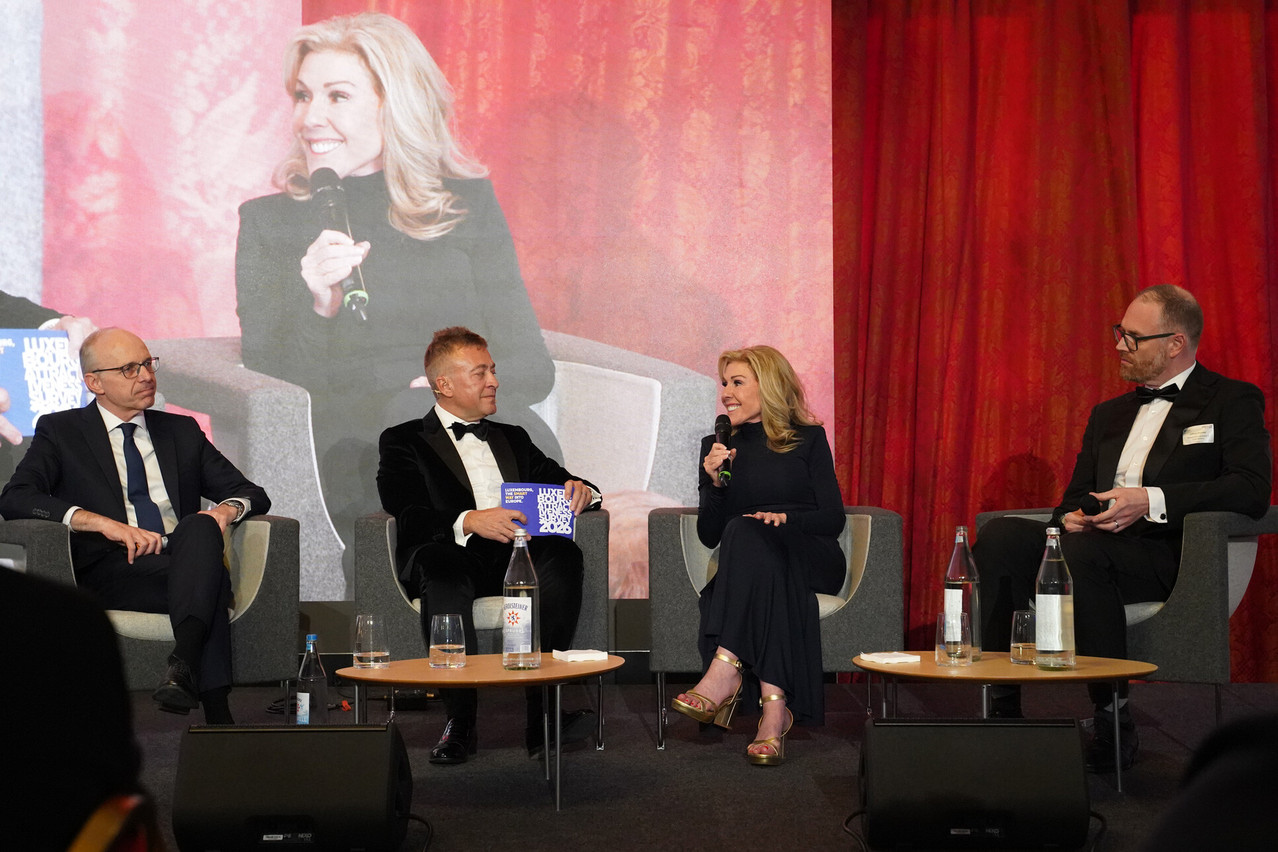
Attractiveness is… attractive. And the VIP table at a dinner hosted by EY at Cercle Cité on Thursday evening--featuring dishes by four Michelin-starred chefs, with tuxedos, bow ties and cocktail dresses de rigueur--is probably the best example: Prime Minister 


The cheerful and upbeat atmosphere stands in stark contrast to the doomsayers predicting the worst, and to the Prime Minister’s very cautious tone during his State of the Nation address on Tuesday. The “Attractiveness Survey”, for its part, offers several ways of interpreting the results, and the invitation to delve into it in order to fully grasp its subtleties is valuable advice.
Because behind the champagne flutes and petits fours, EY had come to tell a story that was far more political than economic: that of a Europe gradually losing ground in the global race for investment… and of a Luxembourg trying to turn its small size into a strategic advantage.
Capital is not leaving Europe entirely. It is simply becoming much more selective, much more concentrated and much more strategic in the way it is deployed.

The figures presented during the evening immediately set the tone. In 2025, Europe attracted just 5,026 foreign direct investment projects, a fall of 7% year-on-year and 24% compared with 2017. France saw a 17% decline, the UK a 14% decline and Germany a 10% decline. Industrial investment fell by 12%, logistics by 17% and research and development projects by 30%.
“Capital isn’t leaving Europe entirely. It’s simply becoming much more selective, much more concentrated and much more strategic in the way it’s deployed,” he sums up 
Europe continues to attract investment, but almost exclusively in sectors deemed critical for the coming decade. Projects related to artificial intelligence have surged by 96% in a year. Investment in data centres has risen by 127%. More than 100 defence-related projects have been identified across the continent.
35 projects last year, 51% of which were finance-related
And this is precisely where Luxembourg believes it can play to its strengths. “Luxembourg has never been a high-volume market, and it doesn’t need to become one,” Brice Lecoustey told the audience. “What matters here is consistency, positioning and the ability to create value.” The Grand Duchy has gone from 25 foreign investment projects in 2021 to 35 in 2025, representing a 40% increase over five years, whilst the European trend remains negative.
The financial sector now accounts for 51% of projects recorded in Luxembourg. However, a closer look at the figures provided by EY reveals, above all, a gradual shift in the Luxembourg model. Projects are increasingly moving away from simple administrative functions and towards decision-making centres, European headquarters, technology-related activities and artificial intelligence. “The most significant change concerns the nature of the activities being attracted,” explains Brice Lecoustey. “We are seeing growth in head office functions, decision-making centres, digital services and AI-related investments.” EY highlights in particular that Luxembourg attracted six projects directly linked to artificial intelligence in 2025. More broadly, over 240 AI-related start-ups are now reportedly active in the country.
The firm even believes that artificial intelligence could profoundly transform Luxembourg’s financial centre. “AI will fundamentally transform the financial services industry,” says Brice Lecoustey. “As automation reduces the importance of manual processes, value will shift towards higher-level activities: supervision, portfolio management, risk intelligence and strategic decision-making.”
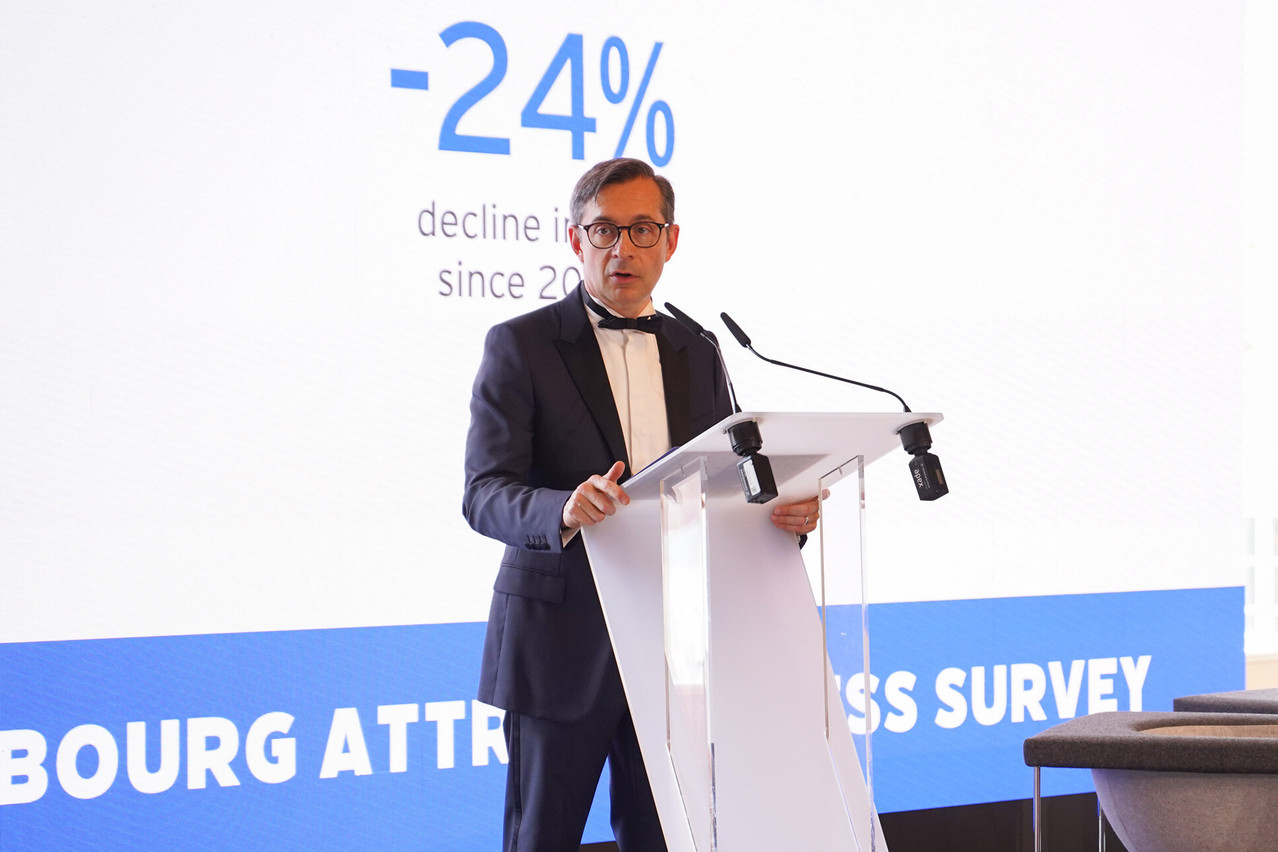
“Luxembourg is increasingly seen as a stable anchor,” explains Brice Lecoustey. “A place where businesses feel confident enough to continue investing, even when the economic climate becomes more volatile.” (Photo: EY)
On stage, the financial executives present seem to largely agree with this assessment. Jeffrey Dentzer, CEO of the Bil, explains that automation is no longer a theoretical issue for Luxembourg’s banks. “The question is not whether AI will have an impact on financial services. It is how we position ourselves to embrace it,” he says. The banking executive also calls for greater collaboration between financial institutions and the public sector, particularly regarding regulatory data and digital infrastructure. “We won’t be able to solve the world’s problems one case at a time,” he explains, lamenting the fact that each bank is still trying to manage the same regulatory constraints separately. This vision of a more agile, better coordinated Luxembourg that is more focused on strategic activities was a recurring theme throughout the evening.
US Ambassador Stacey Feinberg, who was particularly enthusiastic during the discussions, clearly sees the Grand Duchy as a future European technology hub for US companies. “I am very excited about the space sector, defence and artificial intelligence,” she says. “I have a huge number of American companies, tech firms and AI businesses that want to come here.” She even reveals that she has met with several American AI companies over the course of the week. “I’ve had three AI companies this week and I think they’re going to open their European headquarters here.”
The space sector also stands as a symbol of Luxembourg’s long-term commitment. Stacey Feinberg cites Blue Origin and Jeff Bezos to illustrate the long-term benefits of the investments Luxembourg has been making for years. “Luxembourg invested in the space sector very early on, before it became popular,” she points out. “And today, it is paying off.”
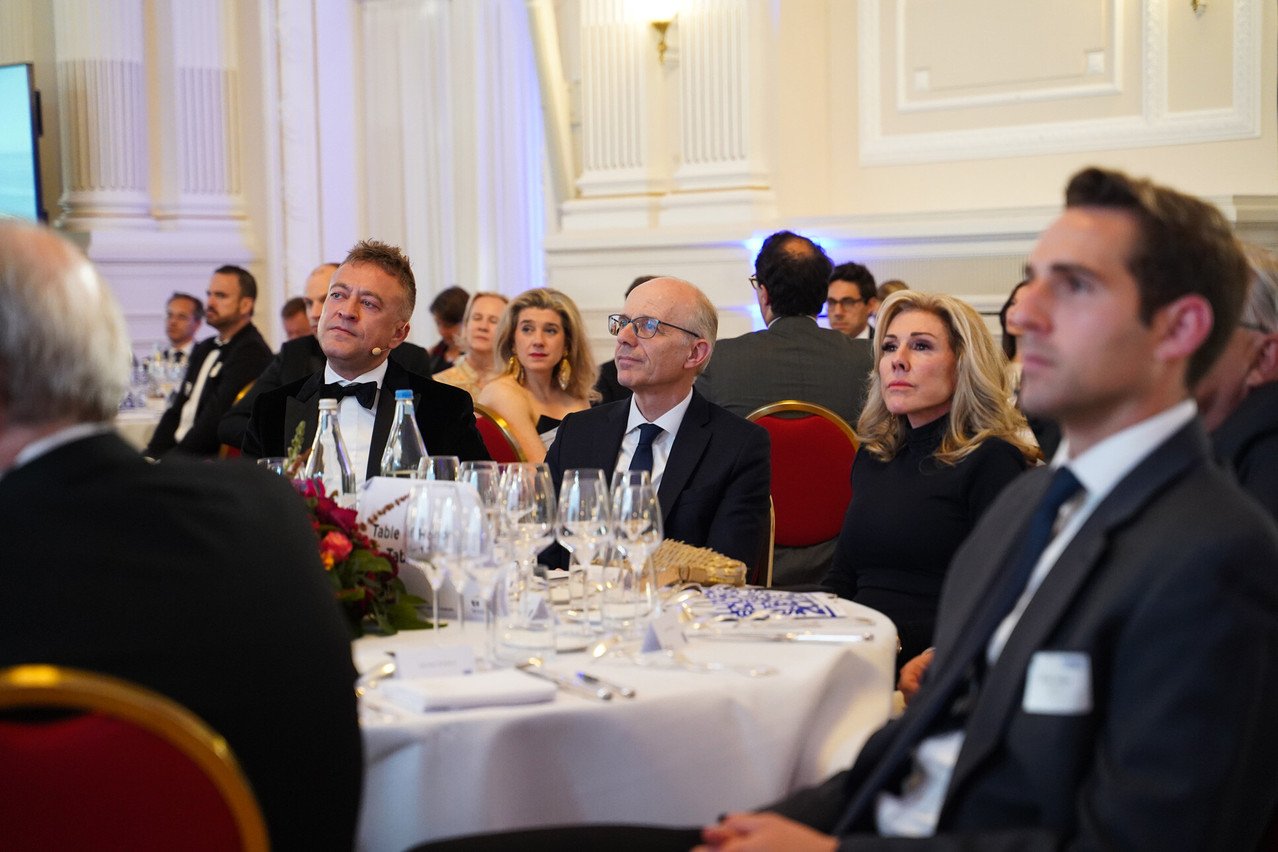
During the round-table discussion, the Prime Minister spoke at length about international schools, security, taxation, infrastructure and housing as the cornerstones of the country’s future appeal. “Without a thriving economy, you don’t have the money needed to fund social programmes, hospitals, infrastructure or schools,” he said. (Photo: EY)
This optimistic outlook, however, contrasts with the vulnerabilities identified by the survey. EY notes in particular that just 54% of investors surveyed still plan to invest in Europe over the next 12 months, compared with 72% two years earlier. In Luxembourg, too, caution is on the rise. Only 54% of investors plan to expand or establish operations in the country, compared with 72% in 2024. Yet more than 70% of investors say they have not postponed or cancelled their plans for Luxembourg, despite geopolitical and economic tensions.
“Luxembourg is increasingly seen as a stable anchor,” explains Brice Lecoustey. “A place where businesses feel confident enough to continue investing, even when the economic climate becomes more volatile.”
Housing: the main obstacle for investors
Luc Frieden is precisely trying to maintain this image of stability. During the round-table discussion, the Prime Minister spoke at length about international schools, security, taxation, infrastructure and housing as the cornerstones of the country’s future appeal. “Without a thriving economy, you don’t have the money needed to fund social programmes, hospitals, infrastructure or schools,” he said.
The head of government acknowledges, however, that housing is becoming a key issue. EY also reports that 61% of investors now regard access to housing as the country’s main infrastructure constraint. “I recognise that this remains a challenge,” admits Luc Frieden, whilst defending the new fiscal and administrative measures announced by the government.
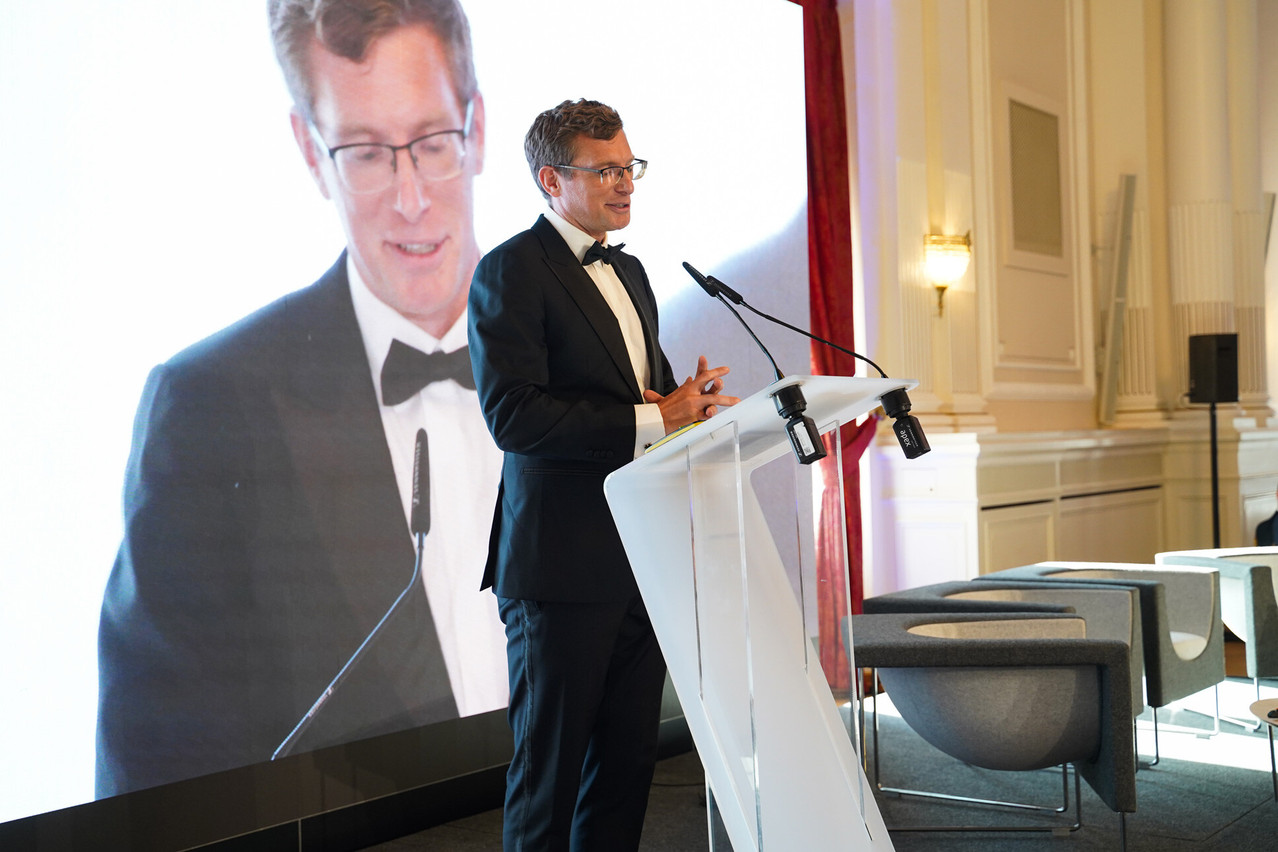
Luxembourg’s most famous journalist, Philip Crowther, reflected on his many trips to areas of conflict or political tension. As if to highlight, by contrast, the value of Luxembourg’s tranquillity. (Photo: EY)
Energy is also emerging as a growing cause for concern, particularly for activities linked to AI and data centres. The Prime Minister acknowledges that Luxembourg will “always remain an energy-importing country”, but calls for greater European integration. “We must become more European,” he asserts. “More Europe for energy, for defence and for our economy.” Luc Frieden also indicated that he had not rushed to deploy aid to tackle the oil crisis, believing that if the situation in the Strait of Hormuz did not resolve itself within two weeks, the economic shock would be far more severe and would require action on a different scale.
As the evening wore on, a realisation gradually dawned on the guests at the Cercle Cité: Luxembourg is no longer merely trying to remain attractive. The country is now seeking to reposition itself as a strategic European hub for sensitive, regulated, technology-driven and highly international activities. “Luxembourg is no longer simply a gateway to Europe,” concludes Brice Lecoustey, to applause from the audience. “Luxembourg is the smart way to enter Europe.”


