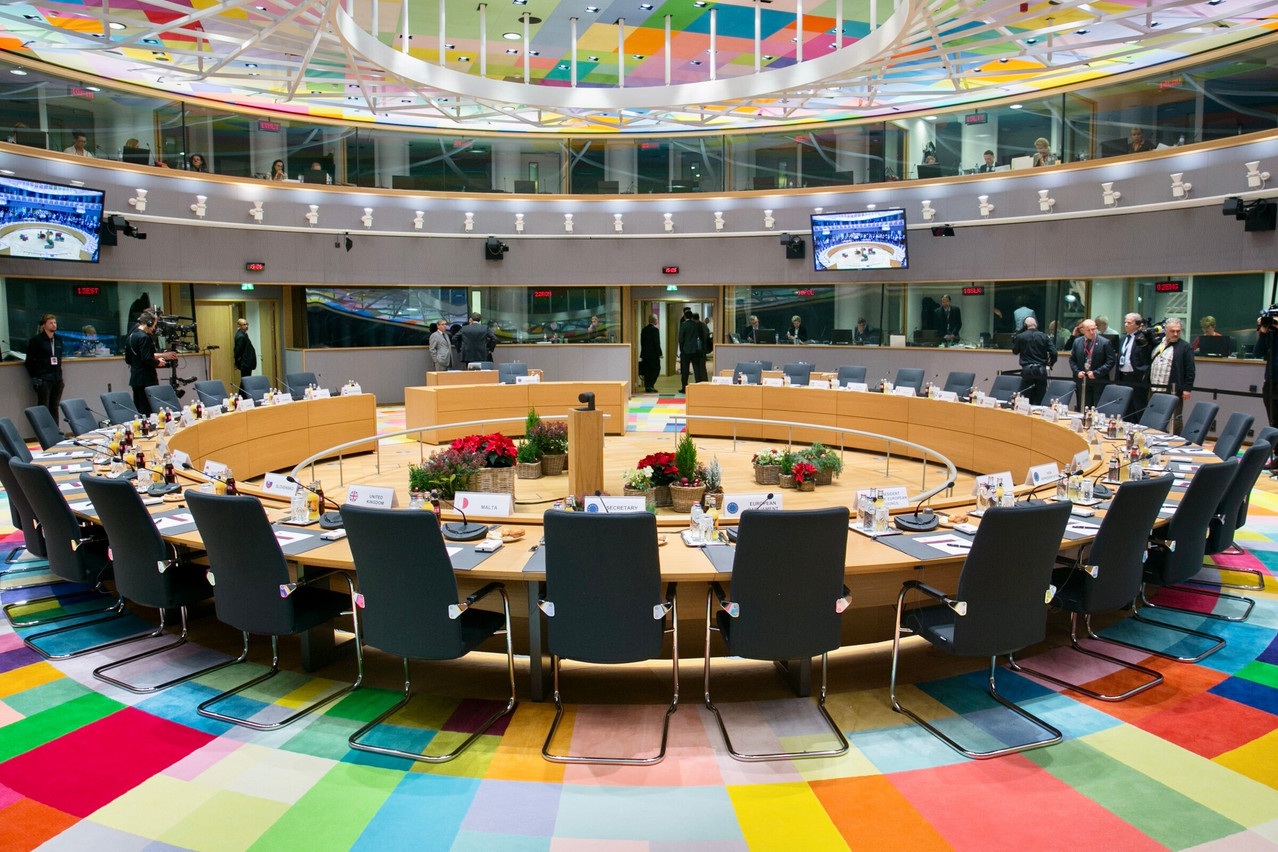
EU leaders will examine a proposal to reduce spending commitments by €141bn, in constant 2025 prices, from the European Commission's plans for the next seven-year budget when they meet in Brussels on Thursday and Friday. The Irish presidency's revised document was discussed by European affairs ministers on Tuesday, but the spending reductions remain contested.
“Luxembourg belongs neither to the countries that want to spend enormous amounts of money nor to the so-called frugals who say the budget must be cut massively,” Prime Minister 
In a joint written response to Paperjam on Wednesday, the Luxembourg government backed reaching a political agreement by the end of 2026. “What we need is a budget that delivers on the EU’s ambitions, invests in our people, and equips us to build a strong, modern, and innovative Europe, while ensuring the EU remains nimble, and ready to respond to crises, especially given today’s geopolitical uncertainties. This requires striking the right balance between expenditure and revenue, which is equitable and can find the agreement of all Member States and is in line with our overall objectives of competitiveness, growth, social cohesion, security, and democracy,” it said.
Competing demands
Germany, Austria, Denmark, the Netherlands, Finland and Sweden called in a declaration published on 27 August for the Commission's original proposal to be reduced by several hundred billion euros. They want additional spending on defence, security, competitiveness and migration to be financed by changing priorities and cutting expenditure elsewhere.
The Friends of Cohesion, including Spain, Italy and Poland, have defended funding for agriculture and regional development. According to the Spanish foreign ministry, participants at a meeting on 12 October opposed further cuts while expressing openness to new EU revenue sources and limited borrowing through targeted loans for strategic investment. France also attended; the meeting did not establish identical positions among all participants on every financing proposal.
The Irish presidency proposes €1.622tn in spending commitments for 2028–2034, compared with the Commission's original €1.763tn, both measured in constant 2025 prices. That represents a reduction of roughly 8%. Its 10 October negotiating document is non-binding, and the figures remain provisional.
Luxembourg's spending priorities
A joint declaration issued by Luxembourg and Belgium on 23 March advocated sufficient funding for new European strategic priorities without neglecting traditional EU policies. The two governments also called for predictable yet flexible spending, simpler procedures, transparent governance, rule-of-law safeguards and fair financing. They envisaged a greater role for the European Investment Bank in attracting private investment.
Frieden identified competitiveness, innovation, the energy transition and space as areas needing European resources. The proposed European Competitiveness Fund includes support for space-related activities, giving the negotiations a direct connection with an industry in which Luxembourg has invested. The country's eventual access to that funding remains uncertain.
Luxembourg has also taken positions on the conditions attached to cohesion funding. According to the government's 2025 European policy report, published in June, it argued for lower pre-financing and co-financing rates for new objectives during the previous year's cohesion-policy negotiations. Those discussions concerned an earlier revision of EU rules, rather than the 2028–2034 budget, but show that the terms attached to funding have already been a concern for Luxembourg.
Disagreement over financing
Frieden objected to a corporate-related revenue proposal. “If we say that we are cutting taxes here, we cannot then increase them at European level for competitiveness reasons,” he told MPs. His comments referred to directing part of corporate tax revenue to the EU budget.
The presidency's actual proposal differs from that description: its Corporate Resource for Europe envisages fixed annual contributions based on companies' net turnover, rather than transferring a share of Luxembourg's existing corporate income tax receipts to Brussels. The proposed bands begin above €100m in annual turnover. Frieden's remarks do not establish whether Luxembourg would oppose every possible version of the mechanism.
He was more open to discussing EU revenue from the emissions trading system and the carbon border adjustment mechanism. The presidency proposes directing 30% of ETS1 revenue and 90% of CBAM revenue to the EU budget. Luxembourg has not accepted those rates in the public statements examined.
The borrowing proposals have different purposes. The six governments oppose fresh common borrowing for additional EU expenditure, while the Friends of Cohesion meeting discussed targeted investment loans. Separately, the presidency's document proposes an exceptional facility allowing borrowing of up to €350bn to provide crisis loans to member states. Luxembourg's stated desire for Europe to respond effectively to crises does not establish its position on that facility.
The financial balance
The eventual settlement will affect Luxembourg's contribution to the EU budget and the funding available through programmes supporting businesses, researchers, farmers and regional projects. Frieden also raised the balance between what Luxembourg pays into the budget and what it receives, but the available proposals do not establish how that relationship would change. Direct budget flows alone cannot measure the wider economic benefits of EU membership.
Luxembourg supports reaching agreement by the end of 2026 to allow legislation to be adopted in 2027 and funding programmes to operate from January 2028. A delay would leave less time to approve the rules governing the next budget, increasing the risk of disruption to programmes and their beneficiaries when the new financial period begins.