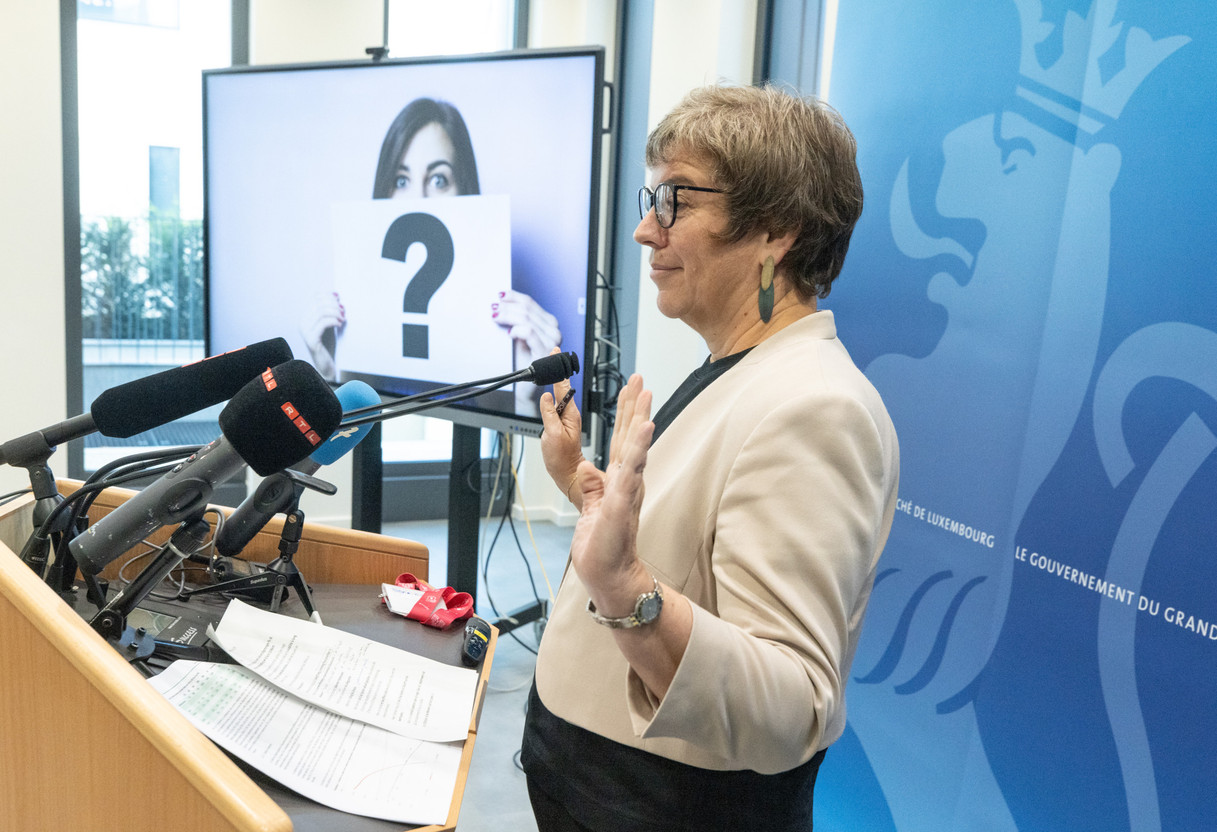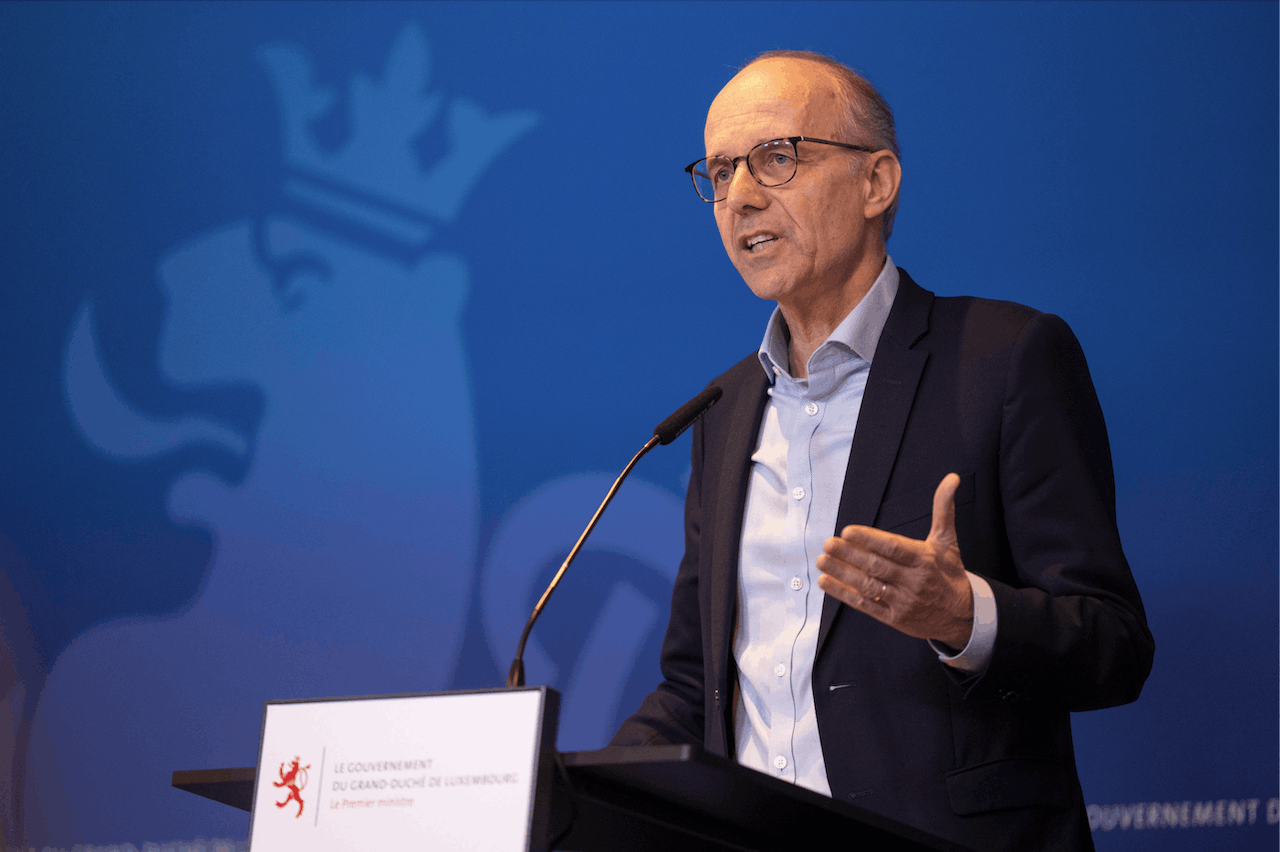
“It’s not because people disagree that the country is necessarily on fire,” said prime minister 


Plea for social dialogue
These accusations were refuted by the prime minister, for whom “social dialogue is extremely important for the government. As a government, we have a duty to talk to the social partners. That has always been the case in Luxembourg, and this government has no intention of changing that, quite the contrary. Anyone who thinks that this government does not wish to talk to the social partners is mistaken.” For Frieden, talking does not mean agreeing immediately. But a difference of opinion on a point should not necessarily be interpreted by the press as a dispute. “A democracy lives on different opinions. If everyone had the same opinion, then we would have a weak democracy.”
But the fact remains that the government has made no secret of its desire not to reduce working hours, but to reorganise and adapt them, in order to “make society, the economy and family life function in a harmonious and modern way. The reform of Sunday working is a response to a demand from employees who do not wish--as is currently the case--to work only four hours on Sundays. It’s a question of finding a balance between employees and businesses that suits everyone.” “In dialogue,” insists Frieden. Dialogue with all stakeholders.
A place for neutral employee delegations
And here we reach the limit of the demonstration: that of the representativeness of the trade unions... Discussing with everyone means working as closely as possible, in the companies, and therefore with neutral employee representatives, not affiliated to one of the two national trade unions, the LCGB and the OGBL. This is the point that has the unions on edge.
This is why Frieden took care to emphasise that it was not the government’s intention to call into question the primacy of the national unions in negotiations and the conclusion of collective labour contracts. At the same time, he insisted that neutral delegations are just as respectable as national trade unions, and that they must be heard.
The labour minister and the unions are due to meet again on 5 November to clarify all these misunderstandings. Frieden sees this meeting as proof that dialogue will be maintained with all the social partners.
The proper use of Lëtzebuergesch
The other controversy pits Frieden against 
In addition to this little ‘provocation,’ Kartheiser tabled a formal proposal to amend the rules on the use of languages in the European Parliament. This is an issue that does not fall within the remit of this institution, but must be negotiated directly between the governments of the member states. In other words, the government has to get to grips with the subject.
This is not on the agenda. “As a government, we are very attached to the Luxembourg language, and we intend to strengthen its promotion and use,” said Frieden. “But when it comes to making our voice heard abroad, it is important to be able to express ourselves in a language that is understood by others. So it’s not unusual in the European institutions, but elsewhere too, for us to be asked to express ourselves in French, German or English. Asking the European institutions to translate everything into Luxembourgish is unrealistic.”
This article was originally published in French.