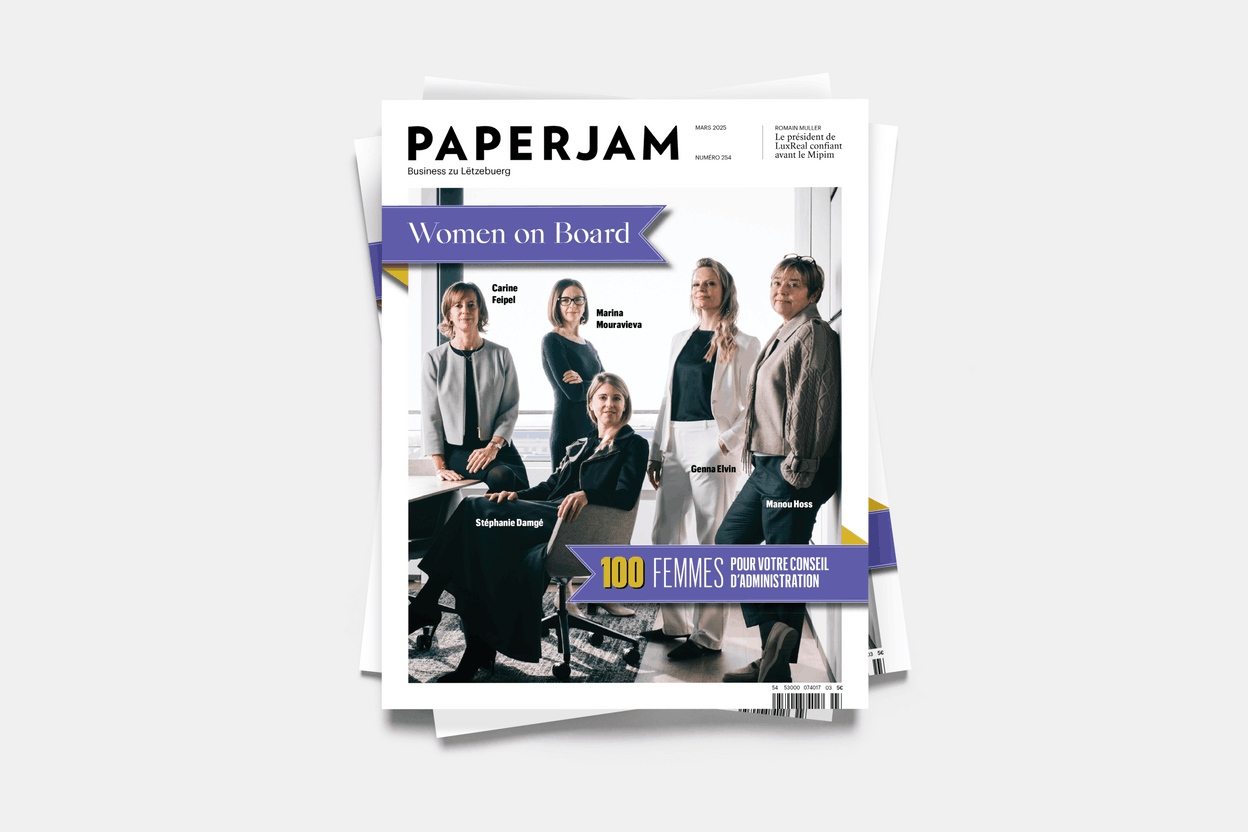
The progress is real, but it remains fragile. According to the 2025 report of the Luxembourg Women in Finance Charter (WiF), published on Friday 6 March by the charter’s founders and the Luxembourg Sustainable Finance Initiative (LSFI), women now hold 32.4% of ExCo or C-suite executive positions in signatory institutions. A slightly higher level than in 2024, when they accounted for 29.9% of these positions, but still below the symbolic one-third mark.
This year’s study is based on data from 85 signatory organisations, compared with 78 a year earlier. These institutions represent almost 31,000 employees, or around 42% of the workforce in the Luxembourg financial sector. Women account for 47.1% of the workforce, virtually unchanged from last year. But as you move up the hierarchy, their presence decreases sharply. They represent 39.6% of middle and junior management and only 31.1% of senior management, compared with 30.9% in 2024.
Gender balance in finance is a business imperative.

The trend is even more mixed at the top. While female representation is increasing in executive positions, it is declining on boards of directors. The proportion of women on boards has fallen from 29.8% in 2024 to 28.5% in 2025, taking the sector even further away from the average target of 34.4% set by the signatories. In reality, men remain around twice as likely to hold the most senior management positions.
A battle at the top
For 
Faced with this persistent glass ceiling, institutions are stepping up their initiatives. Leadership programmes, mentoring, pay gap audits, more inclusive recruitment and the development of flexible working are among the most widespread measures. However, the report stresses that the battle for balance is now clearly being fought at the top of the pyramid, where progress remains slower.