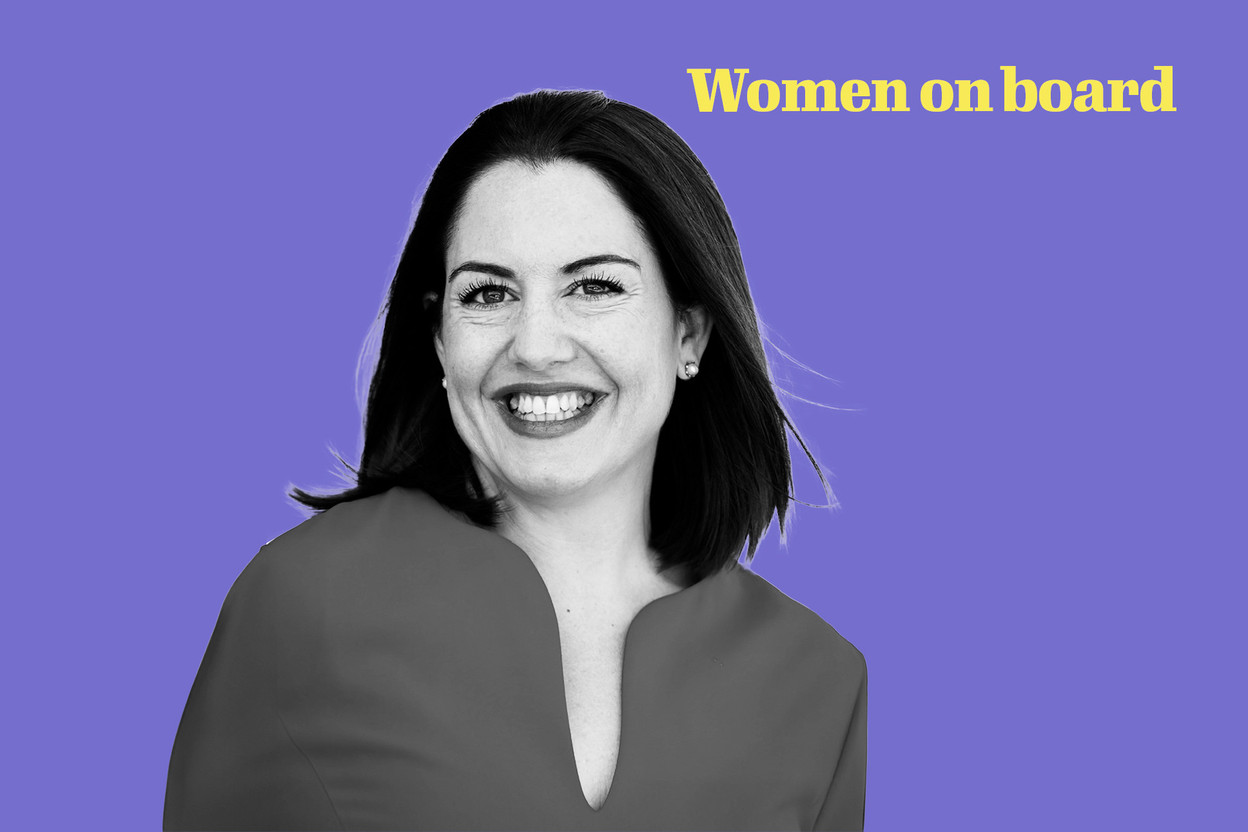
Laura Ferber, holder of a master’s in management from ESCP Paris-Berlin-London, is an entrepreneur with a passion for fashion and beauty. In 2014, she took over the reins of the family hairdressing salons in Luxembourg, alongside her brother Lionel, representing the fourth generation to run the Ferber Group. The group now contains 13 salons, four barbershops and a ‘Hair’cademy’ in Bascharage.
Ferber has driven a key digital transformation, notably with the creation of a local webshop dedicated to hair care, Hairshop.lu, launched in 2019. She is currently continuing this digital shift with the development of a beauty services app.
Paperjam: What are the main challenges you have faced as a female director?
Laura Ferber: The main challenge lies in being able to join a circle where you are recognised and recommended for the added value you can bring to the board. You also have to prove your legitimacy in an environment that is sometimes characterised by traditional perspectives. Finally, reconciling professional responsibilities, board commitments and personal life can become an issue, especially in the absence of clearly defined expectations.
How do you deal with any resistance or scepticism towards you?
I favour an approach based on facts, competence and collaboration. Gaining trust through tangible results and open communication helps overcome reticence.
Do you think gender equality is progressing on boards?
Yes, equality is progressing, but at an uneven pace across sectors and regions. This is due to a growing awareness of the importance of diversity for performance, but also to the introduction of incentives, such as training to identify female talent.
What do you think about quotas for women on boards?
I’m against quotas. A woman must have the courage to put herself forward, and that’s the real challenge: women often underestimate themselves and focus too much on the obstacles. They need to learn to have confidence in themselves and to take action, without waiting for quotas to encourage them to do so. As Henry Ford said: “If you always do what you’ve always done, you’ll always get what you’ve always got.” Women must overcome their own limitations and believe in their potential to rise to the place they deserve.
As a female director, do you feel a particular responsibility to champion issues of parity and inclusion?
Yes, because everyone tends to choose people who are like them, with the same preferences and ways of thinking. But by opening up to other cultures and visions, you gain so much! This openness changes the way we react, and that’s what all companies need in a globalised world.
In your opinion, how does diversity influence the performance of a board of directors?
Diversity brings varied perspectives and promotes more balanced decisions. Companies that embrace this diversity benefit from a constructive clash, essential for innovating and adapting to a complex global environment.
What solutions or policies do you think could encourage better parity?
We have brilliant women who put aside their careers to look after children. Facilitating support at home--with nannies or au pairs, for example--and simplifying the processes for hiring these helpers could make a big difference. This would enable more women to reconcile family life with professional ambitions.
What advice would you give to a woman who is hesitating to take the plunge?
It’s important to start small and adapt. If you see that something is working well, put more energy into it. Little by little, but start today: Rome wasn’t built in a day.
Any moments in your career that illustrate the reality of being a woman in this role?
A little anecdote: I launched the luxury service Wedding Hairstyle at Home, an idea that worked really well. It’s the kind of initiative that I think a man might not have imagined.
What specific advice would you give to a young woman who wants to take her place in a company?
I would advise her to cultivate her expertise, seek out mentors and develop her professional network. I would advise against conforming to stereotypes or trying to please at all costs. Be authentic and persevere.
This article was originally published in French.