Kleos confirmed that it had made contact with the satellites KSF2-C and KSF2-D. The satellites KSF2-A and KSF2-B, which are planned to be sent into another orbit than the satellite transfer vehicle, in a few weeks will complete the four satellites’ formation.
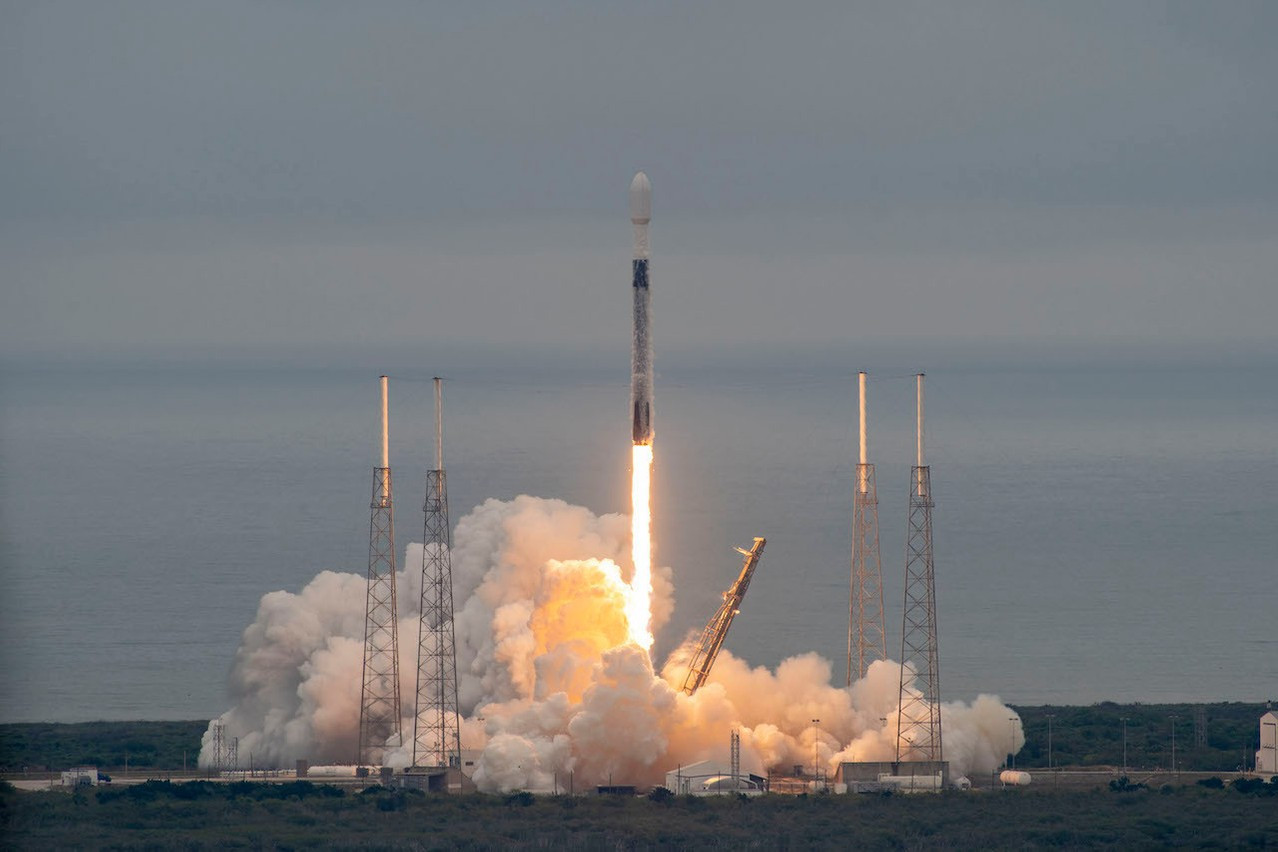
The transfer vehicle containing all satellites had been launched into a Sun Synchronous orbit on 1 April, with the aim of growing Kleos’ low earth orbit constellation. So far, this consists of 12 satellites that increase radio frequency data collection capability to 253 million km2 per day. “The cluster features new frequency spectrum capabilities, enabling geolocation of X-Band radar transmissions in the 8500 -9600 MHz range, commonly used for maritime vessel traffic control,” stated Kleos in press release.
KSF2-C and KSF2-D, which Kleos made successful contact with, will be in a slightly different orbit than the other two models, as this will save the company propellent and establish the satellite formation faster. Vincent Furia, CTO of Kleos Space on the occasion says: “Our third satellite cluster almost doubles our constellation’s data collection capability and improves revisit rates over key areas of interest. The Patrol Mission satellites add the ability to geolocate X-Band radar frequencies to further enhance our existing maritime situational awareness capabilities.”
Read also
Defining itself as a space-powered Radio Frequency Reconnaissance data-as-a-service company, the firm, which has operations in Luxembourg, the UK and the US, locates radio transmissions in key areas of interest around the globe via clusters of four satellites that efficiently uncover data points to expose human activity on land and sea. It launched its first cluster in November 2020 while a second batch of four satellites, the Vigilance Mission, was sent into orbit in June 2021. With this addition, Kleos Space plans to improve the detection of illegal activity. It will provide more enhanced intelligence, surveillance, and reconnaissance.
Kleos’ fourth cluster, the Observer Mission, is scheduled for a mid-2022 launch.