What are you doing in Luxembourg, you who are a true Frenchman?
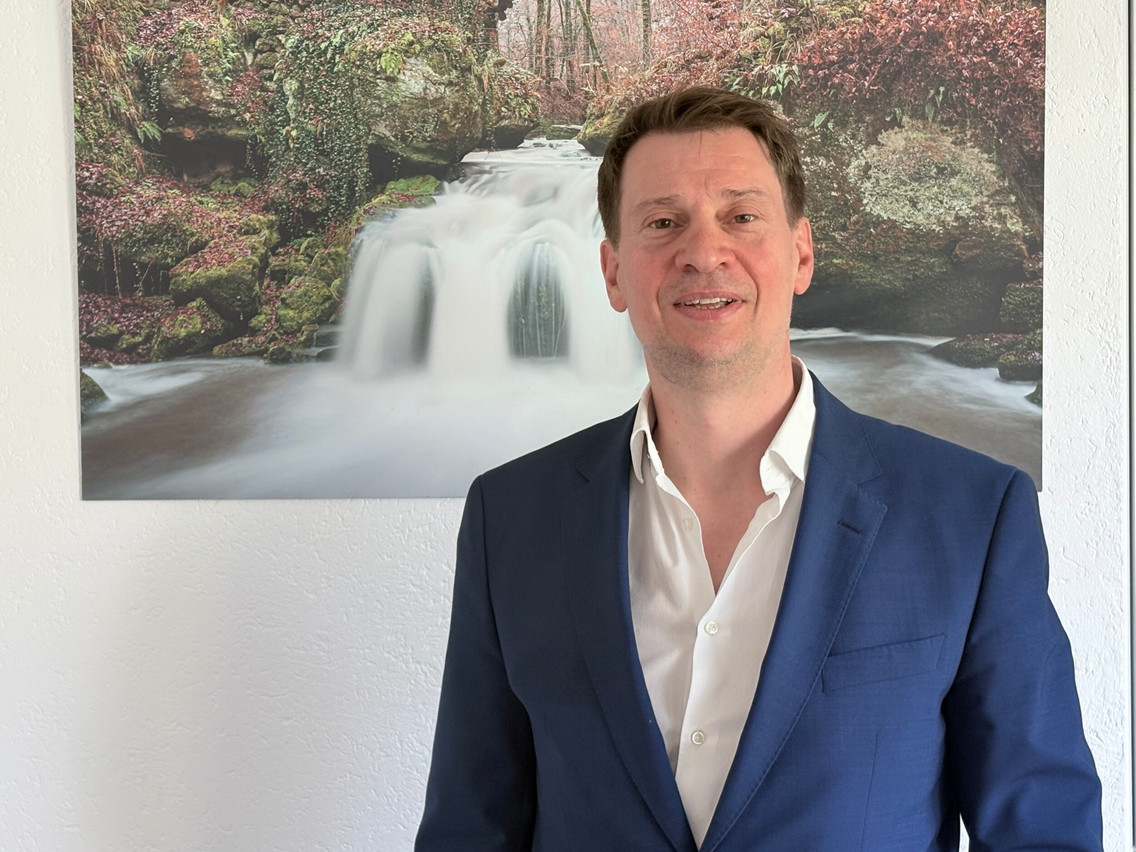
Jérôme Rouquié. – “I’m very proud to be French, but from a very young age, my parents took me travelling. By the age of 22, I’d set up a company from my student room, and for 20 years I travelled the world. I’d spend about a week in the Paris area, where my company was based, and then a week somewhere else in the world.”
I had set up a business selling refrigeration components. That’s what you find on the temperature displays of refrigerated cabinets at Carrefour, Leclerc and other retailers, as well as fridge seals. I had the idea of specialising in the islands. No one had thought of doing that before. I ended up fitting out the kitchens at Le Brando in Tahiti – which was, at the time, the most beautiful hotel in the world – all the Four Seasons hotels in Bora Bora, hotels in Mauritius, New Zealand, and so on.
And at the age of 41, whilst on a boat, I realised that life might be about something else entirely. I decided to sell this business, which had 10,000 clients worldwide and was listed with McDonald’s, Accor, KFC, Four Seasons and others. And I wanted to move on to something else. That ‘something else’ was Luxembourg, but not necessarily for the reasons we’re all familiar with.
Actually, why?
“What has saddened me a little, having travelled extensively, are the stereotypes people hold. ‘Africa is like this’, ‘Russia is like that’ and, of course, ‘Luxembourg is like this’. I love this country. Why? Because I’ve met people of so many different nationalities whilst travelling, and here we have 180 nationalities. Personally, I know about 39 of them.
Luxembourg is probably the best country in the world to raise a family.

So, what are you doing there with Come To Lux?
“I arrived in December 2015. The group that had acquired me was a Spanish group, the third-largest in the refrigeration sector in Europe. I worked for them as an agent. I developed the Luxembourg, Belgium and Switzerland markets, whilst also handling strategic procurement. When I came here, I immediately got the usual reactions: ‘What on earth are you doing in Luxembourg?’ Luxembourg, seen as a sort of Hong Kong next to La Défense – a place where the food is rubbish, where it rains all the time, an offshore country… Well, all the clichés.
Whilst working for the group in 2016 and 2017, I began to take an interest in the country with a view to bringing my family and friends over. In December 2019, being someone who thinks proactively, I realised there was something to be done. I wanted to showcase the true values of the Grand Duchy and support people based on who they are, not what they have.
Have you heard of KYC [Know Your Customer]? KYC is mainly about judging people by what they have. I realised that when people arrive here, we give them a credit card and sign them up to the Cercle Münster, but they don’t really have any human contact. I started taking an interest in the country’s culture and realised there were three types of people: native Luxembourgers, expats and cross-border workers. Everyone tended to keep to themselves. I thought that, having travelled and met so many different people, I would try to do something to bring the different communities together.
In practical terms, what exactly does Come To Lux do? How do you position yourselves? Do you attract private individuals?
“I attract companies and individuals, but with a completely different approach. Before getting into business, I find that Luxembourg is probably the ideal country to raise a family. It’s a very social-democratic country. It isn’t seen that way at all in the world. It’s seen as an ultra-capitalist country. Yet we are the only country in the world with a Grand Duke at its head and where such care is taken of its citizens.
When you see the quality of the roads, public infrastructure and schools, it’s extraordinary. When I meet people whilst travelling, I ask them what they know about Luxembourg. The same old clichés often come up. So I suggest they come along for a day out to discover the country. Now that I’ve sold my business and have a bit of time on my hands, I’m really interested in people as individuals.
I’ll work with people when I feel they have a positive vibe. Once I’ve found those people, I’ve managed to strike deals – sometimes just ‘gentlemen’s agreements’ – with major organisations here, such as the Bil, for example. I organise an open day or provide support tailored to the client’s needs. This might involve a school visit for a family. As I’m French, I know the Lycée Vauban very well. It might involve banking support. As Bil is a universal bank, it’s simpler. It might also involve automotive groups such as Losch, wealth management advisers, tax specialists, trustees or even psychologists.
The idea is really to show people what the country is like.
These days, it’s harder, but the quality is better too!
In recent years, there has been a lot of talk in Luxembourg about the issue of bank accounts. Some sources say that it has become very difficult to open a bank account there and that a great deal of red tape is involved in settling there. Has it become more difficult to settle in Luxembourg?
“The country’s image has changed completely, but, in my view, for the better. The image of a country where it was very easy, ten or fifteen years ago, to open a bank account no longer exists. Today, it is much more difficult. Compliance is extremely rigorous, because Luxembourg wants to retain its triple-A rating. It is a national strategy. They also want to be very well positioned with the FATF. The country is really very highly ranked across the board. Today, much more documentation is required, and that is a fact. It is now impossible not to document someone. Institutions really want to do their due diligence, because they wish to be very cautious and precise.”
What do you tell your customers? Do some of them just disappear without a trace? Does this make them reluctant? Does it annoy people?
“No, because if you prepare things in advance, things turn out differently. The Chamber of commerce and its partners have awarded me the ‘Made in Luxembourg’ label. I go to trade fairs like Mipim or the one in Stuttgart. You need to have a very clear vision when you’re face to face with someone. Anyone who asks if they can open an account here or set up their business must understand that, these days, you need a genuine economic reality and substance. Admittedly, it’s more difficult, but, in my view, it’s also of a higher standard.
Northern Ireland also causes significant harm to Luxembourg in certain sectors, such as life insurance, because it does not apply the same VAT rate.
But you haven’t answered me. Does that put people off, or do they understand and do the right thing?
“Take, for example, Americans who want to invest in Luxembourg but face issues related to Fatca. It is extremely difficult for them to open an account. Recently, I worked with business owners who run boats that tour the Statue of Liberty. They were unable to set up here and eventually expanded their operations to Northern Ireland. Northern Ireland is also causing Luxembourg significant harm in certain sectors, such as life insurance, because it does not apply the same VAT rate. Here, we have a 17% VAT rate. Northern Ireland is much more flexible. Conversely, I also know that there are places where it is very easy to open an account, but where hidden fees then crop up. You can be in for a surprise. Yes, it is more difficult, but there is a logic behind it.
Are you also presenting your next project today?
“Yes, it’s the Lux Tour Solidarity. The main aim of this project is to support the Sarah Grond Foundation and to obtain the necessary permits to open an orphanage. It all stems from the story of Yves Barthels, who lost his wife Sarah Grond and went on to set up this foundation. The tour is now supporting this initiative.
Abroad, Luxembourg is very little known. For example, we exhibited at Rétromobile in Paris, and the same old clichés came up straight away: ‘You’re just a country of banks.’ I replied that wasn’t true. The caterer had given us some Riesling pâtés and Domaines Vinsmoselle had lent us their vineyard, where the wine had been aged for 52 months on slats. We offered people a glass of wine and a pâté to taste. People were surprised: ‘You have wine? You have crémant?’ Today, thanks in particular to people like Josy Gloden [chairman of the board of directors at Domaines Vinsmoselle, ed.], Luxembourg is winning competitions for the best French crémants. But not enough people know about it. And then we have exceptional roads, landscapes and castles. Many people come to Luxembourg solely on business, by train or plane, before leaving the very same evening. They don’t get to discover the country.
I thought we could create a tour to showcase the true values of the Grand Duchy.
From Gridx to Luxembourg, via Schengen and Vianden
What exactly does a car ride involve?
“The vehicle isn’t the main attraction. Participants receive a booklet containing a wealth of information about Luxembourg. As they drive past certain places, they discover, for example, that Patton is buried in Luxembourg, that the Schengen Agreement was signed here, or the history of Urspelt Castle and Lake Haute-Sûre. People bring their own cars. You really do need a nice vehicle – whether it’s a classic, a modern classic or a new model – because that’s what inspires people. We organise tours for children, and Lamborghini brings young orphans here every year. We also put together teams with people who come on their own. There’s always this desire to connect and come together.”
Participants follow a route using a map. It is neither a rally nor a timed competition. It is a tour of the country with several stops. This year, we set off from Gridx with breakfast, then head to Schengen Castle, followed by Vianden and Urspelt for lunch, then on to Clervaux and Lake Haute-Sûre, before arriving at Lamborghini Luxembourg. We’ll finish at Casino 2000 with a grand gala evening. Highlights will include a Ferrari F40, which recently won the Platinum Award at the Cavallino competition in Modena, as well as a Praga and other exceptional vehicles.
How does it actually work? Do people have to pay to take part?
“Yes. The two-day event costs €300 per person. This covers the entire programme, including Sunday at Parc Alvisse, where we’re organising a large car show that’s free to the public. Children can come and see the vehicles for free. There will also be stalls, video games and a brunch with access to the swimming pool for participants. When I launched this tour in 2022, my aim wasn’t to turn it into a commercial venture. I wanted a popular event in the best sense of the word, focused on sharing. I want them to have a brilliant day, discover Luxembourg and feel inspired to support the children. The tour continues today thanks to the many partners who support this initiative.
And how many children are we talking about?
“The foundation supports around thirty children. They are in care. That is precisely the problem. Yves Barthels has made one of his homes available to provide immediate psychological support. When a child loses their parents or a family loses a source of income in Luxembourg, things can become very difficult. He has already supported 176 projects over the past seven years. Today, his aim is to open a specialist facility where children can stay and receive proper care.”