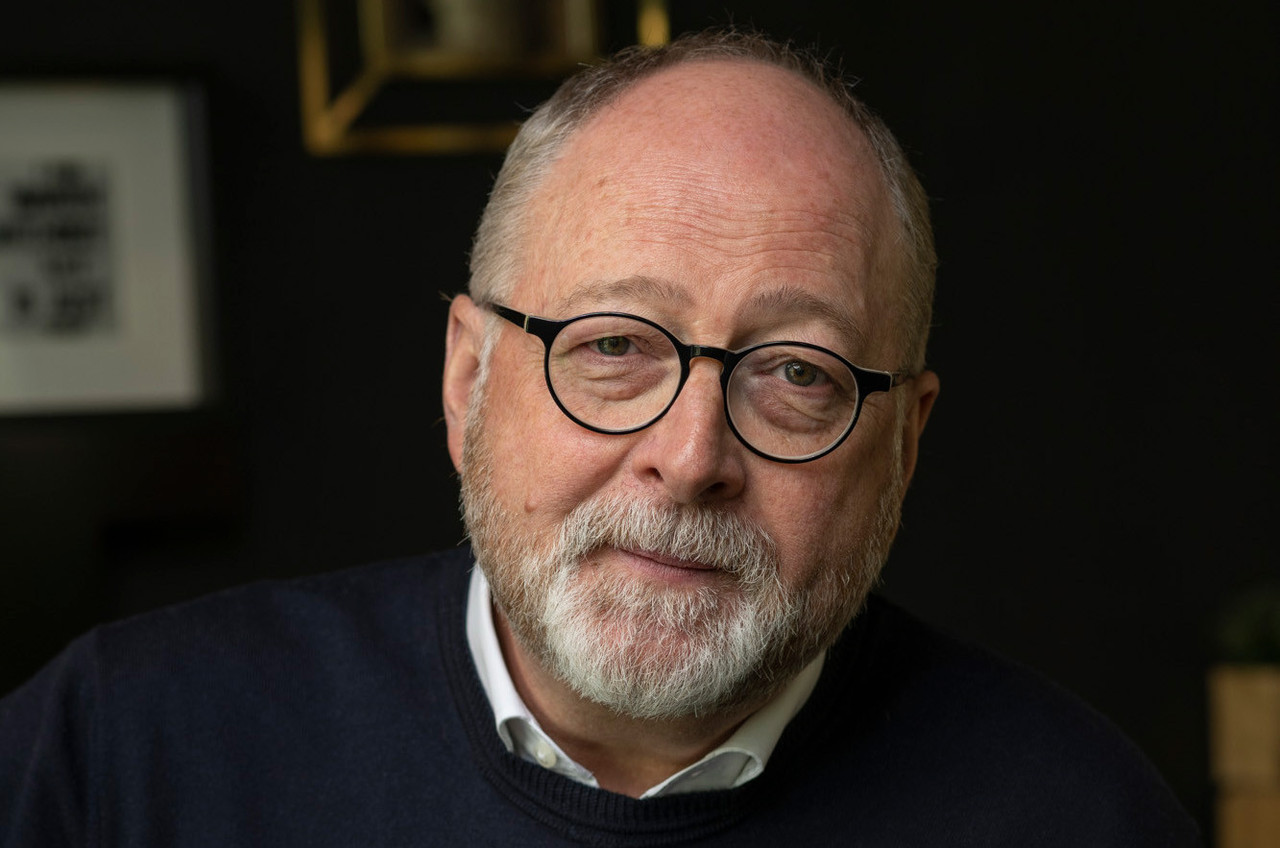
Sébastien Lambotte: What's your view of the state of business?

What is holding back this development momentum? What difficulties are companies facing?
A lot has been said about resilience. However, we can see that the growth rate, while still positive, is stagnating. We can see that the economy has slowed down. I think that this phenomenon, this loss of momentum, reflects a more general dynamic underlying the development of businesses.
And that is?
Every entrepreneur, when they start up, goes all out. There's everything to do: investing, finding customers, generating revenue... But once you've had success, your attitude changes. You become more defensive. It's all about preserving what you've built. The problem is that the environment around us continues to evolve. New competitors are positioning themselves, driven by a real desire to carve out a place for themselves in the market. For an SME, it's at the moment when you're satisfied that you've arrived, when you tell yourself that what you've achieved isn't so bad, that you've become complacent, that the business starts to decline. The entrepreneur's greatest danger is success.
So it's essential to maintain a proactive approach?
Yes. In all areas of business, the environment is changing. To remain relevant to your customers and your market, you have to be constantly adapting and courageously innovating. In retail, for example, proximity can be an important factor. But we mustn't overlook the opportunities offered by e-commerce, or the risks involved in not selling online. You have to be careful to diversify, or risk seeing your sales stagnate simply because you've ignored the competition.
It's essential to know why you're starting out, the reasons that led you down this path.

Does an entrepreneur necessarily have to try to grow?
An entrepreneur doesn't owe anything. They are free. However, it's essential to know why you're starting a business, the reasons that led you down this path. It may be an opportunistic move, to make a quick buck. Others are part of a long-term rationale, with the desire to build something that will last. Growing is not necessarily about making more sales. There are many other sustainable ways of developing a company's value, taking into account the depth of its market and the objectives it is pursuing. Rather than growth, we need to talk about development. It's important to take the time to reflect. Then you have to commit yourself fully.
Growing and developing means taking risks. What are the keys to successful growth?
Often, in Europe, companies struggle to transform themselves in order to change scale. It's to help them face up to these challenges that I work with a number of organisations. In my view, there are several points to consider. The first is to ensure that the company has the right people in the right places. Developing a business is a team effort, and not the work of a single man or woman, as has been the case in the past. Today, we need to mobilise a wide range of skills, aligned with the tasks at hand. Beyond that, we need a clear, communicable strategy.
What does that mean?
It's important that the strategy is understood by everyone involved in the company. To achieve this, it needs to be well defined and clear, and employees need to be aware of it. As soon as the organisation has more than ten employees, information media need to be put in place to communicate the strategy. This will prevent the emergence of micro-management approaches, which are often harmful. Employees will be able to grasp the objectives being pursued and take initiatives to move forward in line with the defined guidelines.
What are the other challenges?
It's important to demonstrate real discipline in executing the strategy, in other words to establish the paths we're going to take to achieve the objective. It's a question of determining what has priority, so that you can really concentrate on what's essential. Finally, in addition to these three aspects - team, strategy, discipline - you also need resources, in other words sufficient cash. We need to ensure that our activities generate margins to guarantee the company's viability. All these elements add up to a virtuous approach.
In such a volatile world, how do you strengthen your ability to adapt?
Yes, uncertainty is undoubtedly greater today than it was a few years ago. As soon as a plan is put down on paper, it is already obsolete. Companies therefore need to be more iterative and experimental. Ideas need to be tested and developed, until we have something that meets the needs of the market. In this way, rather than relying on a guess or a feeling, you can ensure that you remain relevant.
So the idea is not to be the biggest, but to remain the best?
In Luxembourg, we often say that wealth lies in niches. You have to look at a market--in the country, in the Greater Region, in the digital sector--and position yourself with the ambition of becoming the best. Of course, this requires a great deal of thought, a careful consideration of the risks and opportunities, the strengths and weaknesses... and above all, courage and determination to take action.
Read more
For further reading, Jean-Marc Fandel recommends "Hunger in Paradise: How to Save Success from Failure", by Rasmus Ankersen. This book attempts to answer one of the thorniest questions facing managers today: how can successful organisations continue to succeed while eliminating complacency?
This article was written for the small- and medium-sized business supplement Comment bien piloter sa PME published with the January 2025 print edition of Paperjam released on 11 December 2024. Click here to subscribe to the magazine.
Is your company a member of the Paperjam Club? You can request an individual subscription delivered directly to your home or office. Let us know via club@paperjam.lu