Itaú has already relocated the hub of its European operations twice under pressure from economic crises. The third attempt must be the charm. This time, Latin America’s largest bank by total assets has chosen Luxembourg in the hope of finding the stability it has been lacking. Yet the newcomer is by no means a start-up. Behind Itaú Europe lies a 101-year-old banking group, operating in 18 countries and employing 90,400 people in Brazil and abroad. As at 30 June 2026, Itaú Unibanco reported assets of $624.4bn, a loan portfolio of $294.6bn and capital of $47bn.
Its market capitalisation stood at $92.3bn on the same date. Itaú Unibanco is listed on the São Paulo Stock Exchange and the New York Stock Exchange; its brand was valued at $9.9bn by Brand Finance in 2026, making it the most valuable brand in South America.
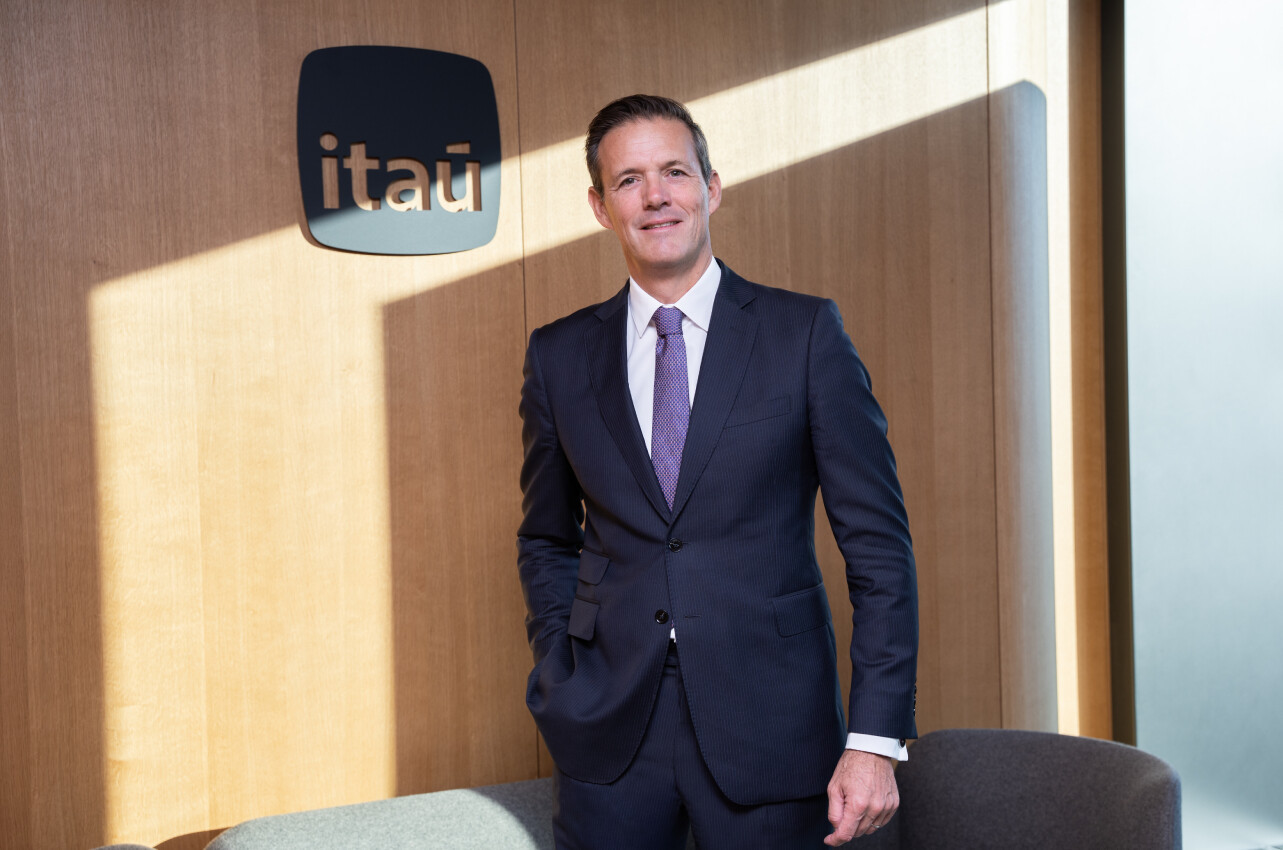
This listing has not eroded its family-owned ethos. The group remains controlled by the founding families, a legacy that Thomas Campion, CEO of Itaú Europe, uses as a selling point. “Even though we are a listed company, we are controlled by three families. We think like a family business,” he explains. He sees this as the ability to maintain long-term relationships where some international banks might scale back their operations or exit a market. “We don’t do stop-and-go. When we support a client, it’s for the long term.”
A dual narrative
The current group brings together two banking histories. The first began in 1924, when João Moreira Salles founded Casa Moreira Salles in Poços de Caldas, in the state of Minas Gerais. The company provided financial services to coffee growers in the region. It took the name Banco Moreira Salles in 1940, before becoming part of Unibanco. The second lineage began in 1943 with the creation of Banco Central de Credito by Alfredo Egydio de Souza Aranha in São Paulo. Following several mergers, the institution joined forces in 1964 with Banco Itaú, originally from Itaú de Minas, to become Banco Federal Itaú. It adopted the name Banco Itaú in 1973.
The two groups then expanded through a series of mergers and acquisitions. Notably, Itaú acquired BBA Creditanstalt in 2002, giving rise to Banco Itaú BBA, its corporate and investment banking arm. In 2008, Itaú and Unibanco in turn merged to form Itaú Unibanco, which became Brazil’s leading private banking group.
In its home market, Itaú is a universal bank, operating in retail banking, corporate lending, investment, insurance, asset management and private banking. In the second quarter of 2026, its recurring operating profit stood at $4.8bn and its recurring return on equity at 24.5%.
A different model for Europe
In Europe, however, the group is not seeking to replicate this universal bank. It is building a more specialised platform aimed at businesses, institutional investors and high-net-worth clients with links to South America. This European chapter began in 1994 with the creation of Banco Itaú Europa in Portugal, tasked with giving the group access to the single market and supporting its cross-border activities.
The first branch opened in Luxembourg in 1995. At that time, it focused on international private banking. This initial presence should not be confused with the branch established in 2021 as part of the new post-Brexit banking structure.
Itaú then expanded its European private banking business through acquisitions. The takeover of Banco Bamerindus fuelled its expansion in 1998. In 2000, Moody’s and Fitch awarded Banco Itaú Europa its first investment-grade ratings. In 2003, a branch focusing on capital markets activities was opened in London. The expansion continued in 2007 with the acquisition of private banking portfolios from BankBoston and ABN Amro in the United States. In 2010, the group consolidated its European private banking operations in Switzerland.
The sovereign debt crisis in southern Europe has forced Itaú to review its organisational structure. In 2013, the European corporate banking operations were transferred to Itaú BBA International in the United Kingdom. The former Portuguese bank became a branch of the UK entity.
Brexit has necessitated a reorganisation. To maintain a bank within the European Union, the group established Itaú BBA Europe in 2020, a bank domiciled in Portugal. In 2021, this bank opened a branch in Luxembourg, this time dedicated to corporate and investment banking.
A very favourable benchmark for Luxembourg
Itaú could have continued to serve the EU from Lisbon. However, the group chose to go a step further: to gradually consolidate its European operations under a Luxembourg-based bank. The plan took shape over a period of around three years. Several jurisdictions were assessed against criteria including political and social stability, sovereign credit rating, the regulatory environment and the capacity to accommodate cross-border activities.
Once Luxembourg has been chosen, it takes around 18 months to obtain authorisation and prepare for the reorganisation. Thomas Campion considers this timeframe to be in line with expectations. He highlights the role played by the Financial Sector Supervisory Commission and the Luxembourg supervisory ecosystem in facilitating the process.
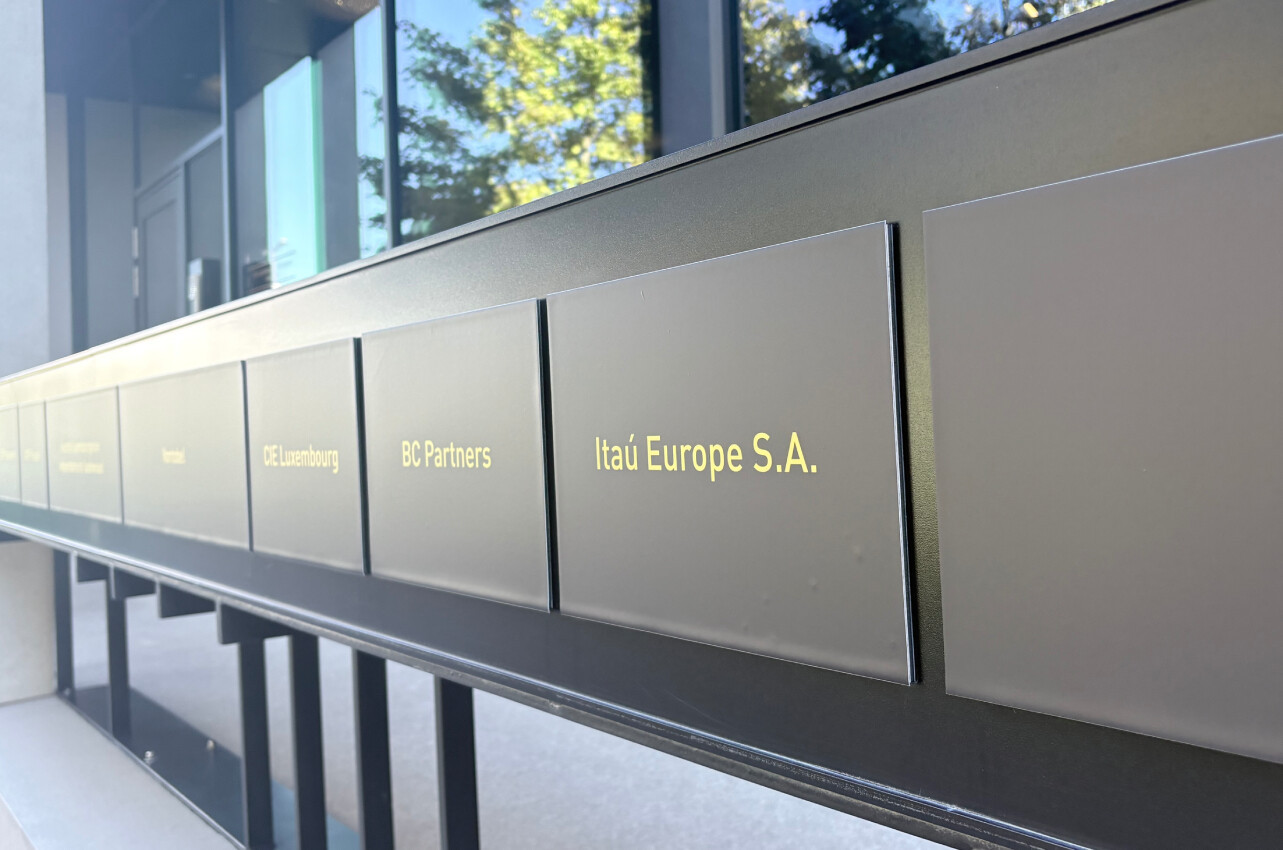
Itaú Europe is registered as a credit institution with the CSSF under number B00000434. Moody’s has assigned it an A3 rating for long-term deposits, a Baa3 rating as a long-term issuer and an A2 rating for counterparty risk, with a positive outlook. (Photo: Paperjam)
Itaú Europe SA will commence operations on 1 June 2026. The Luxembourg-based bank will absorb Itaú BBA Europe, which was previously established in Portugal. All of the latter’s assets and liabilities will be transferred to it by universal succession. Lisbon becomes a branch of the new bank, whose head office is situated at 18 Rue Erasme, in Kirchberg. Itaú Europe is registered as a credit institution with the CSSF under number B00000434. Moody’s has assigned it an A3 rating for long-term deposits, Baa3 as a long-term issuer and A2 for counterparty risk, with a positive outlook.
The choice of Luxembourg is primarily driven by a desire for stability. Following the sovereign debt crisis and Brexit, the group wishes to bring an end to a decade of relocations dictated by economic or political upheavals. It highlights the Grand Duchy’s triple-A sovereign rating, its fiscal, political and social stability, as well as its experience with cross-border financial models.
“We are seeing some differences between the European Union and the United Kingdom at the regulatory level. We have decided that it is time to proceed with this consolidation,” explains the management. “Luxembourg offers us the stability we need to consolidate and develop our business.”
Preparations for CRD VI also had an impact. Itaú has set January 2027 as the operational deadline for the new requirements governing the provision of banking services within the EU by third-country institutions. Consolidating its activities within an EU bank simplifies the group’s governance, reduces duplication of compliance functions and enables it to serve its European customers from an institution holding an EU passport. The merger completed in June is only the first step. In 2027, Itaú plans to transfer the banking activities still based in the United Kingdom – including corporate and investment banking, the loan portfolio and associated liabilities – to Luxembourg. Itaú BBA International is then set to become an investment firm and come under the control of Itaú Europe.
London will retain its capital markets activities, the sale of shares and bonds, and swap transactions. The banking operations will be transferred to Luxembourg. The current structure will be reversed: Itaú Europe, which is still owned by the UK entity, is eventually set to replace it as the intermediate holding company within the international structure.
Change of scale
The private banking subsidiaries in the United States and Switzerland are also to be brought under its control. Luxembourg will thus become the parent company of a group extending beyond the borders of the European Union alone. “Technically, that will be the case, as it will be the parent company,” replies Thomas Campion when asked about the possibility of the country overseeing a broader corridor linking Latin America, Europe and the United States. However, a private bank fully integrated into Luxembourg, comparable to the US and Swiss platforms, is not on the agenda. “But we never say never,” adds the CEO.
To support this expansion, the group has increased the capital of the Luxembourg-based bank by $320 million. The European platform already had $11.4 billion in assets at the end of 2025, compared with $11.1 billion in 2022 and a peak of $11.9 billion in 2024.
Its loan portfolio stood at $7bn, comprising $5bn in corporate exposures and $2bn in private banking. Assets under management almost doubled in three years, rising from $26.1bn in 2022 to $51.3bn in 2025. Shareholders’ equity rose from $1.5bn to $2.6bn.
The platform’s revenue rose from $301.4m in 2022 to $427.8m in 2025, after peaking at $438m in 2024. Net profit rose from $93.3m to $176.8m, peaking at $191.6m in 2024. The total capital ratio stood at 29% in 2025, compared with 19.6% three years earlier.
These figures still relate to Itaú BBA International and the historical scope that the group is in the process of reorganising. They do not, therefore, constitute the separate balance sheet of the new Luxembourg bank, but do give an indication of the scale of the group of companies set to revolve around it.
Not a retail bank
Growth will not come from the Luxembourg retail market. “We are not a retail bank and we will not become one,” states Thomas Campion. Nor does Itaú Europe, at this stage, envisage developing a range of services specifically aimed at funds, family offices or private equity firms based in the country.
The bank is starting out with a team of 20 to 25 people in Luxembourg. It has based its regulated functions, compliance, internal audit and executive committee there. No recruitment targets have been announced. Staff numbers will evolve in line with growth, the skills required and the possible launch of new business activities.
The relocation of the legal centre does not mean that existing offices will be closed down. Paris and Madrid will retain their senior bankers, who are responsible for relations with companies in their respective markets. “Having bankers in Paris to look after French clients makes a huge difference,” insists Thomas Campion. Itaú wants to centralise its balance sheet in Luxembourg without moving its sales teams away from its European headquarters.
Lisbon will retain its branch and shared services centre. The centre handles part of the bank’s back and middle office functions. It also houses an international hub of around 85 staff working for the private banking operations in Miami and Zurich. Proficiency in Portuguese, cultural proximity to Brazil and lower costs than in Luxembourg continue to give this location an important operational role. “The reorganisation will not lead to any job losses,” assures Thomas Campion. The aim is not to close London or Lisbon, but to shift assets, responsibilities and capital ties in order to adapt the group to regulatory requirements and the needs of its clientele. The majority of this clientele is located on one side of the Atlantic. According to the CEO, around 99 per cent of the business follows the corridor from Europe to South America. Far more European multinationals are investing in Brazil, Chile, Colombia or Peru than Latin American groups are in Europe.
350 European companies, including ArcelorMittal, are clients of the bank
Itaú supports 350 European companies and more than 50 international institutional investors active in Latin American equities and debt. Its services include corporate lending, guarantees, trade finance, term deposits, hedging, project finance, debt and equity issues, and M&A advisory services.
Hedging against currency risk is one of its key selling points. Several months may elapse between the signing and the completion of an acquisition in Brazil. However, according to Thomas Campion, the real can experience intraday fluctuations of close to 1 per cent. Itaú therefore proposes to combine its advisory mandate with hedging against the risk incurred between the signing and the closing of the deal.
The bank claims to have been the market leader in mergers and acquisitions between the European Union and Brazil for ten consecutive years. According to its presentation, its Latin American franchise ranked first in mergers and acquisitions over the period 2024–2026, second in equity transactions, first in bond distribution and second in debt origination. The fees generated by this business unit rose from 1 billion reais in 2015 to 3.7 billion in 2026.
Useful depth in Latin America
Its European range of services remains narrower than that of a universal bank. Itaú can advise and finance a South American company wishing to make an acquisition in Europe, but does not yet offer it the full range of cash management services. Nor does it open traditional current accounts. In such cases, it may refer the client to a partner bank.
In contrast to Santander, Citi, JPMorgan and BNP Paribas, Itaú highlights its deep roots in Brazil, its relationships with business leaders and its ability to commit its local balance sheet. “We are the best,” is Thomas Campion’s immediate response when asked why a European company should choose Itaú. The statement may raise a smile, but it sums up the ambition set for the Luxembourg branch: to become the leading banking platform between Europe and South America.
The group has now set specific targets for this ambition. By 2030, it aims to increase its platform’s consolidated assets to between 13 and 15 billion dollars, representing growth of between 14 per cent and 32 per cent compared with 2025. According to its own estimates, this level would place Itaú amongst the top 15 Luxembourg banks by assets.
The loan portfolio is expected to grow by between 15% and 25%, reaching between $8.05bn and $8.75bn by 2025. Assets under management are set to grow by between 25% and 40%, bringing them to between $64.1bn and $71.8bn. Itaú is also targeting a 50% increase in consolidated net profit, amounting to approximately $265.2m, taking 2025 as the baseline.
The bank aims to maintain its efficiency ratio between 40% and 43% and retain an investment-grade deposit rating from Moody’s of between A3 and A2. “What keeps me awake at night, apart from compliance and risks, is ensuring that we grow the business,” says Thomas Campion.