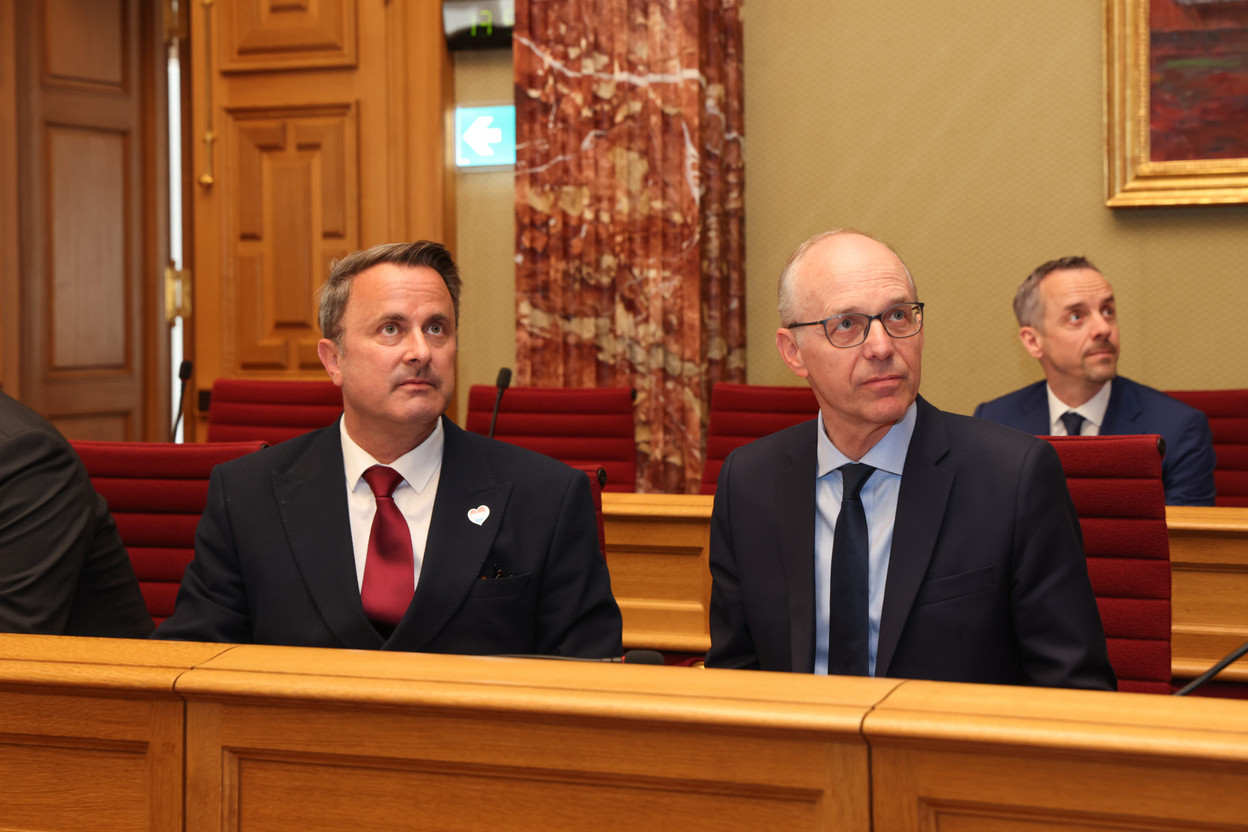
The issue of authorising the sale of Israeli government bonds on the European financial market, granted on 1er September by the Commission de surveillance du secteur financier (CSSF), was being debated today in the Finance Committee, where MEPs heard from the regulator and its director general, Claude Marx, at the request of the LSAP parliamentary group and the political sensitivities of déi Gréng and déi Lénk.
"We can only abide by the laws and regulations in force and we are not in a position to make political choices", 

Independence does not mean disconnection. The CSSF has sent a letter to the Ministry of Foreign Affairs requesting a political opinion on its decision. Xavier Bettel has indicated that he will ask for the matter to be put on the agenda of the Council of Government meeting on 19 September in order to respond to the regulator.
Retour à l'envoieur
"If Israel has asked for responsibility for approving its bond programme to be transferred from Ireland to the Grand Duchy of Luxembourg, it was not because the Irish Central Bank wanted to get rid of an embarrassing file. The request came from the Israeli authorities, who no longer wanted the bank to manage the file. An embarrassing case for the Irish Central Bank, subject to much criticism from the political world and civil society, which is more sympathetic to the Palestinian cause. And here too, the Irish regulator could not fail to accede to this request,” continues Laurent Mosar.
Could Luxembourg become the financier of the war in Gaza? No, says Laurent Mosar: "The regulations governing government bonds require an issuing country that is not a member of the EU to choose what is known as a home country. The regulations also stipulate that the transfer of responsibility for approving another tranche must be exceptional. This will not happen again. It will be up to the Irish Central Bank to approve a new tranche." Back to sender, so to speak.
The issue of image risk
While the CSSF's decision is legally unassailable, from a political point of view it sharply raises the question of possible sanctions against the Jewish state. A divisive issue. As prime minister 

Can authorising such a loan, which it is certain will finance continued military operations in Gaza, harm the image of the financial centre? "No", says Laurent Mosar, for whom "the financial centre will come out a winner in the medium term, because the CSSF has demonstrated its independence and the fact that it takes its decisions purely on the basis of the law. The fact that political considerations can influence the regulator's decisions is not good for a financial centre, because it is a source of uncertainty for investors. I note, moreover, that the procrastination of the Irish Central Bank, which led Israel to Luxembourg, has given rise to controversy that is damaging to the Irish financial centre."