Ireland has officially applied to join the multilateral treaty on the automatic recognition of higher education degrees, adding another country to a Benelux-born initiative that has grown from a regional fix into a wider European model for academic mobility.
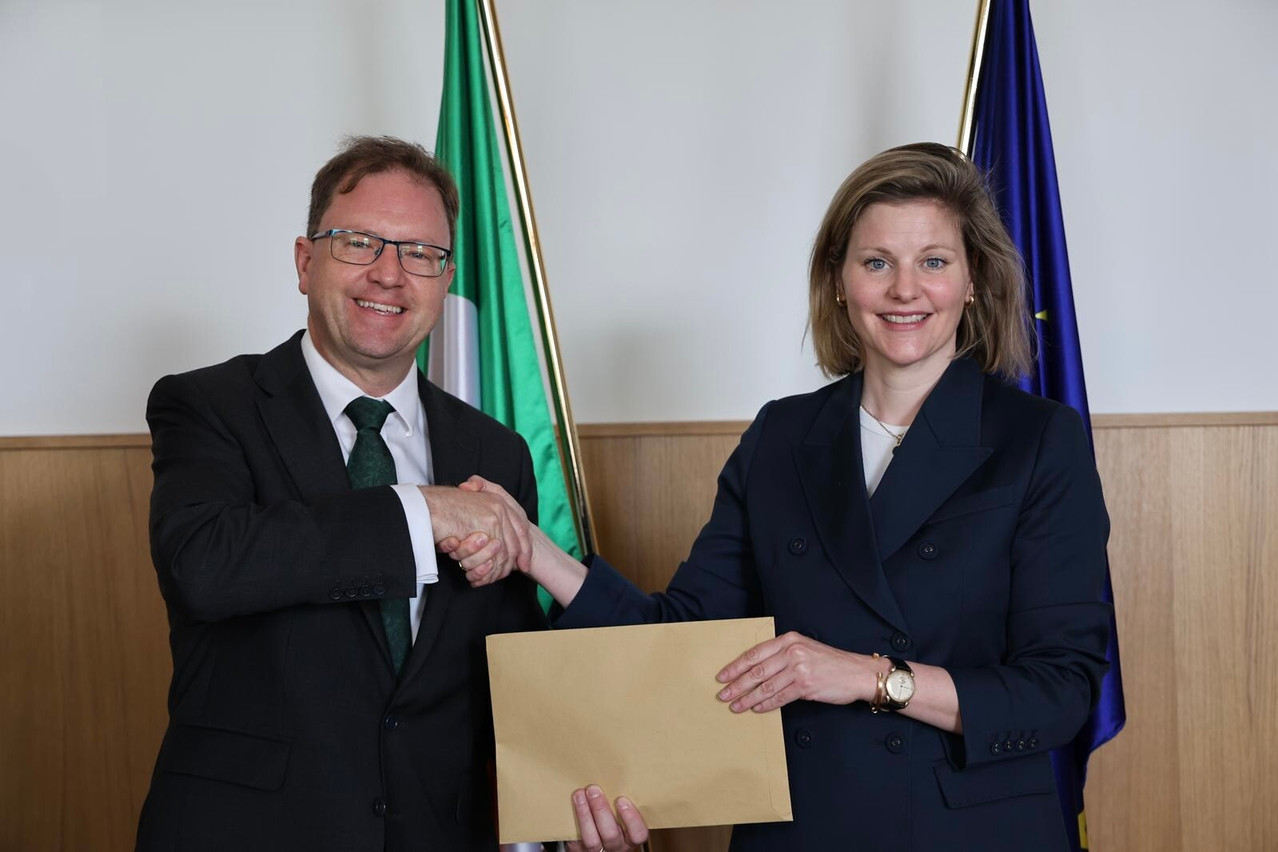
The request was submitted in Brussels by James Lawless, Ireland’s Minister for Further and Higher Education, Research, Innovation and Science, to Liesje Schreinemacher, Deputy Secretary-General of the Benelux Union, ahead of the Education, Youth, Culture and Sport Council.
A Benelux idea
The initiative dates back to 2015, when Belgium, the Netherlands and Luxembourg (Benelux) became the first countries to agree on mutual automatic recognition of higher education degrees within the bloc. The model was expanded in 2021 to the Baltic states, which had already concluded similar arrangements among themselves in 2018.
The legally binding treaty entered into force on 1 May 2024 between Belgium, the Netherlands, Luxembourg, Lithuania, Latvia and Estonia. Poland submitted an application in May 2025 and is finalising its national ratification process. Ireland is now next in the queue.
What changes
Automatic recognition does not create a new European degree. It removes an administrative barrier. Under the treaty, a higher education degree obtained in one participating country is automatically recognised at the same level in all other participating countries. For students and graduates, that means fewer procedures, lower costs and faster access to further study or the labour market abroad.
The treaty does not apply to professional recognition for regulated professions though, which remains covered by broader European legislation and national rules.
Ireland adds political timing
Ireland’s application comes ahead of its presidency of the Council of the European Union in July 2026, giving the issue added visibility.
Lawless argued that the treaty strengthens higher education cooperation in Europe and reflects a shared commitment to academic mobility, quality assurance and the value of education systems. Schreinemacher stated that Ireland’s application confirms growing momentum behind automatic recognition and could ultimately support the EU’s competitiveness.
Why not EU-wide policy?
While European frameworks already exist, including the Bologna process, the European Qualifications Framework and the Lisbon Recognition Convention, there is still no fully automatic EU-wide recognition system in place. That leaves many students and graduates having to prove the value of their degrees country by country.
The Benelux recognised the opportunity. Rather than waiting for a broader solution, the three neighbouring countries moved first in 2015 with a regional agreement on automatic recognition. The approach was later extended to the Baltic states and is now drawing in Poland and Ireland.
If more countries join the pact, internal mobility for education and work could become easier and more widely accepted. For students, universities and employers, that could mean more opportunities, greater diversity and more freedom to choose where to study, recruit and build careers.