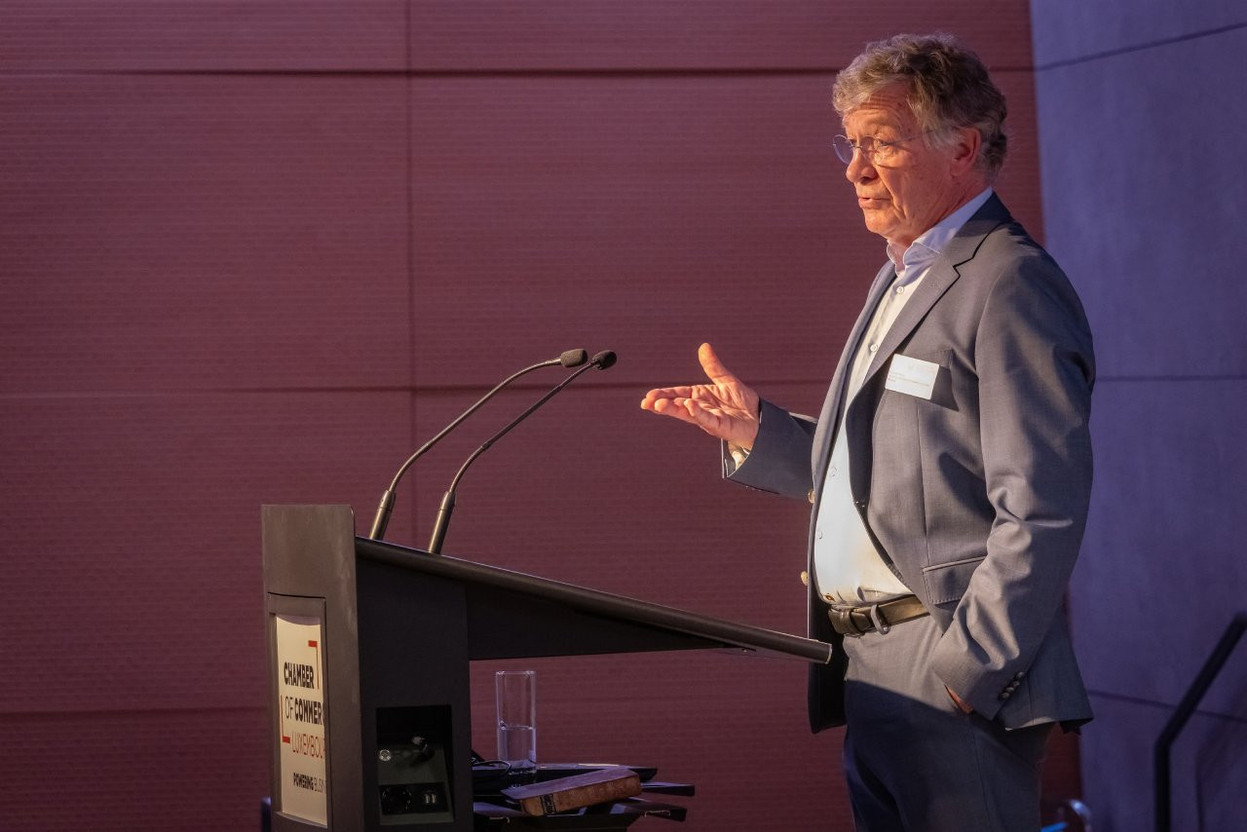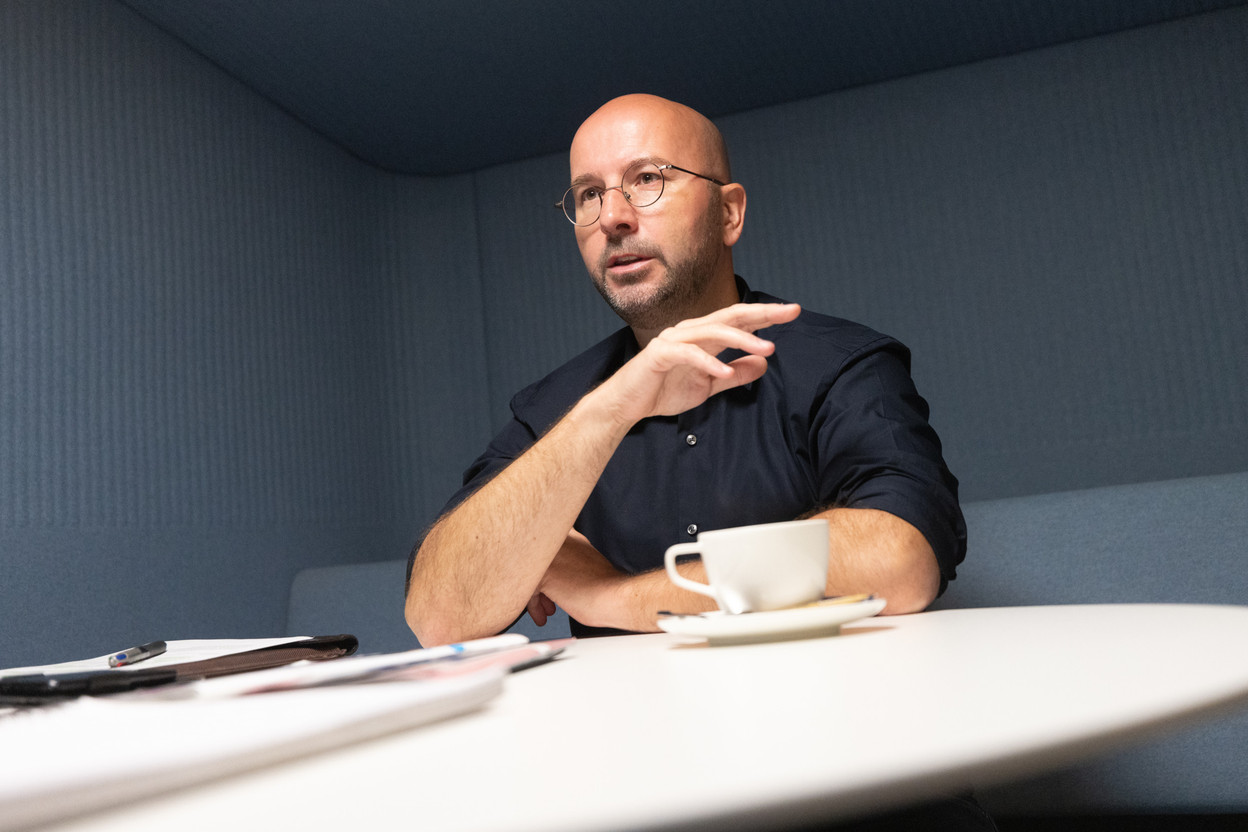
Paperjam.lu: For the past 15 years, the mentors involved in your association have been coaching SME managers. How have the challenges they face changed over this period?

Everyone needs to undertake and live with a plan B in mind at all times.

For an entrepreneur or company director, that's a lot.
CF: Yes, the entrepreneurial approach has changed profoundly. A few years ago, the main concern was growth. Once the company was up and running, the manager's main task was to find ways of making it prosper. Compared with today, this was a relatively leisurely process, following a well-established plan. Today, there are many more stumbling blocks, forcing managers to be more agile. Everyone has to undertake and live constantly with a plan B in mind, making sure that they can bounce back from any eventuality, equipping themselves with the means to anticipate difficulties.
How do you do that?
CF: It's important to keep an eye on a whole series of indicators at all times, so that we can identify warning signs early enough and anticipate crisis situations. It is still all too often the case that when entrepreneurs face difficulties and turn to financiers or public authorities for support, it is already too late. In the reform of bankruptcy law, with a view to preventing crises more effectively, this is an element that is much discussed.
Entrepreneurship always means taking a risk. Given the changing environment, isn't that becoming increasingly difficult to assume?
CF: The risk factors have indeed multiplied. It has become much more difficult. What's proving painful for entrepreneurs is the constant double talk they have to endure. On the one hand, they are told to be brave, to dare. On the other hand, when they need money, help or support, they are refused funding. Every business needs money if it is to prosper over the long term. Launching a business with a startup capital of €1 is an illusion. Many entrepreneurs, seduced by misleading rhetoric, have dared. And, because of a lack of finance, they have found themselves helpless.
And access to finance is becoming increasingly restricted...
CF: And it's not a problem of availability. We can see that there are investors and money. Even if, in Luxembourg, there is a lack of structures ready to invest and support startup companies. However, it seems more essential than ever for an entrepreneur to be able to defend a credible project, starting with a team capable of making it grow and prosper. Drawing up a business plan is no longer enough. If you really want to convince investors, you need to be able to put forward sufficient guarantees in terms of growth and profitability, ensuring that they can exit - in other words, value their holdings - within 3 to 5 years.
So what are the essential qualities of an entrepreneur?
Barbara Stroup (BS): You have to be able to apply a plan rigorously, while showing great agility. But, above all, you have to be able to show great professional humility, recognising that you can't know everything and that it's essential to take advice from the people best placed to help and support you. You can have people who are brilliant in their specific field, who can demonstrate remarkable know-how, but who don't necessarily have the commercial fibre or the financial skills required. But all these aspects are essential to the success of a project. So you need to surround yourself with the right people. It's important to have one or more mentors who can help you along the way.
How would you define the role of a mentor?
BS: Many entrepreneurs can feel a certain solitude in carrying out their responsibilities. Some don't have a natural mentor, someone with whom they can discuss their problems. Business Mentoring Luxembourg is a place where they can turn to find someone to talk to, an experienced person with whom they can discuss and compare ideas, all in a confidential setting. This should enable entrepreneurs to benefit from external experience, so that they can move forward more quickly. It is important to note, however, that in the context of mentoring, the manager remains responsible. It is up to them to drive their project forward, to be the driving force behind the relationship.
What can a mentor do for a manager?
BS: The mentor brings with them their experience. It can help the manager to avoid certain pitfalls and better understand certain risks. More than ever, an executive needs to be constantly vigilant. While you need to keep an eye on the warning signs, as Claude explained, you also need to be able to stay the course and see your ideas through to the end. A mentor, with his or her outside viewpoint, can help the manager to move forward, get through the difficulties and enable him or her to persevere.
CF: I've often seen high-quality projects fail simply because the original idea wasn't followed through. Too quickly, a second or even a third track was chosen. You end up getting lost and falling flat on your face, because you don't have the necessary perseverance.
Isn't perseverance a double-edged sword?
CF: Absolutely. That's why we need to remain vigilant and set alarm indicators.
BS: There are also key elements to consider, points of attention that a mentor is bound to raise. If the business is built around a single customer, for example, it's important to assess the risk of that customer defaulting. In many cases, this means bankruptcy. Once you are aware of this, you can better envisage the possibilities of changing the situation. That's the kind of thinking you need to keep going. For an entrepreneur today, it's also essential to be curious, to be open to others, to take the pulse of society, to see what's happening elsewhere and to draw inspiration from it. The mentoring approach contributes to this and helps to break the solitude.
Today, there are many more stumbling blocks, which means that managers have to be much more agile.
Faced with change, in a shifting environment, what are the keys to staying the course and adapting?
CF: The concepts of continuous improvement and operational excellence are now replacing the rigid frameworks and fixed procedures on which companies were built 40 or 50 years ago. For a long time, developing a business was like setting off on a motorway, with a few major junctions to negotiate. These days, the routes are more varied. Objectives are constantly changing. You have to adapt your route constantly. Technology is evolving. People are on the move more. As a result, companies have to organise themselves around change, and develop a system that can evolve.
BS: Admittedly, the versatility of our societies brings risks. But it also presents opportunities that we need to be able to seize. I'd like to make it clear that failure, and even mistakes, need to be accepted more readily. It is not inevitable, but rather a break from which we can recover and learn. In Europe, we are still struggling with this approach.
While we have to adapt and manage constant change, a company still needs solid pillars if it is to grow.
CF: Yes, but we need to make no mistake about identifying these pillars. Is Amazon primarily a book seller, or is it more a concept that is completely revolutionising the distribution of goods and even services? Amazon's success has more to do with a new global approach than with its original business. This success is based on strong foundations, a clear identification of the key business processes: the ability to manage a wide range of products, robust and scalable IT, a simple and infallible payment system and optimised distribution. In today's versatile world, success is built more on optimising key processes than on offering products or services.
For an entrepreneur today, it's also essential to be curious and open to others.

But not everyone is Amazon.
CF: No, obviously not. Each company must be able to identify its own success factors, which must be in line with its target market and objectives. We can think of the quality of the team, the development of the network, the way of delivering the product, guaranteeing quality and the image we project. Once again, you need to take a step back, get your head out of the game, and be well supported and advised. If we come back to the continuous improvement approach, it's around these success factors that it should be organised, and not necessarily around the product or service.
BS: At this level too, talking to a mentor about the challenges and issues, and benefiting from his or her insight, helps enormously.
To put it in concrete terms: I'm an entrepreneur and I'd really like to get in touch with a mentor. How does that work?
BS: All the interested manager has to do is get in touch with the association, via our website for example. We also often put people in touch with other mentors or mentees. We first ask them to fill in a form, to start thinking about the process. We then meet with them to get a better idea of their expectations, their activities and their background. This also enables us to make sure that the approach is really focused on sharing experiences and seeking support. The idea is not to seek advice on a specific issue, but to promote a more global approach to support and mutual exchange.
The mentor is not a coach?
BS: No. While it's fairly easy to become a coach, not everyone can be a mentor. In our pool, we have men and women with a wealth of experience, all of them volunteers, who have been through the stages of entrepreneurship and are keen to share their experiences. After the first interview, at a selection committee meeting, the entrepreneur has the opportunity to introduce himself to two or three mentors, with whom they can [pursue] their application. This is like a conversation, which can lead to a match-up that works. The mentoring process depends on the entrepreneur and the mentor. Both have to agree to commit to the relationship and define the terms and conditions.
This interview was produced for the small- and medium-sized business supplement Comment bien piloter sa PME published with the January 2025 print edition of Paperjam released on 11 December 2024. Click here to subscribe to the magazine.
Is your company a member of the Paperjam Club? You can request an individual subscription delivered directly to your home or office. Let us know via club@paperjam.lu