Complexity is no longer an external pressure but is now embedded in the very fabric of doing business. Organisations across the commercial, industrial, and public sectors are facing increasingly interconnected challenges, ranging from evolving regulation and rapid technological acceleration to sustainability imperatives and heightened governance expectations.
Against this increasingly complex and interconnected backdrop, corporates expect advisers with a deep understanding of their business and industry. Combining sector knowledge with specialised skills, Deloitte Luxembourg supports clients across Audit & Assurance, Consulting and Tax, helping them navigate complexity and turn it into opportunity.
“In practice, these dynamics extend beyond a single function or industry: they shape everything from supply chains and product development to digital transformation, data governance and financing strategies,” explains Luc Brucher. “Addressing them effectively requires not only deep sector understanding, but also the ability to translate complexity into concrete, operational and strategic outcomes, and ultimately into sustainable, long-term value.”
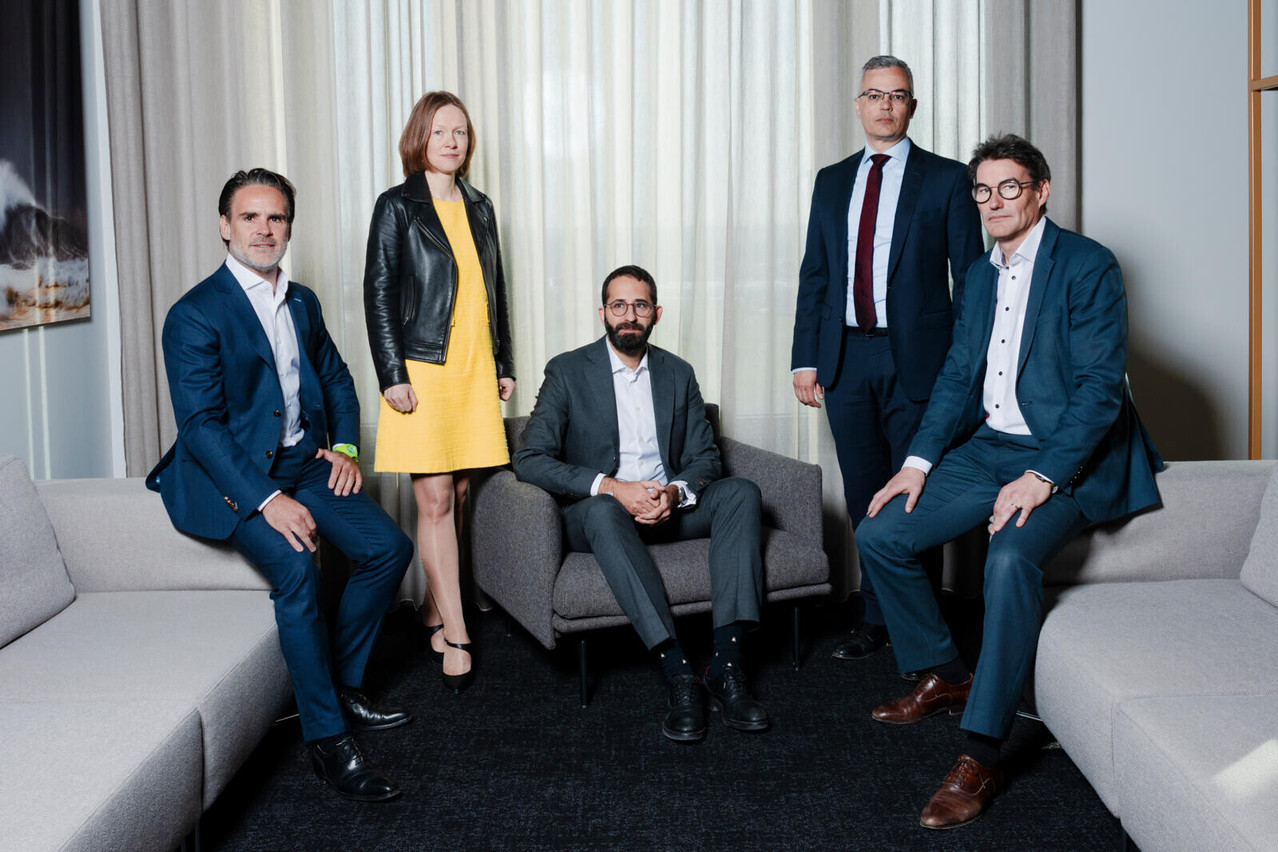
Partners Xavier Sotillos Jaime, Bettina Werner, David Osville, Cédric Tussiot and Luc Brucher share their perspectives on how Deloitte supports corporates in Luxembourg and beyond, and highlight the key trends shaping industries today.
What kinds of corporates do you assist? What are some of their challenges?
Xavier Sotillos Jaime: We assist multinational companies with a presence in Luxembourg and Luxembourg-based or headquartered companies with an international footprint. They’re confronted with challenges around evolving tax regulations, unplanned trade disruptions, the evolution of transformative AI, specific enterprise resource planning (ERP) implementations, ambitious sustainability strategies and extensive governance requirements, among many others.
How is Deloitte organised to serve these clients both in Luxembourg and abroad?
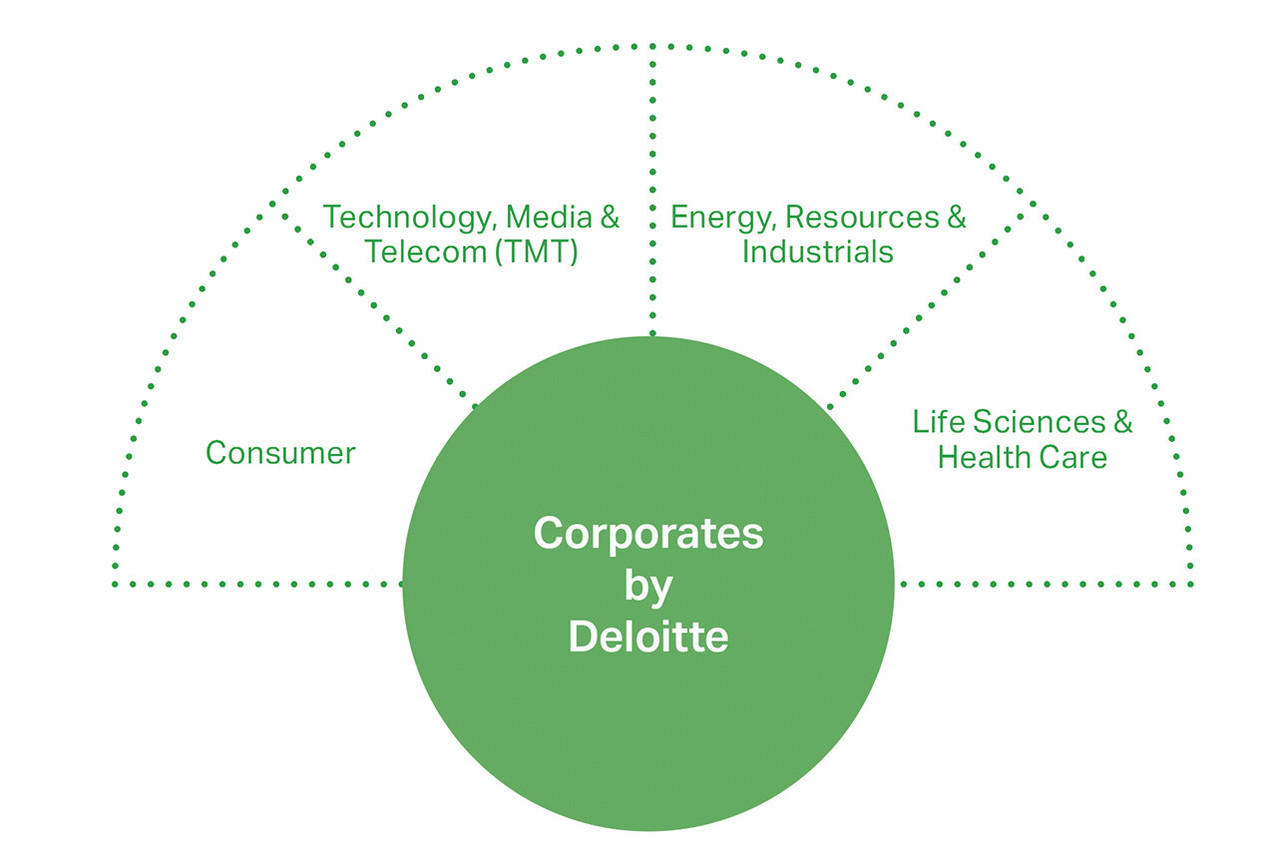
XSJ: The industry angle is fundamental to provide value to our clients. We group corporate clients into four industries: Consumer; Technology, Media & Telecom (TMT); Energy, Resources & Industrials; and Life Sciences & Health Care. Each of them has teams and service offerings designed to serve corporates both through our Luxembourg teams and, when appropriate, together with our international Deloitte network.
Beyond organisational structure and cross-border delivery, these challenges are particularly visible in consumer-facing industries such as food and beverage.
Corporates by Deloitte Paperjam Studio
Consumers are more conscious than ever about what’s on their plate. How is this changing the way food and beverage companies think about their products?
Bettina Werner (BW): People care more about health, the planet and where food comes from. In response, brands are cutting sugar, salt and additives, and bringing more plant-based and simple-ingredient products to the market. Packaging is becoming easier to recycle; labels are becoming clearer and more honest. To put this transformation into practice, many producers work with outside specialists, such as Deloitte, to test new ideas, understand evolving consumer tastes and develop products that can be manufactured at scale.
Global disruptions, from climate change to logistics challenges, are impacting supply chains. What are the biggest lessons for resilience in the food sector?
BW: Recent crises have shown how easily food supply chains can be disrupted. In response, companies are diversifying their supplier base and sourcing countries, maintaining higher safety stocks levels and in some cases moving production closer to home. Digital tools enable them to spot risks earlier, such as extreme weather events or transportation disruptions. We support this work by mapping supply chains end-to-end, stress-testing them across different scenarios, and helping businesses identify where to invest to remain efficient and resilient.
Financing the transition to net-zero is complex and costly. How do companies balance ambition with financial reality in the race to decarbonise?
BW: Companies often start with actions that deliver both cost savings and emissions reductions, such as improving energy efficiency, reducing food waste and improving transport routes. Larger projects, like renewable energy or cleaner production facilities, are often funded with green loans and bonds. External experts can help companies build solid business cases, set realistic climate targets, and show banks and investors how their plans create value over time, linking climate ambition with financial discipline.
While consumer industries are adapting to shifting expectations and supply pressures, digital transformation is reshaping how companies operate across all sectors.
Digital transformation is a major priority for corporates today. Why is it important and how is Deloitte helping its clients achieve this?
David Osville (DO): Digital transformation is critical for organisations seeking to improve growth, efficiency and resilience. It is more than just deploying a new software solution or a new ERP; it is about using technologies like AI, cloud and data to rewirecore processes and business models. At Deloitte, we support our clients from strategy through implementation: defining a clear roadmap, modernising systems, embedding strong governance and controls, and scaling trusted digital solutions across the enterprise. We have deep experience with this topic, as we are on this journey in our own organisation every day.
What are some challenges in the Technology, Media & Telecom (TMT) domain? How does Deloitte support its clients in addressing these issues?
DO: TMT players face heavy AI and data centre investment, fragile semiconductor supply chains impacted daily by the macroeconomic environment, new AI and content regulation, and pressure to monetise networks and media audiences. We support clients with strategy, capital allocation and M&A, benefiting from our global network and capabilities; we help design new AI-driven business and pricing models; strengthen cyber, regulatory and reporting frameworks; and help them scale innovation in a safe and profitable way.
AI is transforming the world of business. How can companies harness its power? How can Deloitte help its clients to benefit from new and innovative technological solutions?
DO: AI is moving from pilots to industrial scale, shaping search, agents, robotics, media and satellites. Companies should focus on high-value use cases, strong data foundations and robust governance. Deloitte helps clients identify and prioritise AI opportunities, orchestrate agents, modernise infrastructure and implement trustworthy, compliant AI, so innovation is positioned to deliver measurable value and to support audit and regulatory scrutiny.
Nowhere is this technological shift more sensitive and highly regulated than in the life sciences and health sectors.
As life expectancies get longer and technologies evolve, the life sciences and health ecosystem is changing rapidly. What is a key challenge faced by organisations in this domain?
Cédric Tussiot (CT): A key challenge is moving from simply “having data” to using it responsibly and intelligently, under growing expectations around privacy, cybersecurity, EU health data rules and AI. Organisations need to build the capabilities and governance to turn data into insights while maintaining trust.
New tech and operating models also demand new skills. How does the talent dimension play out in life sciences and health, especially in a small market like Luxembourg?
CT: Life sciences and health organisations are facing talent shortages and a growing need for data- and tech-savvy profiles, alongside clinical and regulatory expertise. In a small market like Luxembourg, this is further amplified by strong competition from neighbouring countries. Offering meaningful work, modern tools and clear development paths is increasingly important to attract and retain people.
Similar pressures around data, talent and transformation are also being felt in more traditional industrial environments.
Let’s turn to industrial companies. What are their challenges?
XSJ: Both globally and in Luxembourg, industrial companies are grappling with cost and trade uncertainty, complex supply chains, accelerating technology change (especially AI and smart manufacturing) and a tight skills market, while needing to maintain human trust, safety and engagement.
How is Luxembourg’s construction and industrial sector evolving through digital transformation? How does Deloitte support this shift?
LB: Construction and industrial companies are moving towards more modern, efficient and sustainable ways of working, using better planning tools, more structured collaboration and clearer performance tracking. Deloitte Luxembourg supports this shift by helping organisations define their transformation strategy, improve their processes, train their people and meet regulatory and sustainability expectations, while turning these changes into concrete business benefits.
Farm to fork:
Tech for transparency
“New technologies make food products easier to trace,” says Bettina Werner. “QR codes, sensors, and blockchain enable tracking of goods from the farm to the retail shelf. In some stores, scanning a code can already show the origin, animal welfare standards, or carbon footprint. Many companies work with technology and assurance providers, such as Deloitte Luxembourg, to connect these data points and present them clearly to consumers.”
The future of health:
Trends to watch
“We see a clear shift from hospital-centric ‘sick care’ to connected, preventive health,” says Cédric Tussiot. “This includes more remote and home-based care, new incentives and governance models, and a growing role for personalised medicine that uses health data to prevent, predict and tailor care.”
Deploying AI:
Concrete examples
“Industrial companies in Luxembourg can use AI in a practical, human‑centric way to boost performance while maintaining employees’ trust and engagement,” says Luc Brucher. “They can start with small, targeted pilots—such as predictive maintenance, quality control, or cash flow forecasting—and scale what works. Another approach is ‘human augmentation’ using AI to remove repetitive tasks and support teams with tools like copilots or diagnostic assistants, while keeping humans responsible for final decisions.”
Find out more about how Deloitte Luxembourg supports corporates here.