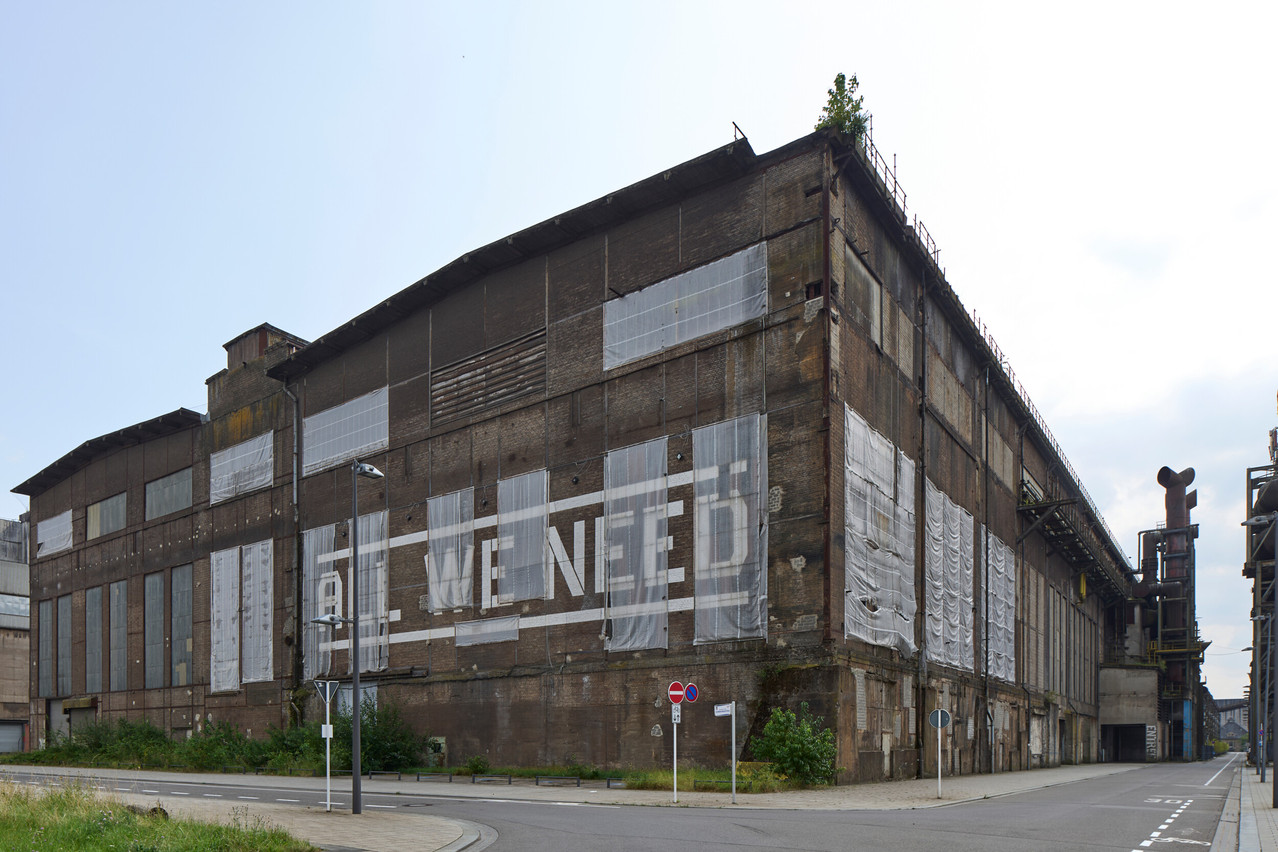
It is precisely the living memory of the Belval site that Anne-Catherine Richard, director of the National Centre for Industrial Culture (CNCI), and Maria Spada, an architect and urban planner who has been committed to the preservation of Luxembourg’s brownfield sites for many years, are so passionately defending. Listening to them, one thing becomes clear: “Industrial heritage is a collective asset that must be preserved, passed on and reinvented,” insists Anne-Catherine Richard.
For both experts, Belval now represents much more than just a former industrial site that has been repurposed. The neighbourhood has become a veritable urban laboratory where working-class heritage, scientific research, cultural spaces and new housing coexist. This gradual transformation is also attracting many foreign visitors who come to see a model of regeneration that is often cited as an example across Europe.
The Halle des Soufflantes, a powerful symbol of the steel industry
For both officials, the Halle des Soufflantes symbolises the steel-making heritage that has shaped Luxembourg. “Preserving these sites is not just about maintaining beautiful buildings; it is about passing on a shared history that we must continue to keep alive,” notes Anne-Catherine Richard.
It is the last building in Belval still standing, and it once formed the heart of the plant, as the hall housed the blowers that supplied the air needed to operate the blast furnaces.

Maria Spada also highlights the building’s importance within the industrial complex that Belval forms today. “These places are our history. If we remove part of it, the site becomes incomprehensible to anyone unfamiliar with Luxembourg’s history. In this case, it can be difficult to imagine what this building represents. It is the last building in Belval still intact, just as it was, and it once represented the heart of the factory, as the hall housed the blowers that supplied the air needed to operate the blast furnaces,” she explains.
For the architect, the Halle des Soufflantes cannot be viewed as a stand-alone building. It remains a key element in understanding how the former steelworks complex operated. Preserving it would also help to maintain a tangible link between today’s generations and the industrial history of the south of the country.
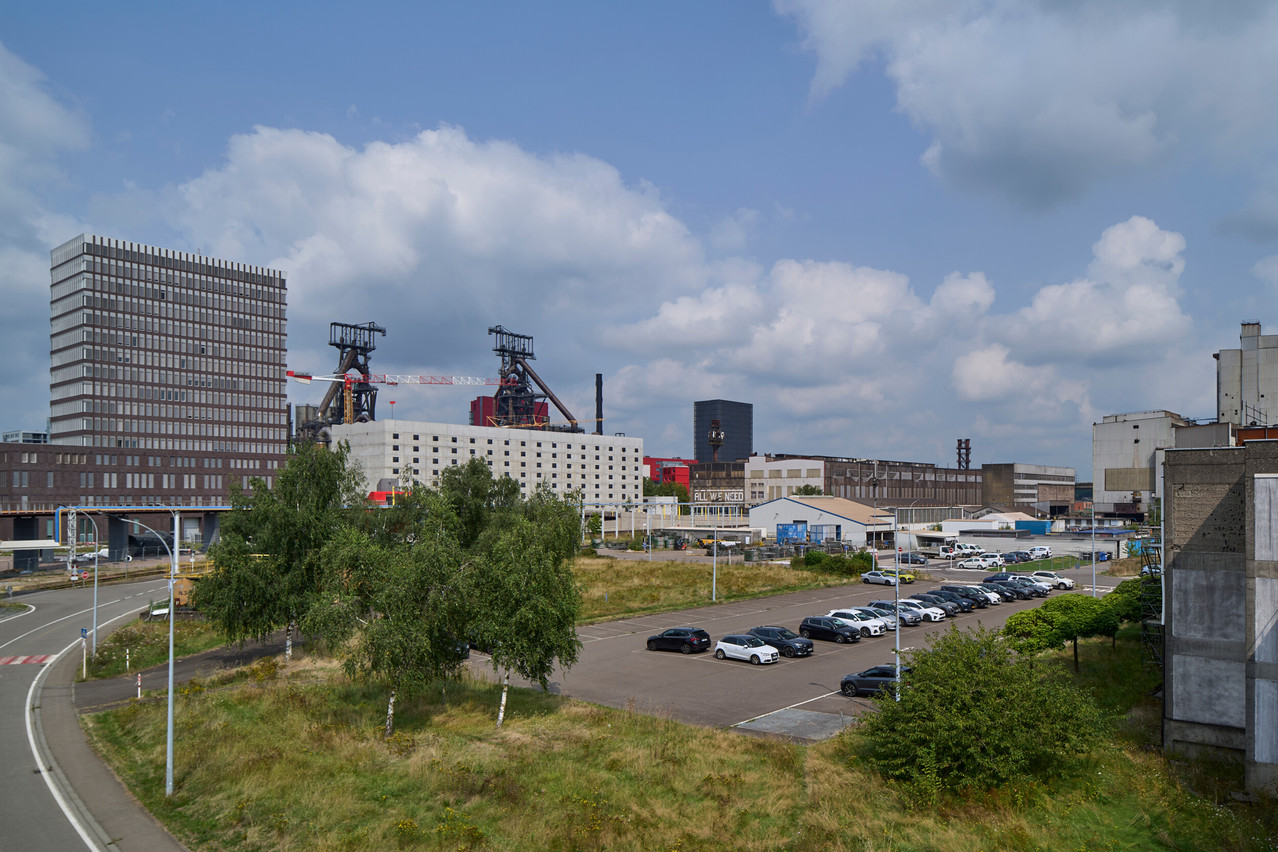
The University of Luxembourg has a number of its campuses in Belval and has successfully initiated a renaissance on a site steeped in the country’s history. (Photo: Eric Devillet/CNCI)
Preserving our heritage for the future
Founded in 2019, the CNCI works to preserve and promote industrial heritage through exhibitions, educational projects and European collaborations. Today, the association focuses much of its efforts on the Halle des Soufflantes, which has been nominated for Europa Nostra’s ‘Seven Most Endangered Sites in Europe’ programme.
Beyond heritage conservation, the debate surrounding the Halle also raises questions about the reuse of existing buildings and the green transition. For the project’s supporters, renovating an existing structure is also a way of reducing the environmental impact associated with new construction.
This repurposing is considered exceptional, but what really gives the site its character is the still-visible traces of its industrial past.

For Anne-Catherine Richard and Maria Spada, the successful regeneration of Belval cannot be achieved without preserving certain key historical landmarks. “When foreign visitors discover Belval, they are impressed by this redevelopment, which they consider exceptional,” says Anne-Catherine Richard. “But what really gives the site its character is precisely the still-visible traces of its industrial past.”


