What’s it like to be 100 years old when you’re running a bank?


Is the history of the bank really something that interests you?
G. H. —“We still have the same DNA. If you look back at our history, it’s the story of Friedrich Raiffeisen, who lived from 1818 to 1888, and who, during those years of enormous scarcity and crisis for the people, came up with the idea of founding banks with the people themselves: small local banks rooted in the village, with the deep conviction that together, men and women could overcome the challenges of their time. The principle was based on solidarity: decisions were taken locally, the bank was at the service of the community, and trust replaced dependence. It was a time when people and rural communities were largely excluded from access to the banking system. And if you look today, there are many elements that have been preserved, not least the fact that the bank belongs to its customers. The bank has a clear vocation: to be there for society, and therefore to take an interest in its customers’ projects. The profits made remain within the company to give greater stability and solidity to the company itself. As the bank is not listed, it can concentrate on its primary objective, which is the customer. I believe that this DNA is still deeply rooted in the bank today, and this DNA is dear to us.
As the bank is not listed, it can focus on its primary objective, which is the customer.

Today we see young people joining us, who like the model. It’s surprising, but it’s a pleasure. We’ve recruited some good people who came to us because they said: ’We like this balanced profile in a world dictated by figures and profitability. And we’re not socialists! That’s why I say: we live in a capitalist world, but perhaps in a slightly more balanced, slightly more 'fair' way, in terms of our business model.
It’s become quite modern to say “we have the customer in our DNA”… In what ways is this investment in proximity, in decision-making, more evident at your bank than at others?
G. H. —“First of all, I think there’s a big difference: the customer owns the bank. Customers who are interested can apply for access to the Beirat, to challenge the bank on its strategy. It’s an antechamber for access to advisory services later on, depending on the regulatory conditions. We have our Opera loyalty programme, which allows customers, depending on the volume of business they do with us, to take points at the end of the year and exchange them for paid services within the bank. There is no other bank that allows you to do this. I believe that this proximity and stability are a huge asset, appreciated by customers.
L. Z. —“Our primary aim is to invest in our employees: to train them, to develop them, to provide the best possible support for our customers. And that’s something customers feel, they see it in continuity. And when we talk about investment, it’s not just focused on digital because that’s more efficient: we invest consistently in the physical side, our physical channels, but also our digital channels, because digital reinforcement is necessary. We are strengthening digital in order to strengthen the human relationship at the same time, not to replace it. We are not the ones imposing the choice of channel on the customer: the choice of channel must remain in the hands of the customer.
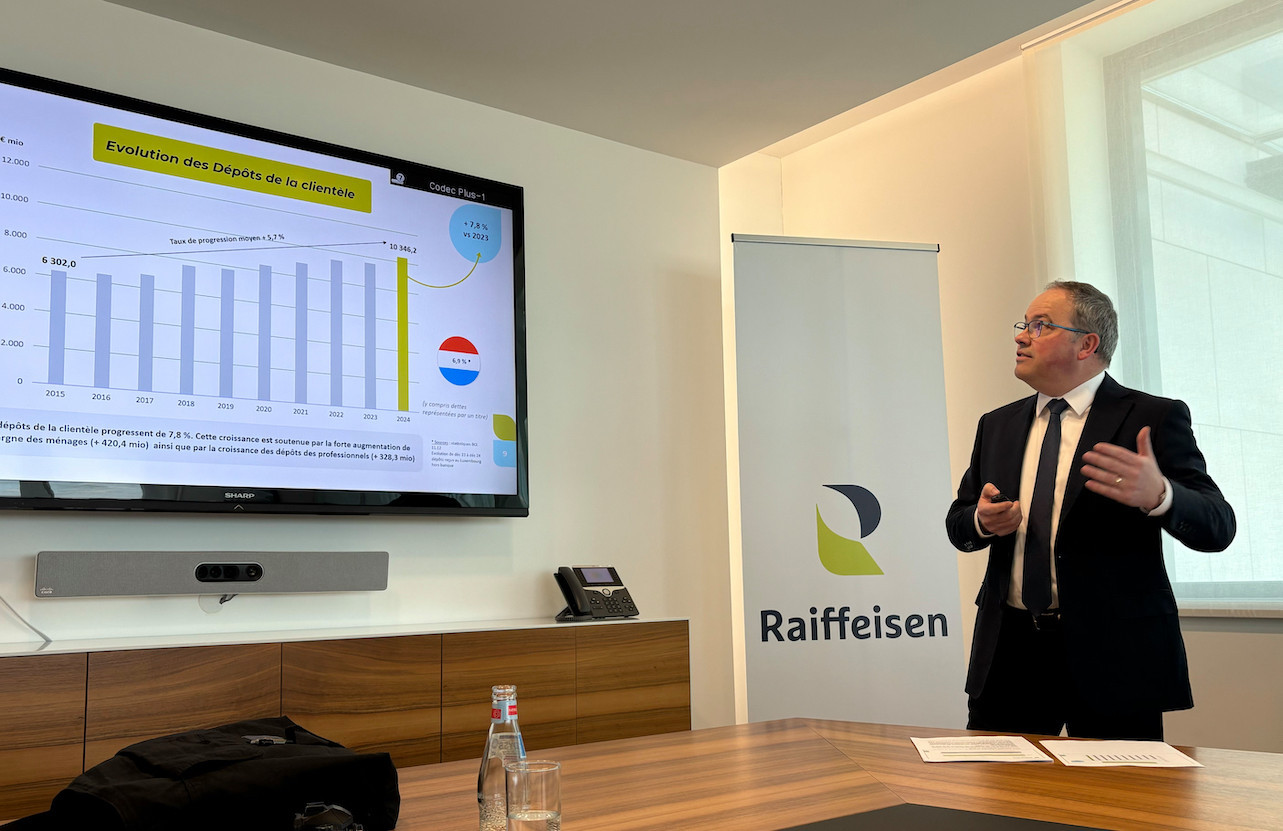
We will be investing more than €10m over the next few years in digitalising and redesigning our lending business, our core business, to make the customer journey smoother, to have a significantly improved 'time to decision'.

Is it easier to open a bank account with your bank than with others? Is it easier to get a mortgage? Is it easier to get a loan to invest as an entrepreneur?
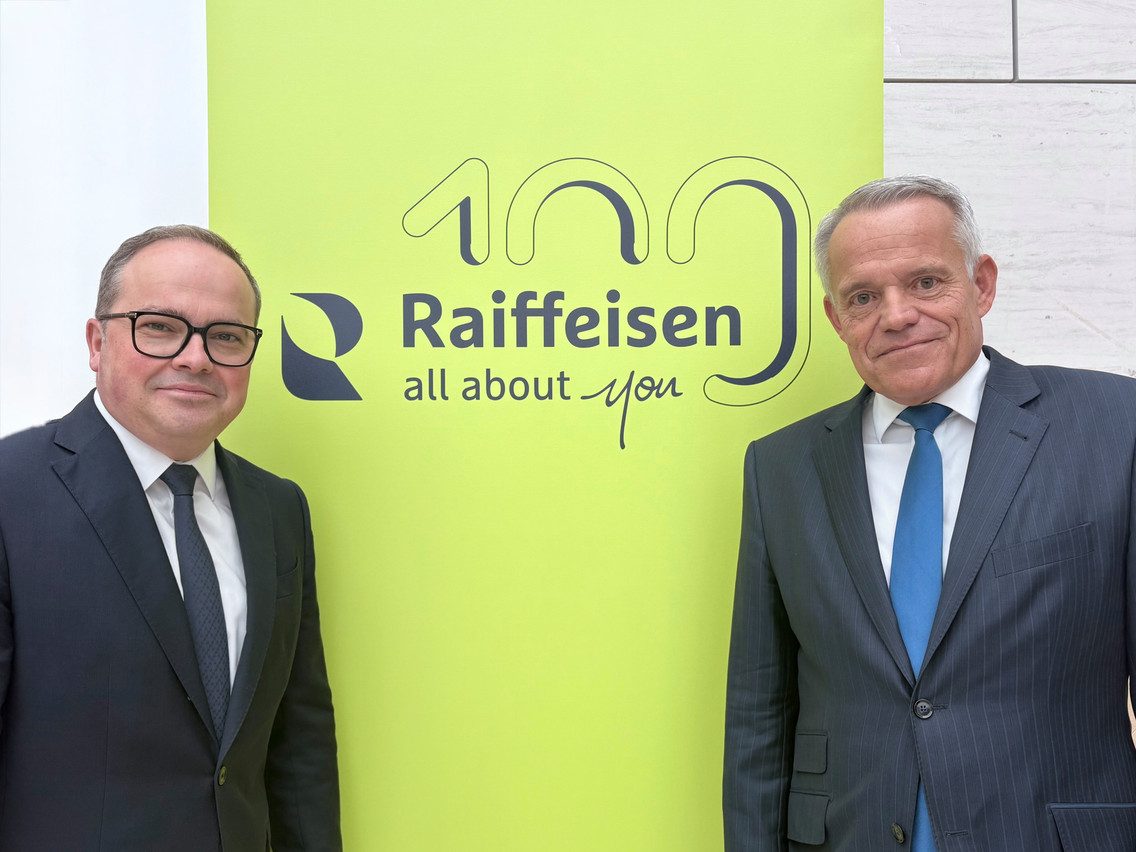
L. Z. —“The bank’s future strategy is to put the customer experience at the centre of all our actions and considerations. What’s important is to have all the initiatives that will be taken to ensure this, so that customers feel that they are at the centre of our concerns. We will be investing more than €10m over the next few years in digitising and redesigning our lending business, which is our core activity, to make the customer experience more fluid and to significantly improve the time taken to make a decision. Our vision is to offer the best customer experience, and we are documenting this in relation to our new baseline: 'All about you'; the customer at the centre of our concerns, with a commitment to offer them the best customer experience in the future.
G. H. —“One very subtle difference that I hear a lot—and it almost makes me feel sorry for the banking profession—is that people say to us: 'You’re still the only bank that responds to our requests'. For the others: ’We send emails, we try to get in touch with our manager, we come across a machine somewhere in the world and we can’t get in touch with our manager. I don’t think we’re any smarter, but maybe we’re more human. And when I look at our figures over the last 20 to 30 years, the bank has defended itself well. Obviously, we want more customers, but what interests us even more is having more satisfied customers. Satisfied customers also tell others. So, before we pull out all the stops to find more customers, we take our stock of customers and try to find a customer experience and customer satisfaction that’s 'breathtaking', so that the customer comes away saying: 'Blimey, I got more than I bargained for'. I’m used to saying that the bank has to know its customer: it makes sense, from a regulatory and other point of view.
L. Z. —“I like it when a client comes to Raiffeisen, to feel the 'Raiffeisen feeling', to feel comfortable, surrounded, and that it’s genuine. Commitment is the commitment of our 730 employees. In 2025, we launched an exercise to look for ideas: our employees came up with very concrete ideas, sometimes simple everyday elements, which we are trying to implement.
We have never made any big mistakes, we didn’t run after every file if we thought it wasn’t profitable in relation to the risk. That’s why we’re still here when others have to pull out because they can’t afford it.
G. H. —“It’s a source of pride, along with my mandates at the ABBL and the Chamber of Commerce, to hear that if you take the last two years, when the property market was at a standstill, our bank has still made loans and continues to make loans, with growth that may no longer be close to record levels, but we’re there. I’m convinced that a bank needs to be more solid in times of crisis if it is to have a presence and not just throw up its hands and say that it doesn’t know what to do. It’s a question of discipline and credit policy. We’ve never made any big mistakes, we wouldn’t run after every file if we thought it wasn’t profitable in relation to the risk. That’s why we’re still here when the others have to pull out because they no longer have the resources.
L. Z. —“I come from the world of companies, corporate banking, local SMEs. At the time of Covid, other banks were busier with other things than with customers. We were in great demand, particularly from business customers, who sometimes found themselves without a contact. And I remember the phrase: “But we can still talk to you”. It left a lasting impression on me. We’re still trying to maintain that. Everyone met customers, everyone was out in the field, active. We tried to keep it that way. A lot of customers were surprised: “Oh, you’re getting in touch?” Yes: that’s our job too. And I don’t think a customer forgets that in a hurry.
You were talking about the people who respond to customers, and the branch network: what you do has an enormous financial cost.
G. H.: “A huge cost. All the more reason: you have to call a spade a spade, the profitability of a retail bank has become difficult today with all the regulation. It’s a less buoyant market. You need to have good expertise and experience of the market. But on the other hand, in our strategy, we are convinced that the physical mix—our presence, with 28 branches today—coupled with online banking for day-to-day activities, suits us very well. We own our buildings, in good, modernised locations, and this allows us to offer customers this choice, which is extremely important.
We are aware that the world is changing, that customers’ habits are changing. But in this technological evolution, our conviction is clear: digital technology must strengthen the human bond, not replace it. There is financial trust and human trust, and human trust cannot be digitalised. We have built it over decades by cultivating a dialogue with our customers, a consistency, a closeness. It’s in our DNA. Even our younger customers appreciate it.
Yes, physical contact has a cost, but it’s necessary. And you can live this model if your first priority is not shareholder value, but long-term value creation: for your customers, your employees and the bank. And we also have substantial investment projects in digital, without ever forgetting the human relationship: finding the right mix between the two.
What are the limits of your model, and how do you intend to overcome them without distorting your group or your philosophy?
G. H.: “One very important element is managing the bank’s growth. We manage our solvency and equity with a degree of prudence, taking care not to jeopardise our financial strength. We have different mechanisms, such as profits or subordinated loans, but hoarding our profits is important: to give back to the economy what we have earned from the economy, and to strengthen our equity to ensure stability.
It’s easier to write off regulation over 13 million customers than in a market of 650,000. That’s why managing growth and demonstrating that we know our business is crucial, including for the ECB.
Regulation weighs on everyone, and perhaps more so on the smaller ones: It’s easier to write off regulation on 13 million customers than in a market of 650.000. That’s why managing growth and demonstrating that we know our business is crucial, including for the ECB: making money from our business—without becoming super-rich—, mastering credit risks, liquidity, solvency.
The limit, for me, is not a question of size: it’s a question of consistency, and the ability to implement what we say. The moment you get greedy, the moment you take risks you can no longer control, that’s when things get complicated.
A key element in this equation is the skills of our staff: maintaining and developing skills, despite the regulations and the challenges, is the focus for the future. We are making a huge effort to train and develop. We find people on the market because they see a bank where we can develop, bring in ideas and where people are given responsibility. And then we have to say: we don’t have to master everything. We have to master our core business. Where there is complementarity, we form partnerships.
Which partner are you talking about?
G. H.: For example: Foyer (2002), Vontobel (2009), Post (2016), Venrout (2020), Nature Enwelt Rocal recently. I think that’s part of the solution: you commit less capital and, if you find partners who share the same values, you benefit from complementarity, they benefit from our skills when we’re called upon. It makes the structure lighter.
What’s stopping you from considering a tie-up with a group like DZ, Crédit Mutuel, or others?
G. H.: “It’s not on the radar, but it’s often under discussion. I’m president of the International Raiffeisen Union, so I see the bosses of the various banks regularly. I know, with a certain pride, that we are regarded as a little jewel. And there’s this kindness between cooperative banks: we don’t step on each other’s toes. So some people say, “What more could we do together? Our ambition—we don’t know what the future will bring—but our pride is our independence. In a world that is looking for consolidation, sometimes desired by the ECB, and even from a political point of view, we have 6,300 banks in Europe: they say that there are very small players and that it doesn’t make sense. I’m glad we’ve managed to keep this independent mentality. Our discussions never went beyond a certain point: it remained, with a good glass of wine, exchanges about things we could do together, but never in a capitalist way.
Raiffeisen, it’s a very German-speaking name: is it a challenge for new residents of all nationalities? And do you want this clientele?
G. H.: “Yes. A great appetite, in fact. These people, who tend to be English speakers, are very familiar with the cooperative system: in England and the United States, there are a huge number of them, even if it’s more local—Community or Mutual Community Banks. But as soon as you leave the German-speaking world, the name doesn’t lend itself so well. We started a few years ago: contracts in English, communications in English, and the result is also an English baseline, communicating more in English. It doesn’t change anything for our customers. Older clients tease us: “Oh, now you’re starting out in English too”. Yes, because if you look at the population of Luxembourg, we’ve grown up with it, but we don’t want to die with it: the country lives off this inflow of people from all over the world. And we’ve made a lot of effort, with a lot of success.
L. Z.: “The trends are positive. We’re certainly not neglecting traditional customers, on the contrary: we want to increase their loyalty. But there is a particular focus on newcomer customers. They know even less about Raiffeisen when they cross the border: that’s where all our efforts must be deployed, and the trends are positive. With an English-language baseline, we want to appeal more to these newcomers, to show that we are modern and geared towards a younger clientele. A lot of young people are already part of our customer base, but we’re convinced that we have a great card to play when it comes to foreign residents moving in, and the trends confirm this. And today, a lot of people at least know that this is a bank and not a club.
Today, 20% of our customers are young people, students, high school and university pupils, sometimes even before school. Business customers already account for a third of our business, around 30%.
How do you approach the issue of business transfers, to turn it into something positive?
L. Z.: “We have a very diverse customer base: today, 20% of our customers are young people, students, high school pupils, university students, sometimes even before school. You were talking about professional customers: the transfer of businesses is part of our discussions. The professional sector is one of the bank’s areas of development: professional customers already account for a third of our business, around 30%. The professional client business and the private banking investment business have developed very strongly over the last 15 years. These are two pillars and two segments where we still want to grow.
Are you in favour of a market solution for onboarding, or are you going to do this on your own?
L. Z.: “Our aim is to develop our areas of business and extend our areas of activity: savings, investments, loans, for private and professional customers. We have a major project to overhaul the credit process, and then the onboarding that we’re going to redo: it’s a project that shows our desire to facilitate and improve the customer experience. We want to open accounts for both private and business customers, and we are doing so today. The turnaround times are reasonable for private customers. The professional depends on whether the application is complete. But for customers who do a traditional business and who fit in with the bank, there’s no reason why they shouldn’t be able to open an account with us. And what we’re always looking for is: where can we provide even more support? Cash flow needs, investments, credit, etc. We try to offer a combined package.
G. H.: “On the contrary: as Chairman of the ABBL, I was very keen to see this happen. The future of the market also depends on our ability to pool things that everyone else is going to do in the same way. Account opening, know your customer, etc., lend themselves extremely well. Initiatives have not yet reached the same level of maturity, in terms of both solutions and players. But our bank is very open to entering into shared solutions. It’s a very administrative business: the added value comes afterwards, in terms of customer development.
Have you made a strategic decision today that you think will stick with you for the next 100 years?
G. H.: “We’ll say the next 10. The strategic guidelines, and we have just completed the strategic exercise for the next few years, is not to lose sight of our bank’s mission: the key elements that characterise the cooperative bank remain faithful and anchored in our mechanisms in the future. Our DNA remains intact. But the world is changing: customers, digitisation.
The greatest effort in the years to come lies in two elements: offering an irreproachable experience. And to achieve this, our digitalisation efforts are focusing first and foremost on our internal processes. That’s the biggest challenge: changing processes that have grown up over 100 years. We’re doing it on the credit side, the relationship entry, and we’ll be doing it on other key processes. The interaction with the customer will not change: the customer’s experience will be easier thanks to what goes on behind the scenes.
Customers still come for advice, even young ones, but they no longer come two or three times for the same thing: there has to be fluidity behind the scenes, electronic signatures, exchange of documents and so on. This is where we need to do our job so that we can concentrate on what we do best: advising.
L. Z.: “All About You is a commitment, a promise to our customers. We’re going to keep it, but the means are different from 100 years ago. Our ability is to adapt to changes and needs: to constantly look at our processes, our tools, how we can do better to improve the experience. I’m convinced that we’ll still be able to stand out thanks to an improved, personalised customer experience.