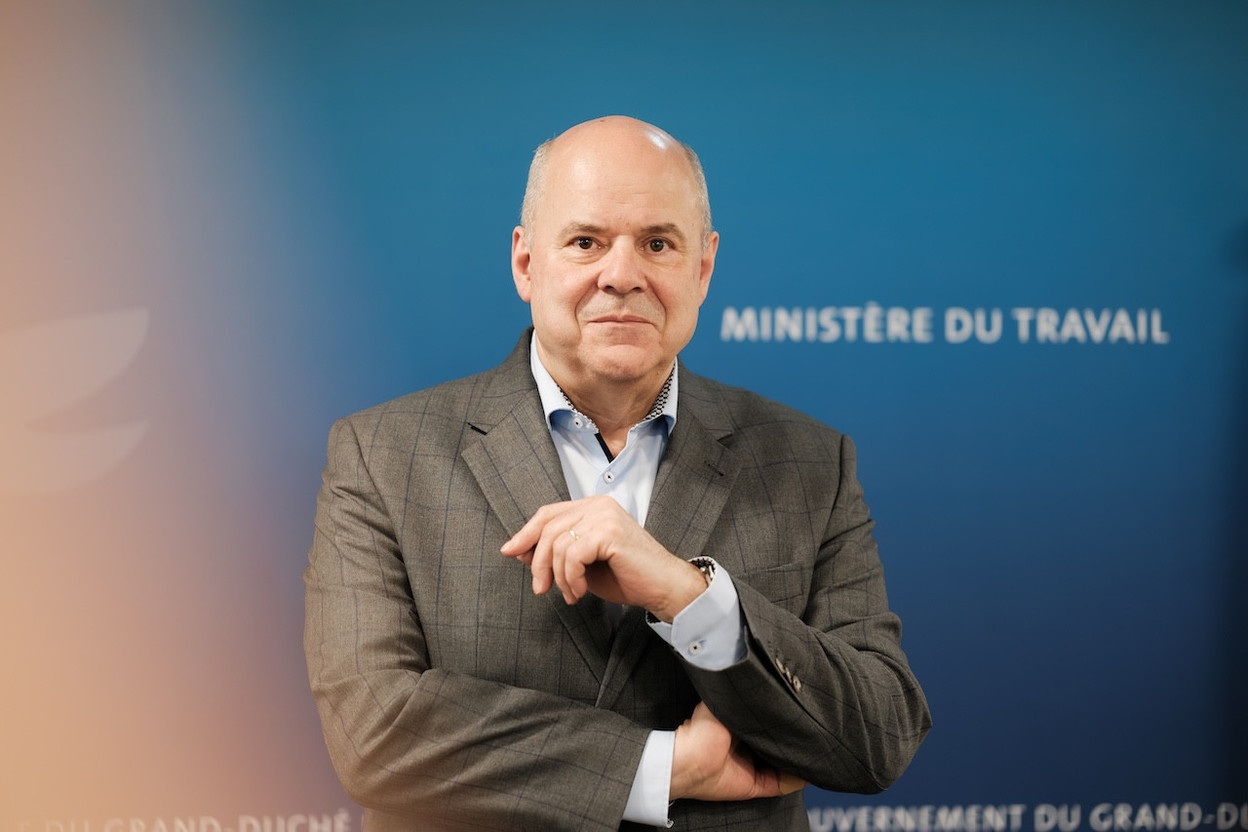
Marc Spautz, minister of labour, said the increase will go ahead alongside the next indexation tranche, confirming that compensation has been set but that no details have yet been defined on how it will be applied.
That leaves the government’s position split between what is already decided and what is still to be worked out. The level of the increase and the compensation has been fixed, but the structure of the mechanism — including how support will be distributed — remains open.
From announcement to committee
The committee exchange follows the government’s 27 March decision to raise the minimum wage by 3.8% from January 2027, on top of an indexation tranche expected before the summer, a combined increase ministers said would amount to around €170 for minimum-wage earners.
At that stage, the government said it would compensate employers for part of the increase, with economy minister Lex Delles indicating a reduction of around 1.3 percentage points in the effective cost for companies. The mechanism and scope of that compensation were left to further negotiation.
Spautz’s intervention confirms the direction of that work, fixing compensation at 1.5% in principle while leaving its application unresolved.
Mechanism still to be defined
Spautz said the 3.8% adjustment reflects recent developments, noting that over the past ten years increases had averaged between 2% and 2.5%. He said the current level is linked to “the situation that is currently facing the economy” and pointed in particular to sectors that are performing less well.
He said a compensation mechanism of 1.5% has been fixed. “That’s why the compensation of 1.5% should come, but there you find that the 1.5% has been fixed, but there is still no detail set out how that should work.”
The design of the mechanism will be worked out by the economy minister together with the minister for social security, who will determine how the distribution should take place.
Spautz added that the compensation is intended for companies with many employees on the social minimum wage. “That should go to the companies that have a lot of people on the minimum social wage.” He said the approach should differ from the one used in 2018.
Method dispute unresolved
The discussion takes place against a wider dispute over how the minimum wage should be measured against the median wage, a key benchmark under the European framework on adequate minimum wages.
Trade unions have criticised the government’s approach to calculating the median wage, arguing that the use of base salary data excluding bonuses understates the benchmark and limits the case for a larger structural increase.
The government has defended that method, arguing that the minimum wage itself is a base salary and should be compared on the same basis.
Spautz also referred to the legislative steps linked to the increase, including a draft law covering the 3.8% adjustment and amendments to existing legislation. An action plan on collective bargaining, required under the European framework, is expected before the summer but will not form part of the same legislative package.
The increase will proceed, the compensation level has been fixed, and the government has assigned responsibility for designing the mechanism, but how that support will be applied — and how the broader wage-setting dispute will be resolved — remains open.