“The gradual switch to electric mobility is essential to achieving the energy and climate targets to which Luxembourg has committed itself. In order to continue to support households and businesses in the ecological transition, the government is renewing the Klimabonus Mobilitéit scheme”, reads a press release published after the meeting of the Government Council. This aid scheme was due to expire on 11 July. 
With the aim of further facilitating access to electromobility, a system of pre-financing aid will be introduced for new vehicles purchased by natural persons from 1January 1 2027, similar to the system used for photovoltaic panels. Details of the scheme have not been revealed.
The level of support remains the same.
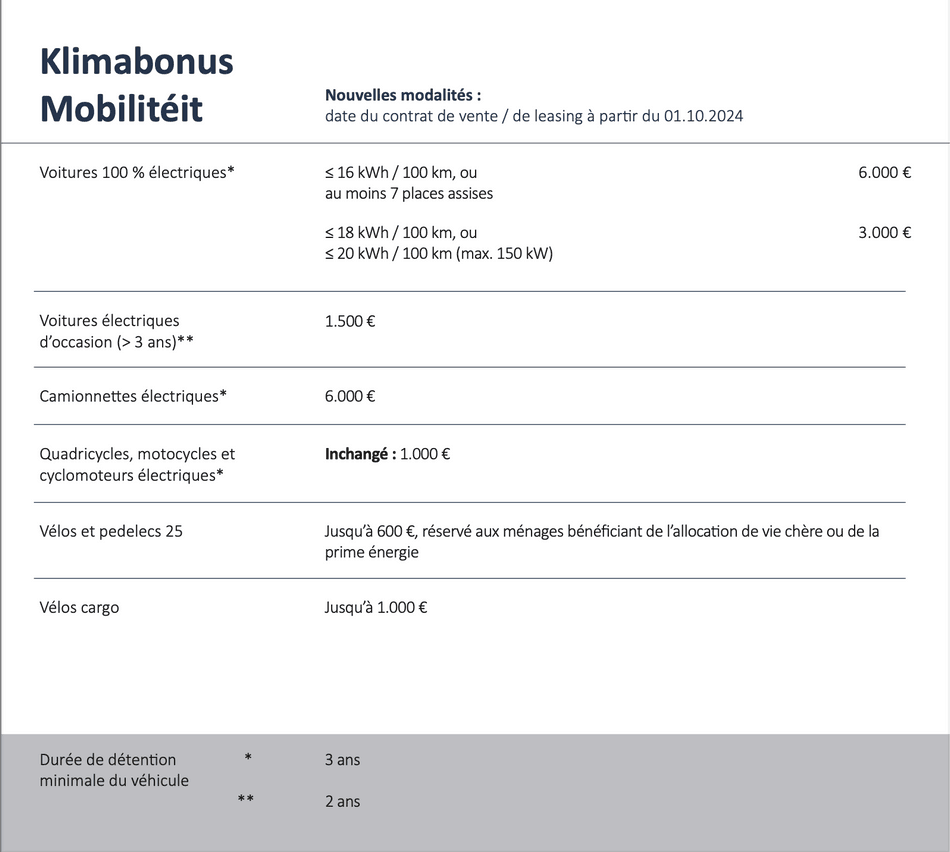
Details of the Klimabonus Mobilitéit aid scheme. (Source: Government)
The Klimabonus Mobilitéit scheme had been reformed in October 2024, following Prime Minister 
In the same vein, the holding period to benefit from the scheme was extended from one to three years. Finally, “with a view to encouraging electric cars to remain in the national fleet for longer”, a grant of €1,500 has been introduced for second-hand cars - cars that are more than three years old. The condition for obtaining this aid is that the car must be driven for two years after the grant is awarded. Developing the second-hand market was seen as a way of enabling low-income households to still be able to switch to electric.
The bonus for electric vans was cut from 8,000 to 6,000 euros, while the ownership period was extended from one to three years. The same applies to electric motorbikes. However, for this category, the premium remains fixed at 1,000 euros. The last new feature is that the ceiling on aid for cargo bikes, which represents 50% of the cost excluding VAT, has been raised from €600 to €1,000. The bonus for bicycles remains fixed at 600 euros, but is now reserved for households receiving the cost-of-living allowance or the energy bonus.
The Opposition has already criticised these cuts during the debates following the Prime Minister’s State of the Nation address, with the central accusation being that they are seeking to make savings. Serge Wilmes refuted this accusation. He added that the government would not refrain from reviewing the amounts of all these subsidies in the light of market trends.