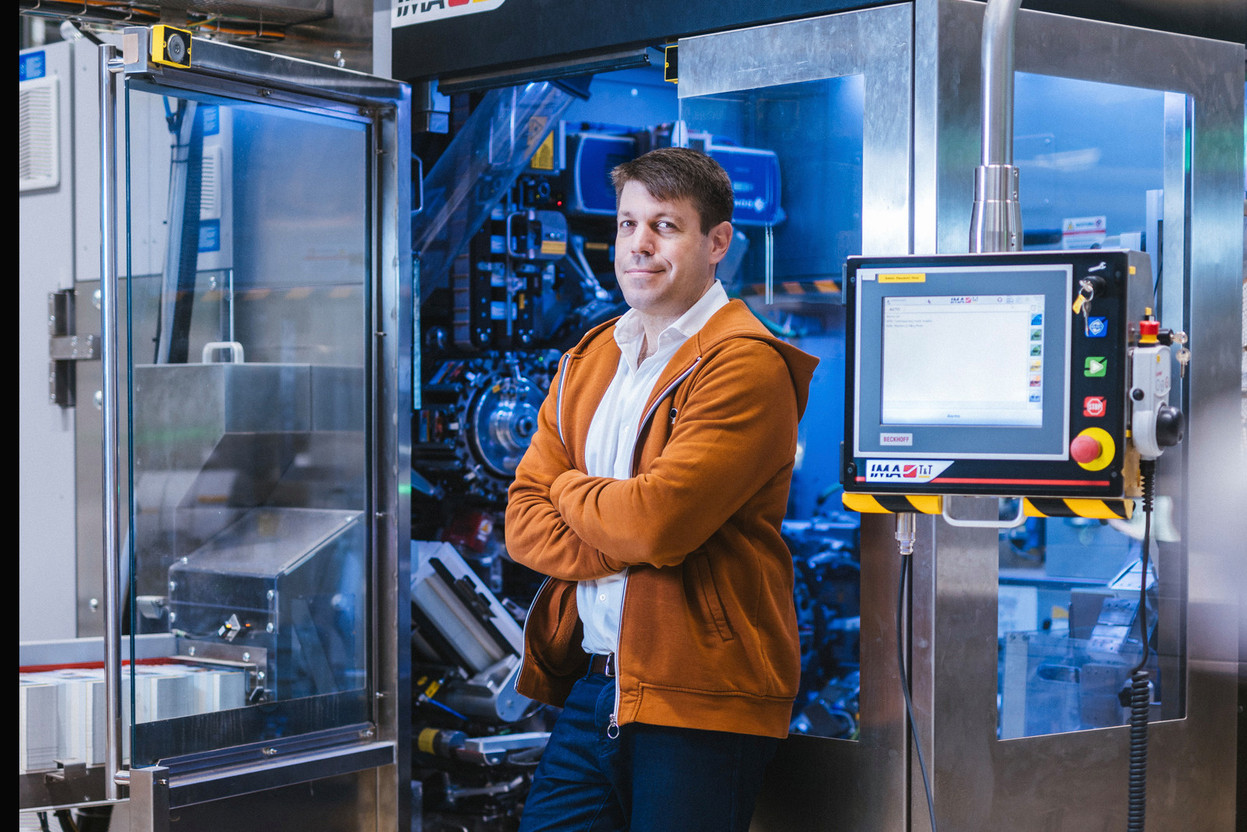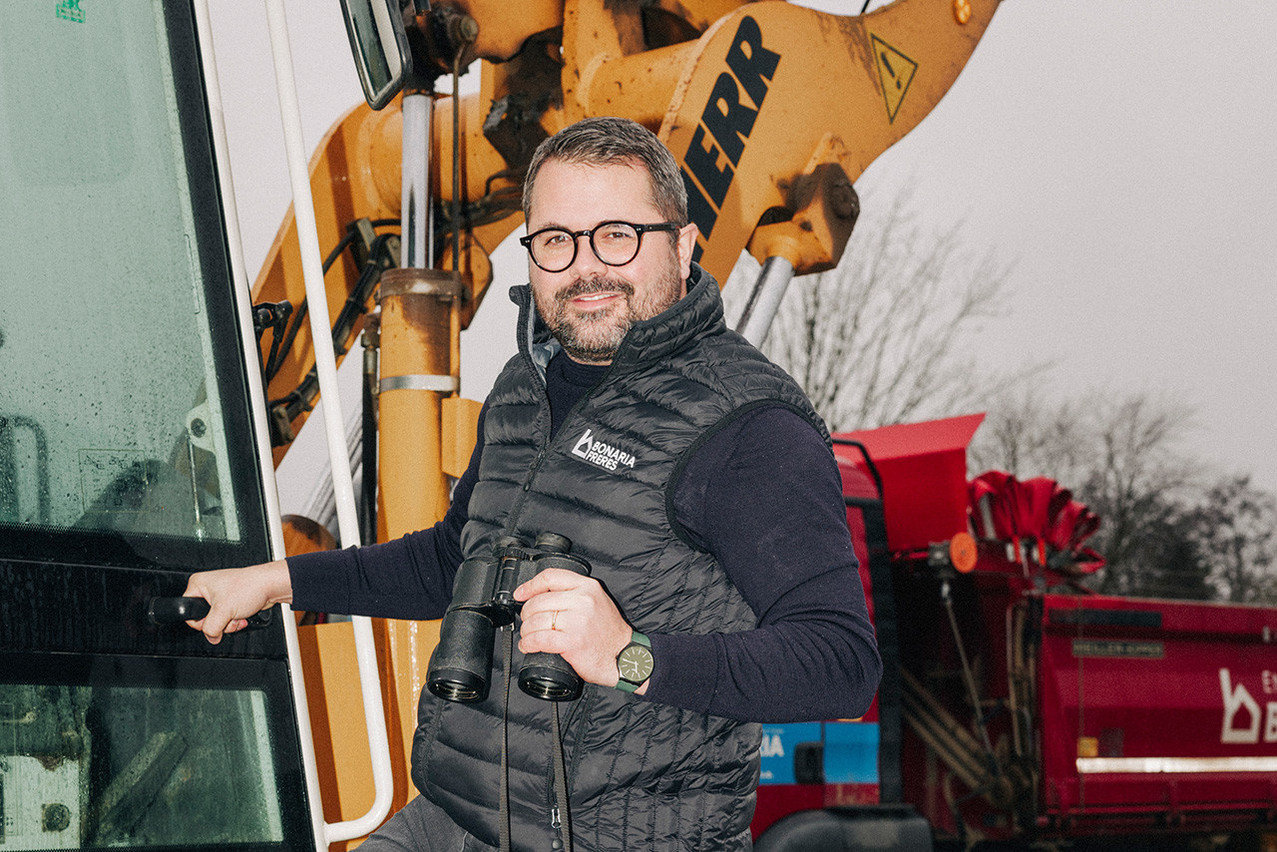
You have just been elected president of the Fédération des jeunes dirigeants, what trend do you want to carry forward?

What do you think will be the major trend redefining the way companies are run in 2026?
“A key question for businesses in 2026: ‘Kënne mir bleiwe wat mir sinn?’ (Can we remain who we are?) questions the ability of companies to preserve their identity while adapting to rapid change. In 2026, the major trend will be towards adaptive, people-centred leadership, capable of combining authenticity and transformation.
Leaders will have to remain true to their values while responding to profound changes. Digitalisation, the arrival of generation Z, economic pressure and social expectations are all forcing a review of management methods. In 2026, ‘staying who you are’ does not mean freezing the past, but reinterpreting your identity to stay relevant. The companies that succeed will be those that are able to combine their values with a capacity to adapt quickly.
What challenges will Luxembourg's leaders face?
“Talent management will be a key concern. Social responsibility will also play an important role. Faced with the housing crisis and the cost of living, companies will be encouraged to support the well-being of their employees.
Risk management will become essential. Cybersecurity and occupational health and safety will require investment to ensure business resilience.
Finally, economic pressure from falling GDP and budgets will force businesses to innovate to maintain performance without sacrificing quality.
What are the expectations of the young executives you represent?
“Above all, young executives want a framework that ensures economic competitiveness and quality of life; competitive and transparent taxation, to maintain the country's advantage over its neighbours.
The shortage of skilled labour is a major challenge. We want active policies to attract, retain and develop skills.
Innovation is another key pillar for the entrepreneurial ecosystem; with a favourable environment for start-ups, research and development, as well as agile regulation to experiment.
The way we build is going to change profoundly over the next few years.

You are active in the construction sector, what will be the big trend there in 2026?
“The quest for efficiency and sustainability, against a backdrop of economic downturn and pressure on margins. Companies will have to ‘do more with less’ by focusing on three strategic levers.
The first will be administrative simplification, with initiatives such as the ‘Gebäudetyp E’ concept, which aims to speed up procedures and reduce the costs associated with regulatory processes. This simplification is essential to make projects run more smoothly and improve competitiveness.
The second lever will be digitalisation, which represents a concrete way of increasing productivity. The integration of digital tools will make it possible to reduce deadlines, minimise errors and optimise resources.
Finally, sustainable construction will be a priority. The use of local and low environmental impact materials, such as CEM III cements and recycled steels, will help to meet ecological requirements while supporting the circular economy.
What will change in the way we build?
“It will change radically over the next few years as a result of several major trends. The first transformation concerns sustainable construction. Companies will have to reduce the carbon footprint of their buildings. The logic of circular construction, which consists of reusing and recycling materials, will become an unavoidable standard.
The second change is linked to digitalisation. Digital tools such as BIM (Building Information Modeling) enable collaborative design and better project management. The Internet of Things (IoT) will make it easier to monitor worksites in real time, improving safety and productivity. These technologies will help to reduce errors, optimise costs and accelerate deadlines.
Finally, the industrialisation and automation of processes will transform construction methods. Prefabrication and modularity mean that components can be produced in the factory and assembled on site, thereby reducing lead times and costs. Automation, particularly via robotics for certain repetitive tasks, will help to alleviate labour shortages and improve quality.
Digitalisation is still moving slowly: what will the tipping point be?
“In 2026, a complete tipping point towards digitalisation seems premature, as the priority will still be to revive the sector. But it will continue to progress, accompanying the recovery rather than anticipating it. Companies will favour solutions that deliver immediate productivity gains. Site automation remains limited to pilot projects, as heavy investment is difficult in a context of reduced margins. In short, 2026 will be a time of continuous improvement, not revolution.
In short, 2026 will be a time of continuous improvement, not revolution.”
Doing BIM in Luxembourg
“Building Information Modeling”, commonly known as “BIM”, is a method for creating, sharing and updating an intelligent digital model of a building or infrastructure. It has the advantage of reducing errors on construction sites, improving coordination and optimising planning and costs. This technique “will revolutionise the way a project is designed and work habits, in a way that is comparable or even superior to what the introduction of computer-aided drafting was from the 1980s onwards”, says the Building Technology and Innovation Resource Centre on its platform digitalbuilding.lu.
This article was written for the January 2026 Paperjam magazine, published on 10 December. The content is produced exclusively for the magazine. It is published on the site to contribute to Paperjam's comprehensive archive.
Click on this link to subscribe to the magazine.
Is your company a member of Club Paperjam? You can request a subscription in your name. Let us know via club@paperjam.lu