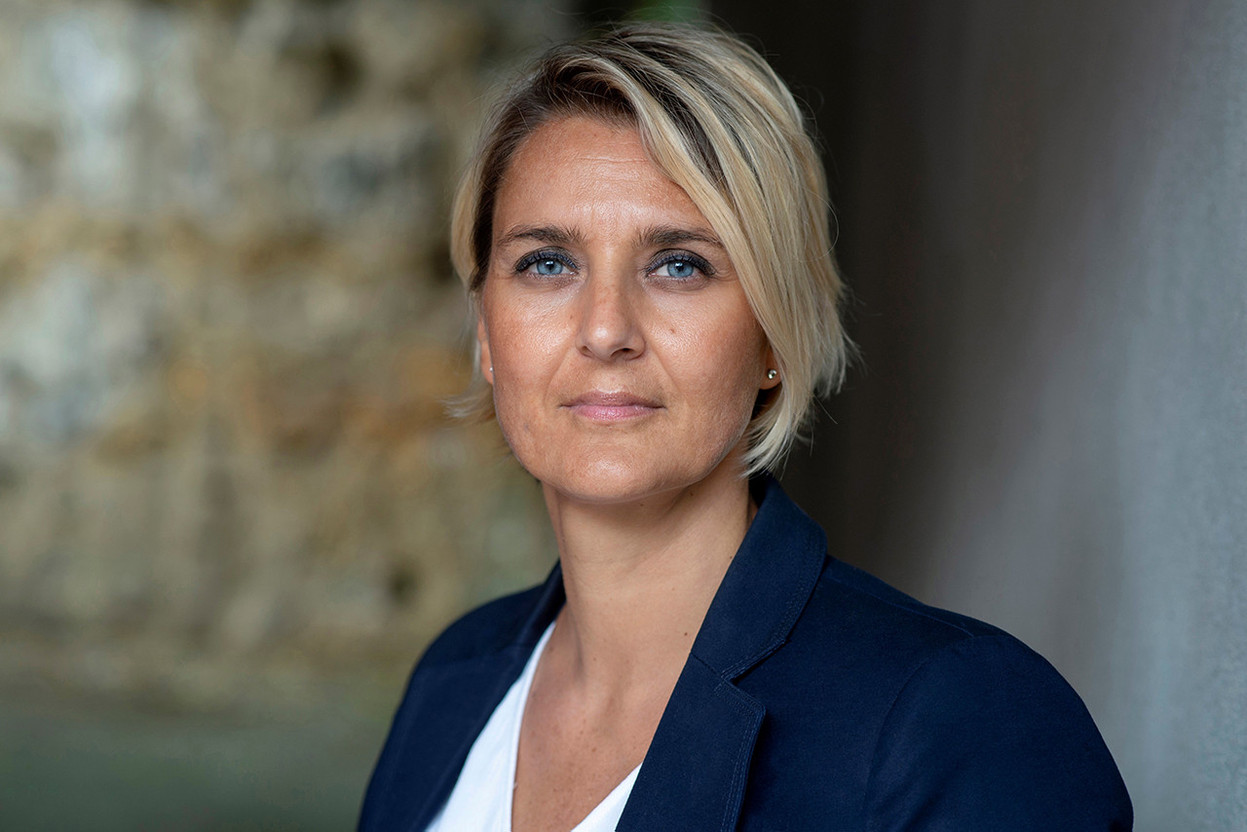
Specialising in Gen Z, researcher Élodie Gentina teaches at the IESEG School of Management and is the author of several books. In particular, with Jérémy Lamri, she published the essay “Le Défi du management intergénérationnel. Comment transformer la cohabitation en collaboration vertueuse”, published last year by Dunod.
What do you observe in organisations that makes you say that the managerial authority is changing in nature?
Élodie Gentina. – “What I see is that authority is no longer taken for granted. It’s no longer an automatic ‘plus’ linked to the position. Previously, a title was enough: a manager was respected for his or her degree, status or age. Now, managers have to demonstrate their legitimacy on a daily basis. And in the company, teams no longer obey on principle. They adhere... or they don’t.
Authority is thus shifting from a statutory power to a much more relational and explanatory power. I often say that we are moving from de facto authority to relational authority.
We’ll no doubt come back to this but, in the meantime, do seniority and experience still weigh in the legitimacy of a manager? Or have these criteria become obsolete?
“It matters, yes, but it’s no longer enough. Today, particularly for the new generation, experience has to be ‘translated’: made useful, concrete and shareable. That’s also what intergenerational skills are all about: passing on a culture, a history and an experience from older to younger employees, while recognising that younger employees also bring skills in digital, CSR, languages, etc.
An experienced manager who doesn’t explain why he’s making decisions quickly loses credibility. Experience is not a totem. It’s a resource to be activated, one criterion among others. In a context where many jobs are changing fast, some young people put diplomas and seniority into perspective and look for answers on the internet. Or to a manager who listens, equipped with soft skills, rather than an authority based solely on status.
They often say that authority comes first from competence. Before, the manager, like the teacher, was the person who knew. Today, with immediate access to information, the situation has changed: ‘I watch tutorials and learn.’ They therefore also expect experimentation, feedback, benevolence and something other than mere seniority from the manager.
In the medium and long term, a more relational authority makes it possible to understand the ‘why’, to give meaning, and therefore to reduce friction.

Are tensions around’authority just generational or are they a matter of power?Are they purely generational or do they stem from’a more profound change in the relationship to work?
“Excellent question. For me, generation is just the tip of the iceberg. The real issue is the major changes taking place in society, in particular the relationship with time, which has changed profoundly and cuts across all generations.
We are facing a multi-crisis situation, with one young person in two declaring that they are anxious and finding it difficult to plan ahead. This is changing the relationship between meaning and recognition. Young people are more forthright in expressing expectations that others had little time to formulate. Their mindset is: ‘We dare and we’ll see.’
So I’m not talking about a generational crisis, but a crisis in the model of authority inherited from the industrial era. And paradoxically, young people also say they need authority and hierarchy. In a survey of around 3,500 young people in Hauts-de-France, one in two said: ‘I need authority, I need hierarchy.’ The difference is in the form: they expect relational authority, not de facto authority.
This need for a framework also exists in other generations. It is linked to education, to the family, and runs through society as a whole. What is very specific today is immediacy: digitalisation, AI, smartphones, social networks. Time has become ‘now’. In this context, young people find it easier to question the authority of institutions - school, business, the state, the media - in favour of the internet, with information at their fingertips, not always reliable, but immediately accessible.
How does questioning the’traditional authority impact performance, team cohesion?
“In the short term, it can slow things down. Discussing, exchanging and explaining takes more time than giving orders. Before, the model was more vertical. Today, we’re no longer in that pattern.
In the medium and long term, a more relational authority makes it possible to understand the ‘why’, to give meaning, and therefore to reduce friction: we go faster, further, with more support. The real risk to performance is not dialogue, but blurred, inconsistent or implicit authority.
We saw it with the fashion for ‘liberated’ companies: by doing away with authority or making it invisible, many young people found themselves lost. A large proportion of the under-30s still don’t know what they want to do: they need a framework, and even a manager who is more present, both physically and emotionally. There is increased porosity between their professional and personal lives. Young people therefore expect more: regular feedback, both positive and negative, and sometimes more support. It’s demanding, but in the long term it can create a sense of belonging, team spirit and longer-lasting commitment.
In most of the companies I work for, I see less generational clashes than clashes of management styles.

Do you see any concrete risks to the transmission of knowledge and operational continuity?
“When authority is weakened, some older people keep quiet, take a back seat and end up saying to themselves: ‘What’s the point?’ Under these conditions, knowledge is no longer passed on spontaneously. But knowledge cannot be passed on without recognition. Existential recognition is essential: to feel recognised, considered.
If experience is no longer symbolically valued, it can disappear silently. The notion of a job is evolving towards more 'mission-oriented' posts, but if you don’t like what you do or the people you work with, the transmission of experience will fade away.
Another risk is getting stuck in stereotypes. ‘Young people don’t respect authority’, ‘old people want to keep their status’... This creates friction. However, in most of the companies I work for, I don’t see so much generational clashes as clashes of management styles: family organisations, paternalistic organisations, routines, rigid pyramids, lack of agility. When everyone sticks to their guns, we don't move forward. Hence the importance of redefining authority.
What managerial or organisational practices are'really relevant to rebuilding shared authority?
“The first thing is the ability to question oneself. Getting away from prejudices, accepting to adapt your posture and codes. This can be done through more appropriate channels of communication: email can work with some people, but with young people you sometimes need to favour more direct and regular exchanges.
Feedback is becoming central. Young people need ongoing support. An annual interview may work for other generations, but waiting a year to take stock with a young person may be too late. We also need to instil confidence and allow initiative, while establishing a framework.
The practices that work are those that make power clear: clear roles, clear responsibilities, identified decisions. Too many organisations talk about collaboration without saying who decides what. Cooperation needs a framework.
We therefore need explicit, but not authoritarian, authority. Authority does not mean giving up the right to decide: it means deciding without crushing the other person.
Reverse mentoring, senior-junior pairs, co-decision... Are these gadgets or sustainable transformation levers?
“These schemes become gimmicks if the company puts them in place to ‘do like everyone else’, without believing in them. This is greenwashing. On the other hand, they become real levers if there is consistency between the discourse and the actions.
We need to assume explicit, not authoritarian authority: explain more, be transparent, authentic, expose the constraints, say what is possible and what is not.

Rather than creating separate groups (young people on one side, seniors on the other), the challenge is to create intergenerational groups: conferences, workshops, mentoring, reverse mentoring. It's a form of companionship: it works when everyone accepts that they are not legitimate in everything, that the senior recognises their shortcomings and that the young person also recognises what the experience brings.
These schemes do not replace authority: they redistribute it in a more intelligent way. They also involve adapting internal communication methods: email can be seen as a hierarchical marker, with too many people copied and a cumbersome response process. More informal, instantaneous exchanges can remove certain barriers.
A concrete lever: integrating mentoring into onboarding. Many young people leave the company because they feel alone. Working in pairs with a senior mentor for several months changes the situation and also makes the senior feel useful and proud.
Finally, we need to work on exit interviews: understand why people leave, because today's career paths are fluid, and some come back after experience elsewhere. At the end of the day, everything hinges on coherence: without alignment between discourse and action, no scheme will hold.
How can a manager establish his authority in a context where employees expect more participation than'obedience?
“First and foremost, it's a posture. Some have it naturally, others need to work on it. We see young managers struggling with older ones, and vice versa. Some young managers feel disqualified by their age, while some older ones remain attached to a logic of advancement by seniority.
In this context, you have to assume an explicit, non-authoritarian authority: explain more, be transparent, authentic, set out the constraints, say what is possible and what is not. You also have to listen to proposals, because the company is placing greater value on participation and intrapreneurship: young and old alike want to contribute to the vision.
This means reviewing certain rhythms - such as the annual appraisal - and moving towards more intergenerational and inclusive management. Each person is unique, and we can't apply the same model to everyone. So we need to understand why some people feel out of place. And, at the heart of it all, there is feedback, both positive and negative, which forms the basis of a credible relationship.
With young people, questioning is constant.

In multigenerational organisations, what are the weak signals that herald a loss of managerial legitimacy?
“There are often ‘resource people’: those who know the codes, the unspoken things, and can point out what is going well or not. The first weak signals appear when decisions are rediscussed after meetings. Another signal is when the manager becomes a mere relay of information. A third, more discreet, signal is ‘polite disengagement’: the minimum is done without conflict, but without buy-in.
To avoid this, appraisal must not just be top-down: 360-degree feedback is key, to also enable the manager to question and adapt practices that have become obsolete.
Young people are constantly being called into question. They express themselves less in questionnaires and more on social networks, for good or ill. Their relationship with constraints has changed: they test, ask, try, and accept a ‘no’... as long as it is explained. Breaking off dialogue is highly problematic.
Existential recognition plays a central role: the need to be considered, recognised, sometimes even ‘loved’. This applies to everyone, but even more so today. For my part, as a teacher, I multiply exchanges and feedback: my authority remains, but it has been transformed from a posture of knowing to a posture of coach.
If a company had to take just one action tomorrow to rebuild managerial legitimacy, what would you recommend?
“I think the priority is to train managers to explain their decisions: to make trade-offs understandable. When young people no longer obey by default, clarity becomes a form of respect. They demand authenticity and prefer a hard truth to window-dressing or greenwashing. I would also mention ‘management by organised emptiness’: encouraging autonomy, but within a structured framework. Total emptiness loses young people; excessive rigidity drives them away. They demand flexibility, particularly in terms of working hours. And contrary to popular belief, many of them want to come to work: it's a place to learn, socialise and meet people.
This implies greater managerial proximity: getting out of the office, being there for your team. Empowerment, as with a child, requires trust, room for initiative, a clear framework, and dialogue about the future: ‘How do you see work tomorrow?’
We also need to break down the barriers between generations: some purely ‘young’ collectives have failed, because they cut off dialogue with the rest of the organisation.
At the end of the day, there are three levers: clarity, authenticity and decompartmentalisation. Let's stop classifying by age: what counts is competence. And sometimes 'subjective' age counts for more than chronological age: some older managers are better at listening than younger ones. The life cycle comes into play, and that's why, at conferences, I always start from a societal approach before moving on to management.”